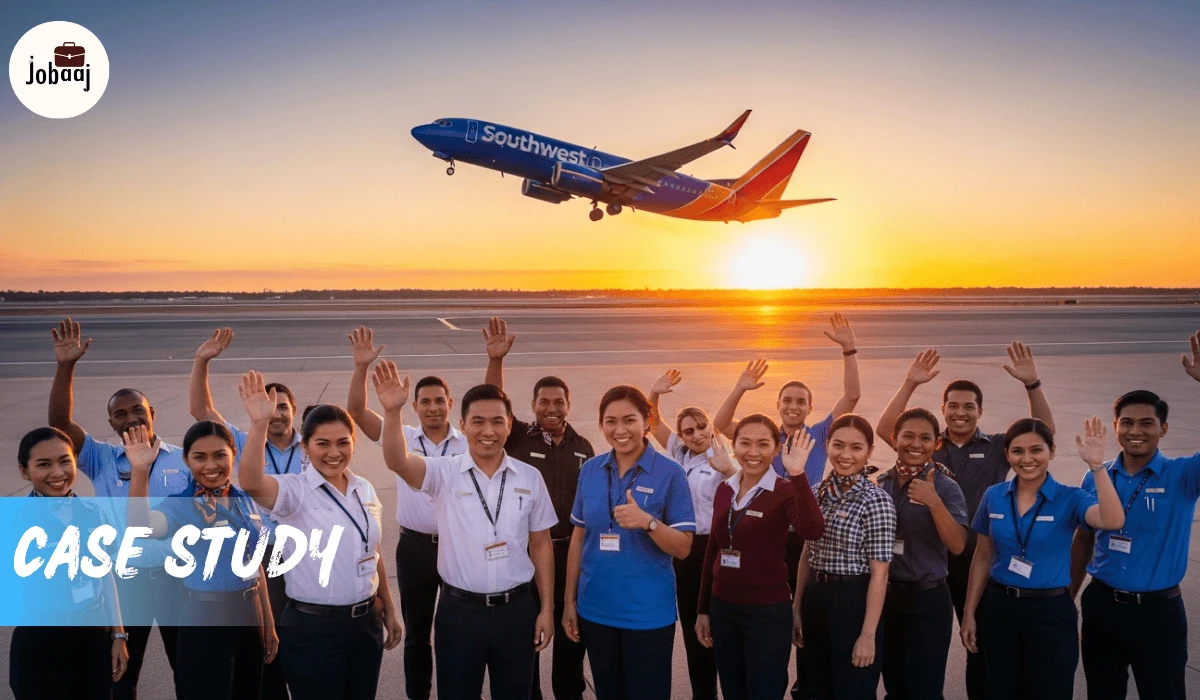
Southwest Airlines is not just known for its low fares and friendly service, it is celebrated for a company culture that truly values its people. While many airlines struggled over the years with high employee turnover, low morale, and a pressured work environment, Southwest stood out. Behind every friendly flight attendant greeting passengers and every smiling gate agent was a deeper engine driving the company forward: highly motivated employees.
For decades, Southwest maintained one of the highest employee satisfaction rates in the airline industry. But what exactly fueled this motivation? How did Southwest manage to keep employees engaged, committed, and passionate, even in tough times? This case study explores the strategies Southwest Airlines used to instill motivation, the challenges they faced, and the outcomes of their people-first approach.
Background
Founded in 1967, Southwest Airlines began as a small regional carrier in Texas. From the early days, the airline set itself apart with a simple mission offer affordable air travel with outstanding service. Yet, what really shaped its reputation was more than just competitive pricing. It was the culture employees who believed in their work, took pride in their roles, and felt genuinely connected to the organization’s mission.
At a time when the airline industry faced financial uncertainties, frequent layoffs, and shrinking job security, Southwest doubled down on its people. Instead of treating workers as cost centers, it saw them as its most important assets.
The Challenge
Like any business, Southwest faced pressures economic downturns, rising fuel costs, intense competition, and the inevitable stress of daily airline operations. But the deeper challenge lay in sustaining motivation over time and making sure employees felt valued beyond just paychecks.
Some of the key motivational challenges included:
1.Burnout from Operational Stress: Airline operations are fast-paced with irregular hours. Keeping employees energized and positive was a constant hurdle.
2. Maintaining Motivation During Hard Times: When the rest of the industry was cutting costs and laying off staff, how could Southwest inspire confidence and performance without compromising morale?
3.Alignment Between Corporate Goals and Employee Goals: Ensuring that employees felt personally invested in the company’s success, not just as workers but as stakeholders in its future.
Southwest had to find ways to motivate employees not only through incentives but by nourishing a culture that made them want to stay and perform their best.
Approach and Strategies
To tackle these motivational challenges, Southwest Airlines implemented an array of intentional strategies:
1. A People-First Culture
Southwest built a culture where employees felt valued and listened to. Leaders communicated openly and frequently, creating a sense of belonging and community.
Employees weren’t just part of the company they were family. This sense of unity encouraged workers to support each other and take pride in the company’s success.
2. Recognition and Appreciation
From simple acknowledgments to formal programs, Southwest made it a practice to regularly recognize strong performance. Employees received praise not only for hitting numbers, but for living the company values kindness, teamwork, and initiative.
This continuous reinforcement helped employees feel seen and appreciated, not just replaced.
3. Opportunities for Growth and Development
Southwest invested in employee development through training programs, leadership workshops, and internal promotions. Rather than hiring externally for leadership roles, Southwest often promoted from within, motivating employees to build long-term careers.
Feeling that they could grow with the company became a powerful motivational factor.
4. Empowerment and Autonomy
Employees were encouraged to make decisions in favor of great customer service. Southwest empowered frontline workers to solve problems without always needing managerial approval.
This freedom gave employees a sense of ownership they weren’t just cogs in a machine, but valued contributors to positive outcomes.
5. Fun and Team Bonding
Southwest is famous for its fun-loving culture. Whether it was holiday celebrations, team games, or humorous onboard announcements, fun was embedded into the work environment.
Work, at Southwest, wasn’t just about tasks it was about joyful collaboration.
Findings
After closely observing Southwest’s strategies and outcomes, several key insights emerged:
1. Employee Satisfaction Was Exceptionally High
Regular internal surveys revealed that employees reported higher satisfaction and motivation than industry averages.
Employees felt respected, heard, and valued not just as workers, but as individuals.
2. Turnover Rates Were Low Compared to Competitors
While the airline industry faced frequent layoffs and high turnover, Southwest maintained one of the lowest turnover rates in the sector. Motivated employees stayed longer, reducing recruitment and training costs.
3. Customer Satisfaction Was Positively Linked
There was a noticeable connection between employee motivation and customer satisfaction. Happy employees created welcoming experiences, which translated into loyal customers.
Customers didn’t just fly Southwest they came back.
4. Performance Remained Strong Even in Crises
During economic challenges like fuel price hikes or slow travel seasons, Southwest employees stood strong. Instead of morale collapsing, teams rallied together. Motivation did not fade because employees felt trust and stability.
Results
By focusing on employee motivation, Southwest Airlines achieved several positive outcomes:
-
Enhanced Productivity: Motivated employees worked more efficiently and delivered higher quality service.
-
Lower Operational Disruptions: Strong internal communication and cooperation reduced errors and delays.
-
Stronger Brand Loyalty: Both employees and customers became advocates for the brand.
-
Sustainable Success: Southwest continued to perform well financially and operationally despite industry turbulence.
Southwest didn’t just build an airline they built a culture where people wanted to work, grow, and give their best every day.
Conclusion
The case of Southwest Airlines clearly shows that motivation is not a bonus it’s a strategic imperative. Companies can invest in the latest technology, process optimization, or marketing strategies, but none of that leads to long-term success without motivated people behind it.
Southwest’s approach teaches us that motivation is built through respect, recognition, trust, empowerment, and environment. When employees feel a sense of belonging, purpose, and appreciation, they show up not just to work, but to win.
For any organization aiming to improve productivity and loyalty, Southwest’s model provides a powerful example: Motivate your people, and they will create value that goes far beyond numbers.
FAQs
Southwest Airlines focuses on building a strong company culture, offering employee recognition programs, empowering staff with decision-making authority, and providing opportunities for growth and development. This combination of strategies ensures that employees are motivated, engaged, and aligned with the company’s mission.
Motivated employees are more likely to provide excellent customer service. At Southwest Airlines, employees feel valued and empowered, which directly contributes to the company’s friendly and customer-centric reputation. This results in high customer satisfaction and loyalty.
Recognition is a central component of Southwest’s employee motivation strategy. Regular acknowledgment of employees’ hard work, whether through informal praise or formal awards, helps foster a positive work environment, increases job satisfaction, and reinforces company values.
During challenging times, Southwest Airlines focuses on transparent communication, providing reassurance to employees about job stability, and reinforcing the company’s commitment to its people. This approach helps maintain morale and ensures employees remain motivated even when external pressures increase.
Yes, while every company’s culture is unique, many of the strategies Southwest Airlines uses—such as fostering a positive work environment, offering employee empowerment, and recognizing achievements—can be applied to other organizations to improve employee motivation and engagement.
Employees at Southwest Airlines contribute to the company’s success by embracing the company’s values, providing exceptional customer service, and working together as a team to overcome challenges. Motivated employees are more productive and loyal, which ultimately leads to greater business success.