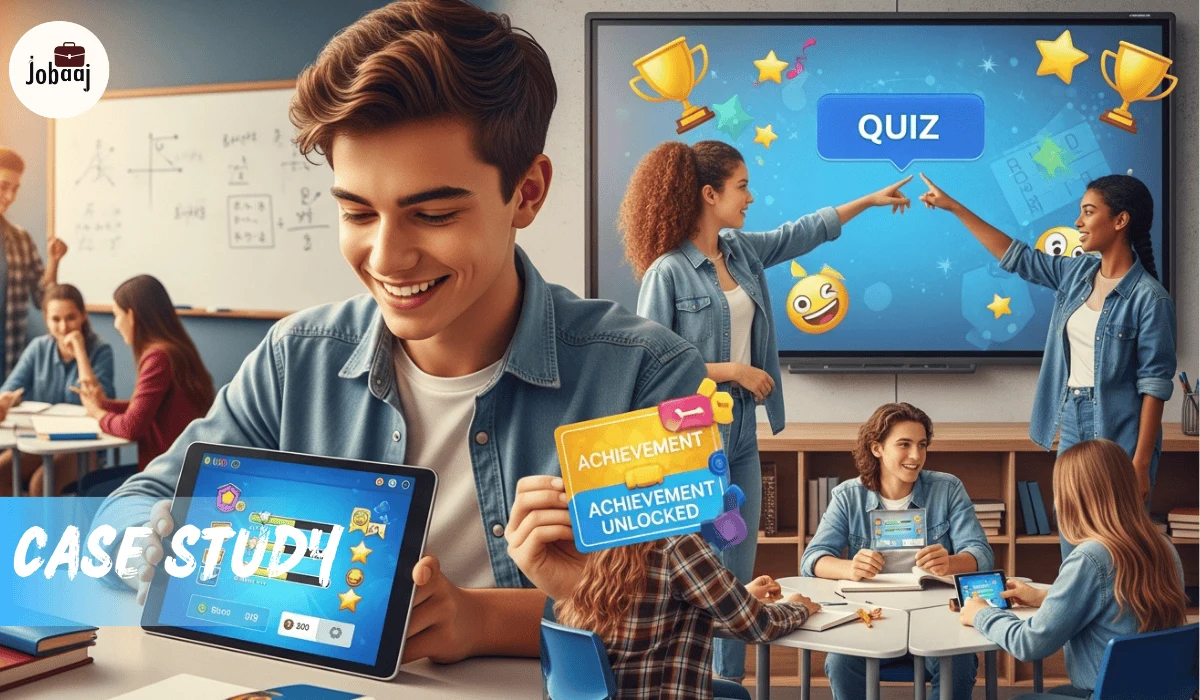
You’re a student, and instead of staring at textbooks for hours, you’re unlocking levels, earning badges, and collecting points as you learn new concepts. The more you engage with the subject, the more you progress just like a video game. But the twist? You’re not just playing for fun; you’re mastering the subject matter, all while enjoying the process.
This is gamification in learning the use of game-like elements to make education more engaging, interactive, and rewarding. Over the past few years, gamification has gained tremendous popularity in classrooms and digital learning platforms. What makes this approach so effective? Why has it transformed the way we engage with learning? And how can we ensure it works in the long run?
In this case study, we’ll delve into how gamification works, why it’s so impactful, and how various platforms and educational systems are using this strategy to enhance learning. Let’s explore this innovative learning approach and discover why it has become a game-changer for educators and learners alike.
Problem
Traditional learning methods, despite being effective, have been struggling to keep students engaged. Long hours of reading, memorizing, and passive learning often leave students feeling disconnected from the subject. Here are some of the key issues faced in traditional education systems:
-
Decreased engagement: Students often struggle to stay motivated, especially when the learning process feels repetitive or overwhelming.
-
Lack of motivation: Without tangible rewards or feedback, students often fail to stay committed to their learning journey.
-
Poor retention of information: After a few weeks, students tend to forget much of what they've learned because the content wasn’t memorable or engaging.
-
Limited personalization: In many systems, there’s little room to tailor the learning experience to individual needs and paces.
The challenge, therefore, became: How can educators re-engage students, keep them motivated, and ensure they retain the knowledge they gain?
This is where gamification comes in.
What is Gamification in Learning?
Gamification in learning uses game elements such as points, levels, badges, leaderboards, and challenges to make learning feel more like a game. It’s about transforming the educational experience into something interactive, rewarding, and fun, where students feel motivated to progress, just like they would in their favorite game.
Unlike traditional methods where students passively absorb content, gamification turns students into active participants in their own learning journey. As students complete challenges or milestones, they unlock rewards, level up, and move closer to their educational goals.
Gamification in education isn’t just about playing games; it’s about making the process of learning engaging and dynamic while allowing students to receive immediate feedback, helping them understand their strengths and areas for improvement.
Implementation Strategy
Many educational institutions and online platforms have successfully integrated gamification into their learning systems, and here’s how:
1. Curriculum Gamification (Schools & Colleges)
Some schools have gamified their entire curriculum by incorporating game mechanics into their lesson plans. For example:
-
History classes where students earn badges for mastering historical periods or events.
-
Math courses where learners “level up” by solving progressively difficult problems.
-
Science experiments structured like quests with multiple stages and goals, allowing students to unlock new concepts as they complete them.
These gamified elements inject fun into subjects that might otherwise feel tedious, creating a vibrant, competitive learning environment.
2. EdTech Platforms Using Gamification
Well-known educational platforms like Duolingo, Khan Academy, and Quizlet have adopted gamification to great effect:
-
Duolingo makes language learning more enjoyable by offering points, streaks, and levels. Users earn rewards and progress through a virtual language journey.
-
Khan Academy uses energy points and badges to motivate students as they complete learning modules and master concepts.
-
Quizlet allows students to compete with their peers and track their progress by using flashcards and other game-like elements.
These platforms have seen increased engagement and higher retention rates because their gamified approach keeps learners hooked and eager to continue their journey.
Findings
The results of integrating gamification into learning have been overwhelmingly positive, as evidenced by multiple studies and real-world examples:
1. Increased Engagement
Gamification has shown to boost student engagement by making learning feel like an exciting challenge. Students are more likely to stay invested when they feel like they are competing, leveling up, and rewarded for their efforts.
2. Improved Motivation
The use of rewards, badges, and leaderboards gives students tangible goals to strive toward, creating a sense of achievement and progress. This motivational boost helps them stay focused and consistent with their studies.
3. Enhanced Retention
Gamification encourages active participation, which leads to better retention of information. Instead of simply reading through pages, students engage with the content in a dynamic way, which helps them remember it long-term.
4. Personalized Learning Experience
Many gamified systems adapt to individual learning paces. For instance, if a student struggles with a particular concept, the system can provide additional resources or simplify challenges until they master it, ensuring that every learner progresses at their own pace.
Results
Let’s look at some real-world examples and the measurable impact gamification has had on learning outcomes:
| Outcome | Observed Result |
| Learner Engagement | Increased by 50%+ in many settings. |
| Course Completion Rates | Improved, with students showing a stronger commitment. |
| Motivation to Learn | Learners felt more driven to continue learning. |
| Knowledge Retention | Enhanced through active participation and instant feedback. |
| Collaboration Among Students | Increased, as students often worked together to unlock challenges. |
In addition to these results, many teachers reported that classroom dynamics improved, with students more willing to help each other and collaborate, leading to a more cooperative learning environment.
Lessons Learned
Gamification in education is not a one-size-fits-all solution. Its effectiveness depends on thoughtful design and clear educational goals. Here are a few key lessons learned from successful gamification implementations:
1. Design with Purpose
The game elements must align with the learning objectives. Simply adding rewards isn’t enough. You need to ensure that the tasks students are completing are helping them master the material.
2. Keep It Fun but Challenging
While gamification should be engaging, it’s also essential that the tasks are challenging enough to stimulate learning. The best gamified experiences maintain a balance between fun and educational value.
3. Instant Feedback
Gamification works best when learners receive immediate feedback on their progress. This helps them identify areas they need to work on and encourages them to keep going.
4. Personalization is Key
Gamified platforms that allow students to learn at their own pace and customize their journey yield the best results. Personalization makes the learning process more relevant and engaging for each student.
5. Teacher Support is Essential
Gamification is most effective when it’s paired with strong teacher involvement. Teachers can guide the students through the process and ensure the game mechanics are being used appropriately to enhance learning.
Conclusion
Gamification has transformed the educational experience in ways we could have only dreamed of a decade ago. It engages students, motivates them to keep learning, and makes the process enjoyable. Whether it’s in the classroom or on a digital platform, gamification is proving to be an effective strategy in modern education.
By adopting game-like elements, learning is no longer a monotonous task but an exciting journey. Students are inspired to challenge themselves, collaborate, and achieve more. As technology continues to evolve, gamification in education will play an even greater role in shaping the future of learning.
FAQs
Gamification in learning is the use of game elements, such as points, badges, and leaderboards, to make learning more engaging and interactive. It transforms traditional learning into a fun, competitive experience, motivating students to actively participate and progress.
Gamification helps keep students engaged by adding elements of competition, rewards, and progress tracking. These elements make learning more enjoyable and create a sense of achievement, encouraging students to continue learning and complete tasks.
Gamification in education increases student engagement, boosts motivation, improves retention of information, and provides personalized learning experiences. It also encourages collaboration among students and gives them immediate feedback, allowing them to understand their progress better.
Yes, gamification can work in traditional classrooms. Teachers can integrate game mechanics into their lesson plans by offering rewards, setting learning goals, and using digital platforms that provide interactive experiences. This approach helps make lessons more engaging and memorable.
Some popular gamified learning platforms include **Duolingo**, which gamifies language learning through levels and streaks, and **Khan Academy**, which uses energy points and badges to motivate students. Other platforms like **Quizlet** and **Classcraft** have also implemented gamified elements successfully.
In gamified systems, teachers can track student progress through dashboards that show points earned, badges unlocked, and levels achieved. These systems often offer insights into which areas students have mastered and which need further attention, allowing for a more tailored approach to teaching.