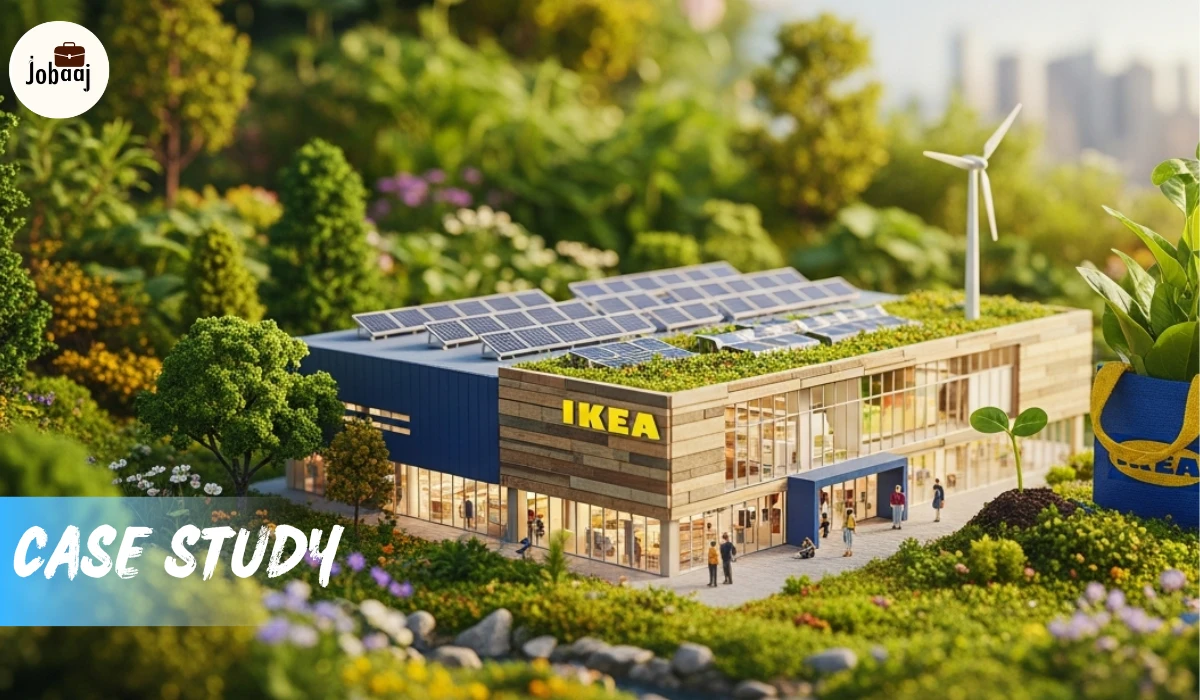
IKEA, a global leader in furniture and home goods, has excelled. The company has set a remarkable example by integrating sustainability into every aspect of its business. From renewable energy use to waste management and sustainable sourcing of materials, IKEA has positioned itself as a pioneer in sustainability. This case study will explore the company’s key initiatives and what other businesses can learn from IKEA’s approach.
Problem:
As the world becomes increasingly aware of environmental challenges, businesses face mounting pressure to adapt and minimize their ecological impact. For a company like IKEA, which relies heavily on resource-intensive manufacturing, achieving sustainability while maintaining affordability posed a significant challenge. The company needed to balance growth with environmental responsibility without compromising on the quality or affordability of its products.
The problems IKEA faced included:
-
Sourcing raw materials sustainably.
-
Reducing energy consumption across manufacturing and retail outlets.
-
Managing waste and ensuring products are recyclable or repurposed.
-
Balancing cost efficiency with sustainability goals.
How did IKEA shift its business model to accommodate sustainability while continuing to grow and meet global demand?
Strategy:
IKEA’s sustainability strategy is built around several key pillars, each designed to address both environmental and business challenges. Here are some of the primary strategies the company employed:
-
Renewable Energy Commitment:
IKEA made substantial investments in renewable energy, including wind and solar energy. The company aims to become climate-positive by 2030, meaning they will reduce more carbon emissions than their operations generate.
-
Sustainable Product Development:
IKEA shifted towards using renewable and recyclable materials. Over 60% of the wood used in IKEA products is sourced from sustainable forests, with a goal to reach 100% by 2025. They also focus on using recycled materials in their products, such as in their cushion and mattress lines.
-
Circular Economy Model:
IKEA has embraced the circular economy by promoting the reuse and recycling of its products. This includes services for product take-back and refurbishment, as well as offering spare parts for products to extend their life cycle.
-
Sustainable Packaging:
IKEA has committed to using 100% recyclable or reusable packaging by 2025, significantly reducing its environmental footprint in the logistics and delivery process.
-
Transparency in Supply Chain:
IKEA works closely with suppliers to help them adopt sustainable practices, ensuring that both the materials and processes meet the company’s environmental standards.
Approach:
IKEA’s approach to implementing sustainability is rooted in both innovation and collaboration. Here’s how they applied these values:
-
Integration Across the Business:
Sustainability at IKEA isn’t a separate department it’s integrated into the company’s core business model. From product design to logistics, the company ensures that every part of the value chain is aligned with its sustainability goals.
-
Collaboration with Partners:
IKEA collaborates with various stakeholders, including suppliers, NGOs, and governments, to create more sustainable systems. They partner with organizations like the Forest Stewardship Council (FSC) to ensure that raw materials like wood are sourced responsibly.
-
Incorporating Technology:
IKEA uses Building Information Modeling (BIM) to optimize resource use and reduce waste. Additionally, they employ real-time data analytics to monitor energy usage and manage resources effectively. The use of AI and other technologies helps IKEA track sustainability metrics and adapt as needed.
-
Consumer Engagement:
IKEA’s sustainability initiatives aren’t just internal they also engage customers to promote sustainable living. From offering products made from recycled materials to providing guides on how to live more sustainably, IKEA has created a culture of environmental responsibility both inside and outside the company.
Lessons Learned:
Through their journey, IKEA has gained valuable insights that can be beneficial for other companies looking to incorporate sustainability into their operations. Some key lessons include:
-
Sustainability and Profitability Can Coexist:
Initially, it seemed that sustainable practices would come at a higher cost, but IKEA’s experience proves that sustainability can actually help reduce costs in the long run. For instance, by investing in renewable energy, IKEA reduced energy costs and improved its long-term sustainability.
-
Collaboration Is Key:
IKEA’s success in sustainability wouldn’t have been possible without collaborating with suppliers, governments, and other stakeholders. Shared knowledge and goals make it easier to overcome challenges and scale initiatives globally.
-
Innovation Drives Success:
IKEA’s adoption of technology, such as BIM and AI, has been crucial in improving the efficiency of their operations. Staying ahead of technological trends helps the company meet both its business and sustainability objectives.
-
Clear and Measurable Goals Are Essential:
IKEA’s commitment to sustainability is driven by clear, measurable goals like becoming climate-positive by 2030. These goals give the company a roadmap and the motivation to continue pushing boundaries.
-
Consumer Engagement and Transparency Build Trust:
By involving customers in its sustainability journey and being transparent about its practices, IKEA has built customer loyalty and trust. Consumers are more likely to support a brand that aligns with their values, especially in today’s eco-conscious market.
Results:
IKEA’s commitment to sustainability has had significant results, both environmentally and financially:
-
Reduced Carbon Footprint:
By investing in renewable energy and improving energy efficiency, IKEA has reduced its carbon emissions and is on track to become a climate-positive company by 2030.
-
Sustainable Product Line:
IKEA now offers a wide range of sustainable products, and over 60% of the wood it uses is sourced sustainably. The company’s circular economy practices, such as take-back services and recyclable products, have also contributed to reducing waste.
-
Increased Brand Loyalty and Consumer Trust:
Customers are increasingly drawn to brands that prioritize sustainability. IKEA’s efforts have resulted in stronger customer relationships, increased sales, and enhanced brand loyalty.
-
Industry Leadership:
IKEA is setting the standard for sustainability in the retail sector, and its efforts have inspired other companies to adopt similar practices. IKEA’s leadership in sustainability has helped them gain a competitive edge in the market.
Conclusion:
IKEA’s sustainability initiatives are a testament to the company’s ability to evolve with changing consumer demands and environmental concerns. Through innovation, collaboration, and a clear commitment to sustainability, IKEA is not only meeting the growing demand for eco-friendly products but also helping lead the charge in making the retail industry more sustainable.
For businesses looking to embrace sustainability, IKEA’s journey provides valuable lessons in integrating environmental responsibility into the core of operations. By prioritizing sustainability, companies can reduce costs, foster customer loyalty, and create a lasting impact on the environment.
FAQs
IKEA has committed to using renewable energy, sourcing sustainable materials, and implementing circular economy practices like product take-back and recycling.
IKEA aims to become a climate-positive company by 2030, reducing more carbon emissions than it produces through its renewable energy investments and sustainable products.
IKEA promotes the reuse and recycling of products through services like product take-back and offering spare parts. Their goal is to use only renewable or recycled materials in their products by 2025.
IKEA uses technology like Building Information Modeling (BIM), AI, and real-time data analytics to improve resource management, reduce waste, and track sustainability metrics.
By investing in renewable energy and improving energy efficiency, IKEA has reduced operational costs and improved long-term profitability while meeting its sustainability goals.
By adopting IKEA’s sustainability practices, companies can improve their environmental impact, strengthen their brand loyalty, and remain competitive in the market.