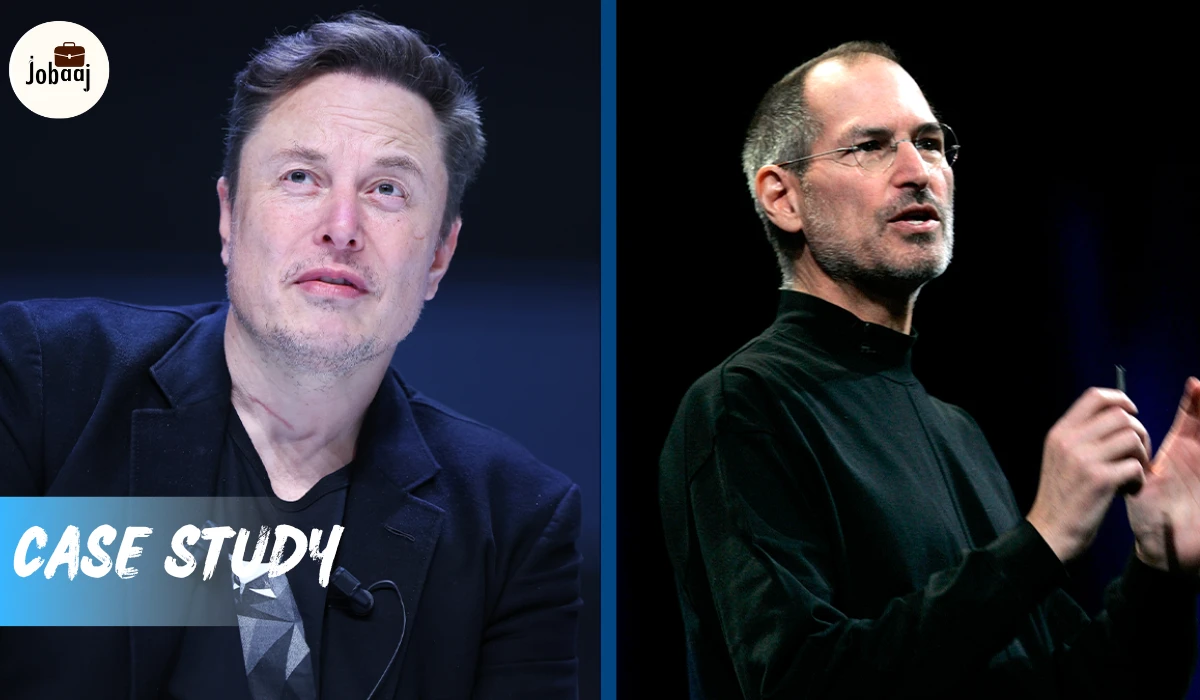
Imagine being at the helm of two of the most innovative companies in the world Apple and Tesla and having the power to shape the future of entire industries. That was the reality for Steve Jobs and Elon Musk, two men whose leadership styles have changed the way we think about business and innovation. But while both are highly successful, their approaches to leadership could not be more different.
Steve Jobs was known for his perfectionism and deep focus on design and user experience, creating products that not only worked but also felt like works of art. Elon Musk, on the other hand, is a visionary who’s driven by big, audacious missions, from colonizing Mars to building a sustainable future with electric vehicles.
In this case study, we’ll dive into how these two leaders approached the challenges of running their companies, the impact of their leadership styles on their teams, and what we can learn from their successes (and failures). Through this comparison, you’ll gain a better understanding of what makes effective leadership in today’s fast-moving world.
Background
Steve Jobs co-founded Apple in 1976, and though he was pushed out of the company in the 1980s, he returned in 1997 to lead it to unimaginable heights. Under his leadership, Apple became a household name, revolutionizing personal computers, mobile phones, and entertainment. Jobs’ emphasis on design, innovation, and an almost obsessive attention to detail turned Apple into a brand synonymous with cutting-edge technology and user experience.
Elon Musk, a serial entrepreneur, co-founded PayPal, but his greatest achievements have been with SpaceX, Tesla, Neuralink, and The Boring Company. Unlike Jobs, Musk’s leadership is rooted in his belief that humanity’s future depends on solving global challenges. From launching reusable rockets to making electric cars mainstream, Musk is as much a futurist as a businessman. His leadership philosophy revolves around pushing the boundaries of what’s possible no matter the odds.
Though their goals and industries may differ, both Jobs and Musk share one thing: an uncompromising vision for changing the world.
The Problem
Leadership in these high-stakes environments is never easy. Jobs faced the problem of resurrecting a nearly bankrupt Apple, where consumer trust was low, and innovation was stagnant. He needed to rebuild Apple from the ground up, demanding excellence while maintaining focus on product design and consumer satisfaction.
Musk’s challenges are no less daunting. SpaceX was founded with the lofty goal of making life multi-planetary, a vision that no one believed was possible. Tesla, meanwhile, had to overcome the enormous financial and technical barriers of creating electric vehicles that were not just affordable, but also desirable to the masses. Musk faced criticism for being too ambitious, but he never wavered from his mission.
Both Jobs and Musk had the task of leading teams through immense uncertainty, with pressures from the outside world doubting the sustainability of their companies. The question was: How did they manage to inspire their teams, innovate relentlessly, and build successful companies against all odds?
Leadership Approaches
Steve Jobs: The Visionary Perfectionist
Steve Jobs was known for his demanding, almost obsessive leadership style. He set impossibly high standards and pushed his teams to achieve what many thought was impossible. His approach was highly intuitive, often relying on his gut feeling more than traditional business metrics.
-
Obsessive attention to detail: Jobs believed that every element of a product from hardware to packaging was essential to the user experience. He was famous for insisting on design perfection, even if it meant frustrating his team members.
-
Demanding innovation: Jobs didn’t just want his products to work; he wanted them to change the world. He was known for challenging conventional thinking and pushing his team to develop groundbreaking products that would shape the future of technology.
-
Emotional leadership: Jobs was known for his intensity. He was blunt, sometimes abrasive, and often unapologetically demanding. But his charisma and drive inspired loyalty and a sense of purpose among his team, who were willing to follow him through challenges because they believed in the vision he painted.
Elon Musk: The Mission-Driven Visionary
Elon Musk’s leadership style is rooted in his bold vision for the future. Musk is not driven by money or personal gain but by a desire to solve humanity's biggest problems. His companies have been built around the idea that they can tackle the challenges of climate change, space exploration, and artificial intelligence.
-
Mission-driven leadership: Musk’s leadership is centered on audacious goals. Whether it’s making space travel more affordable or reducing global reliance on fossil fuels, his leadership style is about setting lofty missions that galvanize his teams to achieve what was once thought impossible.
-
Relentless pursuit of innovation: Musk is a hands-on innovator. He spends hours discussing engineering details with his teams, even diving into the nitty-gritty of rocket science. His attention to detail is on par with Jobs’, but Musk’s approach is much more collaborative and engineering-driven.
-
Tolerance for failure: Musk is not afraid to fail. He embraces failure as part of the process of rapid innovation. If one of his rockets explodes, he’s the first to celebrate it as a learning opportunity. This mindset creates a culture where failure is seen as a stepping stone to success.
Findings: Key Differences in Leadership
| Aspect | Steve Jobs | Elon Musk |
| Core Focus | Design excellence, user experience, and simplicity | Ambitious missions, technological breakthroughs and problem-solving |
| Leadership Style | Demanding, perfectionistic, top-down | Visionary, mission-driven, collaborative |
| Company Culture | Intense, secretive, innovation-focused | High-energy, risk-tolerant, iterative |
| Innovation Approach | Focused on aesthetic and consumer appeal | Focused on engineering and long-term global impact |
| Team Motivation | Excellence through precision and perfection | Passion through purpose and solving big challenges |
Results and Impact
Apple Under Jobs
-
Apple went from being near bankruptcy in the late 1990s to becoming one of the most valuable companies in the world.
-
With products like the iMac, iPhone, and iPad, Jobs transformed entire industries personal computing, mobile phones, entertainment, and retail.
-
Apple’s focus on design and user experience remains central to its identity today, creating a loyal customer base and a culture of innovation.
Musk’s Impact on SpaceX and Tesla
-
SpaceX became the first private company to send astronauts to the International Space Station a feat that was previously only possible for national governments.
-
Tesla has revolutionized the electric vehicle industry, pushing the auto industry toward sustainability and making EVs more mainstream than ever before.
-
Musk’s relentless push for innovation has led to breakthroughs in battery technology, space travel, and solar energy, helping to drive global shifts toward more sustainable practices.
Lessons Learned
While their leadership styles differ, Jobs and Musk both share a few key traits:
-
Visionary Thinking: Both leaders demonstrated the power of having a clear, bold vision for the future and then executing relentlessly to make that vision a reality.
-
Demand for Excellence: Whether through perfectionism (Jobs) or pushing for mission-driven breakthroughs (Musk), both leaders built companies that were known for setting high standards.
-
Resilience in the Face of Adversity: Jobs and Musk faced immense challenges, from financial struggles to public doubt, yet both remained relentless in their pursuit of success.
What we can learn from them is that leadership is not about one-size-fits-all approaches. It's about adapting your style to the needs of your company, your mission, and your team, while staying true to your vision.
Conclusion
Steve Jobs and Elon Musk are two of the most influential leaders of our time, but their leadership styles couldn’t be more different. Jobs built Apple into a design powerhouse, while Musk is reshaping the future with innovations in space, energy, and transportation.
Their leadership styles are reminders that there is no single path to success. What matters most is having a clear vision, the ability to inspire others, and the resilience to overcome setbacks. Whether you lean more towards Jobs’ perfectionism or Musk’s ambitious mission-driven approach, the key takeaway is that great leadership comes from understanding your strengths, aligning them with your team’s capabilities, and being unyielding in your pursuit of innovation.
FAQs
Steve Jobs focused on perfection, user experience, and design excellence, whereas Elon Musk is driven by bold missions and rapid innovation. Jobs’ leadership was perfectionistic and top-down, while Musk’s approach is more collaborative and mission-driven.
Steve Jobs inspired his teams through his obsession with design, his ability to challenge conventional thinking, and his emotional intensity. He pushed his team to achieve groundbreaking products, demanding excellence in every detail of Apple’s products.
Elon Musk’s leadership is unique due to his focus on ambitious missions, such as colonizing Mars and reducing global dependence on fossil fuels. His approach is hands-on, innovative, and based on the belief that rapid failure and iteration lead to long-term success.
Jobs faced the challenge of resurrecting a nearly bankrupt Apple, demanding excellence while rebuilding trust. Musk faced the challenge of creating a sustainable future through electric vehicles and making space travel commercially viable, all while managing massive technical and financial risks.
From Jobs, we learn the importance of visionary thinking, attention to detail, and setting high standards. From Musk, we learn the power of bold goals, rapid innovation, and the resilience to fail and try again. Both leaders show that success requires relentless focus on your vision and adaptability in the face of challenges.
Both leadership styles are effective, depending on the context. Jobs’ perfectionism works well for product-centric companies focused on design and user experience, while Musk’s visionary, risk-tolerant style is ideal for companies tackling complex, global challenges. The effectiveness depends on the company’s goals and culture.