
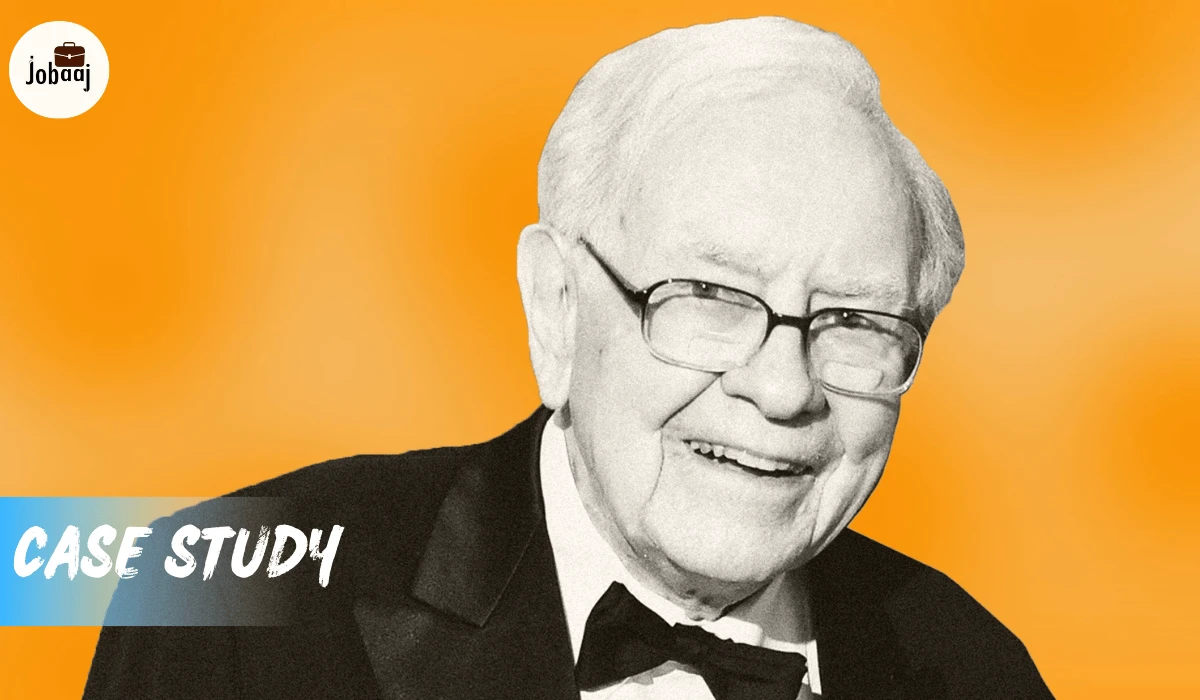
Imagine if you could follow the footsteps of someone who built a multi-billion dollar empire simply by making smart investment decisions. Warren Buffett, the chairman and CEO of Berkshire Hathaway, is a living legend in the world of investing. His investment strategy has made him one of the wealthiest people in the world, with a net worth exceeding $100 billion.
Buffett’s investment style isn’t flashy, and it certainly doesn’t involve short-term market speculation. Instead, his approach focuses on long-term value, fundamentals, and an unwavering belief in the power of compounding. But how exactly did Warren Buffett get to where he is today? What principles guide his investment decisions, and how can everyday investors learn from his success?
In this case study, we’ll dive deep into Warren Buffett’s investment strategy, exploring the key principles and actions that helped him build one of the most successful investment portfolios in history.
Background
Warren Buffett’s journey into the world of investing started at a young age. Growing up in Omaha, Nebraska, he was interested in business and finance from an early age. By the time he was 11 years old, he had already bought his first stock. After studying at the University of Nebraska and later at Columbia Business School, Buffett honed his investment philosophy under the guidance of Benjamin Graham, known as the father of value investing.
Buffett’s approach is heavily influenced by value investing, a strategy introduced by Graham. Instead of focusing on short-term market trends, Buffett sought out companies that were undervalued relative to their intrinsic worth. The focus on fundamental analysis and long-term growth formed the core of his investment philosophy.
The Problem
When Warren Buffett took over Berkshire Hathaway in the 1960s, it was a struggling textile company. At the time, Berkshire Hathaway wasn’t a financial powerhouse it was merely a company with potential. Buffett’s goal was to turn it into something more by leveraging the company’s capital and investing in profitable businesses.
Buffett’s early decisions weren’t without challenges. He had to:
-
Transform a textile company into a holding company for other investments.
-
Choose the right investments companies that would not only grow in value but also align with his value investing principles.
-
Navigate volatile markets, which often led to tough decisions in terms of timing and asset allocation.
The key challenge was finding businesses that not only had strong fundamentals but were trading at a price below their intrinsic value. This required immense patience and discipline, especially in a time when many investors were more focused on speculation and short-term gains.
Key Events
Warren Buffett’s success didn’t come from a single big win; rather, it was the result of consistently making wise investments based on his philosophy of buying great businesses at the right price. Below are the key events that helped shape Buffett’s journey:
1. The Acquisition of Berkshire Hathaway
One of the turning points in Buffett’s career came when he took control of Berkshire Hathaway in 1965. Initially, it was a struggling textile manufacturer, but Buffett quickly shifted the focus of the company. Instead of trying to revive the textile business, he started acquiring companies with strong fundamentals at reasonable prices.
Over time, Buffett transformed Berkshire Hathaway into a holding company, investing in a range of businesses including insurance (GEICO), retail (See’s Candies), and more. He also shifted from using textile profits to acquire other businesses, using the company’s capital to fund these purchases and grow wealth over time.
2. The Big Bet on Coca-Cola
In 1988, Buffett made one of his most famous investments by purchasing Coca-Cola stock. At the time, Coca-Cola was a globally recognized brand, but Buffett believed that it was undervalued. He saw the company’s ability to generate steady cash flow and its strong brand loyalty as key factors that would make it a great long-term investment.
Buffett’s bet on Coca-Cola paid off, and it has since become one of Berkshire Hathaway’s most successful investments. This move highlighted Buffett’s ability to invest in businesses that have brand strength, loyal customers, and long-term growth potential—qualities he still looks for in investments today.
3. Emphasis on Long-Term Value
Buffett’s emphasis on long-term value over short-term gains became more apparent in the 1990s and 2000s. While many investors were caught up in the dot-com bubble, Buffett stuck to his strategy of avoiding technology stocks he didn’t understand. This was a defining moment in Buffett’s career, as his refusal to invest in tech during the dot-com boom allowed him to avoid the massive losses that many other investors suffered when the bubble burst.
Instead, he focused on businesses with a strong competitive advantage and predictable earnings. Buffett’s refusal to chase trends in favor of stable, reliable investments became a hallmark of his success.
Findings
Warren Buffett’s investment strategy is based on several core principles that have stood the test of time. Here are the most important findings from his approach:
1. Invest in What You Understand
One of Buffett’s key pieces of advice is to only invest in businesses you fully understand. This is why he avoided investing in technology during the dot-com boom he didn’t have a deep understanding of how these businesses operated. Instead, Buffett focused on industries and companies with predictable earnings, such as consumer goods and insurance.
2. Look for Intrinsic Value
Buffett’s approach to investing revolves around the concept of intrinsic value the true, underlying worth of a company, based on its fundamentals (like earnings, growth potential, and competitive advantages). He believes in buying companies when their market value is lower than their intrinsic value, providing a margin of safety for investors.
3. Be Patient and Long-Term Focused
Warren Buffett famously said, “Our favorite holding period is forever.” His investment philosophy revolves around buying companies that he believes will continue to grow and thrive over the long term. Patience is a key component of his strategy he’s not interested in short-term market fluctuations. Instead, he focuses on companies with solid fundamentals that can deliver steady returns over many years.
4. Focus on Quality Businesses
Buffett doesn’t just invest in any company. He looks for businesses with a strong brand, a sustainable competitive advantage, and the ability to generate consistent cash flow. Some of the companies he’s invested in, like Coca-Cola and American Express, have these qualities in abundance.
Results
Warren Buffett’s strategy has had remarkable results. Under his leadership, Berkshire Hathaway has grown from a small textile company into one of the most valuable companies in the world. As of 2025, Berkshire Hathaway’s stock has outperformed the S&P 500 by a wide margin over the long term.
Buffett’s ability to identify companies with strong growth potential and invest in them for the long term has allowed him to generate significant wealth. More importantly, his strategy has also shaped the way other investors think about value investing and long-term wealth creation.
Key Takeaways
1.Focus on businesses, not stocks.
Invest in companies that have a strong competitive advantage and predictable earnings over time.
2.Do your homework.
Understanding a business and its fundamentals is crucial before investing. Warren Buffett’s success stems from his deep understanding of the businesses he invests in.
3.Be patient.
Investing is a long-term game. Don’t worry about short-term market fluctuations—focus on the long-term value of your investments.
4.Invest in what you know.
Buffett sticks to industries and companies he understands deeply. Don’t invest in things you don’t fully comprehend.
5.Look for value.
Investing in companies with intrinsic value at a price lower than their market value provides a margin of safety and greater potential for long-term success.
Conclusion:
Warren Buffett’s investment strategy is a proven model for anyone looking to build long-term wealth. By focusing on value, understanding businesses inside and out, and maintaining a patient, long-term outlook, Buffett has created a legacy of financial success.
As investors, we can all learn from his methodical approach and use these principles to guide our own investment decisions. Whether you're a beginner or an experienced investor, Warren Buffett’s investment strategy offers timeless wisdom that can help you achieve your financial goals.
FAQs
Warren Buffett's investment strategy focuses on value investing, meaning he looks for companies that are undervalued relative to their intrinsic value. He emphasizes investing in businesses with a competitive advantage, strong fundamentals, and long-term growth potential.
Buffett avoids short-term speculation because he believes that successful investing is about buying quality companies at the right price and holding them for the long term. He focuses on sustainable growth and avoids market fluctuations that don’t reflect a company’s true value.
The key principles include investing in what you understand, looking for intrinsic value, focusing on long-term growth, and being patient. Buffett looks for companies with predictable earnings and a strong competitive edge.
Buffett transformed Berkshire Hathaway from a struggling textile company into a holding company by acquiring businesses with strong fundamentals. He focused on industries like insurance and consumer goods, making strategic acquisitions and growing the company over time.
Investors can learn the importance of patience, focusing on long-term value, and the need to understand the businesses they invest in. Buffett’s strategy teaches that disciplined, thoughtful investing can lead to significant financial success over time.
Buffett’s investment in Coca-Cola in 1988 proved to be one of his most successful. The stock became one of Berkshire Hathaway’s most valuable holdings, demonstrating Buffett’s ability to spot companies with strong brands and sustainable competitive advantages.