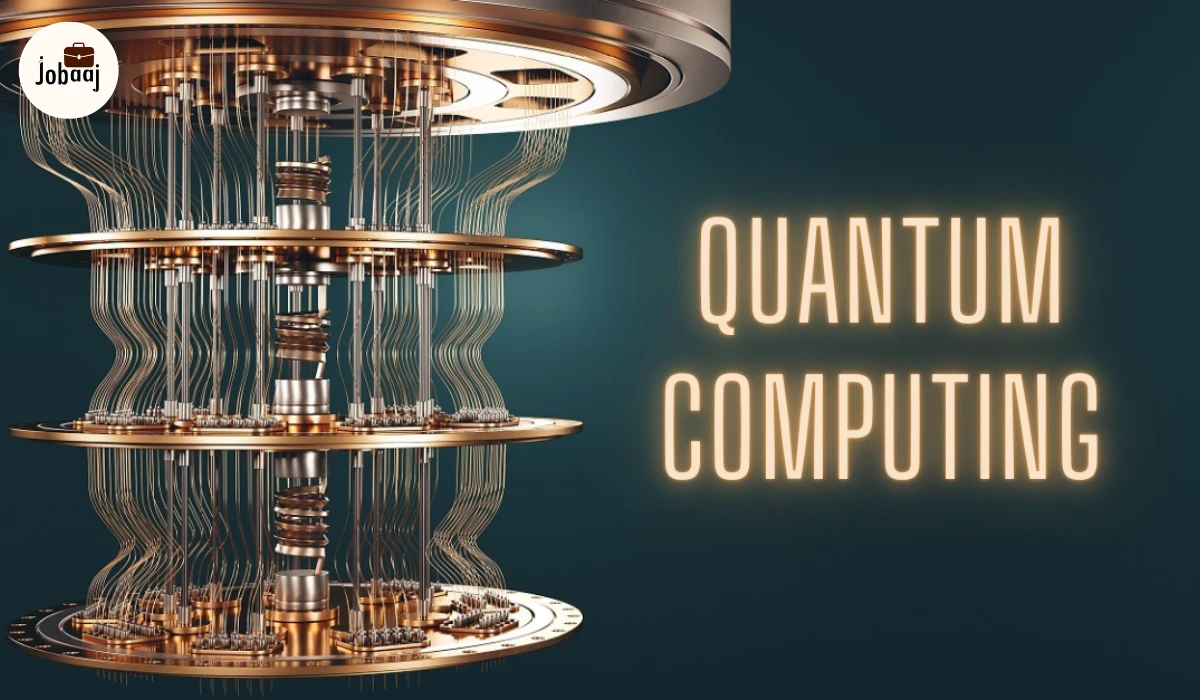
Quantum computing, once a concept confined to the realm of science fiction, is rapidly becoming a transformative reality. As we move into 2026, quantum computing is no longer just a buzzword it’s set to revolutionize industries from healthcare and finance to cryptography and artificial intelligence. But what exactly is quantum computing, how does it work, and why is it gaining so much attention?
In this blog, we’ll dive into the fascinating world of quantum computing in 2026, breaking down its potential, how it works, the challenges it faces, and the industries that stand to benefit from this groundbreaking technology.
What is Quantum Computing?
At its core, quantum computing is a new way of processing information using the principles of quantum mechanics, the branch of physics that deals with the behavior of matter and energy at extremely small scales, such as atoms and subatomic particles.
Where classical computers use bits (which can be either 0 or 1) to represent and process information, quantum computers use quantum bits or qubits. Unlike classical bits, which can only exist in one state (0 or 1) at a time, qubits can exist in multiple states simultaneously, thanks to a property known as superposition. This ability allows quantum computers to solve certain types of problems much faster and more efficiently than classical computers ever could.
In addition to superposition, quantum computers also rely on another quantum property called entanglement. When qubits become entangled, the state of one qubit can instantly influence the state of another, even if they are far apart. This property enables quantum computers to process vast amounts of information in parallel, providing an exponential increase in computational power.
How Does Quantum Computing Work?
To understand quantum computing, we need to break down its two main principles: superposition and entanglement.
1. Superposition
Superposition allows quantum computers to perform multiple calculations simultaneously. While a classical bit can be either a 0 or a 1, a qubit in superposition can be in a combination of both 0 and 1 at the same time. This means that a quantum computer can process a much larger amount of data in a single operation.
Think of it like flipping a coin. A classical computer would only recognize the coin as either heads or tails. A quantum computer, however, could recognize the coin as both heads and tails simultaneously, allowing it to explore multiple possibilities at once.
2. Entanglement
Entanglement is a phenomenon where two qubits become linked, such that the state of one qubit directly influences the state of the other, regardless of the distance between them. This connection allows quantum computers to perform complex operations in parallel, drastically speeding up computational tasks.
Entanglement can be likened to two dancers moving in perfect synchrony. If one dancer moves, the other dancer moves simultaneously, regardless of how far apart they are. In quantum computing, this synchronized movement allows the quantum computer to perform incredibly powerful calculations.
Why Quantum Computing Matters in 2026
As we approach 2026, the potential of quantum computing is becoming increasingly clear. Quantum computers can solve problems that are impossible or time-consuming for classical computers, opening doors to new possibilities in fields like artificial intelligence, cryptography, and pharmaceuticals.
Here’s why quantum computing matters:
-
Speed and Efficiency: Quantum computers can solve problems that would take classical computers millions of years in a matter of minutes. This is particularly important for industries that rely on complex simulations, such as drug discovery and climate modeling.
-
Optimization: Quantum computers can optimize complex systems more effectively than classical computers. This has major implications for industries like logistics, finance, and manufacturing, where optimization of resources and operations can lead to significant cost savings.
-
Breaking Classical Cryptography: Many of today’s encryption methods, which are used to secure data, rely on the difficulty of factoring large numbers. Quantum computers can potentially break these encryption methods, leading to the need for new, quantum-safe encryption methods.
Industries Impacted by Quantum Computing in 2026
Quantum computing has the potential to disrupt a wide range of industries, unlocking new possibilities for innovation and problem-solving. Here are some of the industries that are likely to be transformed by quantum computing in 2026:
1. Healthcare and Pharmaceuticals
Quantum computing holds the promise of revolutionizing the healthcare and pharmaceutical industries by accelerating drug discovery and personalized medicine. By simulating molecular interactions at the quantum level, quantum computers can help researchers understand diseases and develop treatments much faster than classical computers.
In 2026, quantum computers could enable the discovery of new drugs, provide insights into genetic diseases, and offer personalized treatment plans tailored to individual genetic profiles. This could lead to more effective and targeted therapies, reducing costs and improving outcomes for patients.
2. Finance and Banking
The finance industry deals with vast amounts of data and complex calculations, from risk assessments and fraud detection to optimizing investment portfolios. Quantum computing can solve these complex problems more quickly and accurately than traditional methods.
In 2026, quantum algorithms could be used for predictive modeling, cryptography, and portfolio optimization, leading to better investment strategies, more accurate risk assessments, and improved financial security. Quantum computing could also help in fraud detection by analyzing transaction patterns and identifying anomalies in real-time.
3. Cryptography and Cybersecurity
Quantum computing poses both a threat and an opportunity for cybersecurity. On one hand, quantum computers can break current encryption methods, rendering classical encryption obsolete. On the other hand, quantum computing offers the potential for quantum-safe encryption methods, which could provide stronger security for data transmission.
By 2026, organizations will need to adopt quantum-resistant algorithms to ensure the security of sensitive information. Quantum computing could also play a role in developing more secure communication networks that are invulnerable to cyberattacks.
4. Artificial Intelligence (AI) and Machine Learning (ML)
Quantum computing can dramatically enhance the capabilities of AI and machine learning (ML) by enabling faster processing and better pattern recognition. Quantum computers can handle large datasets more efficiently, speeding up the training of AI models and improving their performance.
In 2026, quantum-powered AI could lead to breakthroughs in areas such as autonomous vehicles, robotics, and natural language processing (NLP). Quantum algorithms could also enhance machine learning models, enabling more accurate predictions and faster decision-making processes.
5. Energy and Environment
Quantum computing could provide solutions to climate change and energy efficiency by enabling more accurate simulations of complex environmental systems. Quantum computers could be used to model the impact of climate change, optimize renewable energy systems, and design more efficient materials for energy storage.
In 2026, quantum computing could play a critical role in addressing global challenges related to energy, helping industries transition to greener, more sustainable practices.
6. Telecommunications and Networking
Quantum computing has the potential to transform the telecommunications industry by optimizing network operations, improving signal processing, and enabling faster data transmission. Quantum technologies will allow for more efficient management of complex network systems, leading to lower costs and faster internet speeds.
How It Will Be Impacted in 2026:
-
Quantum communication networks: These will be more secure and efficient, enabling the transfer of large amounts of data in real-time.
-
Quantum cryptography: This will revolutionize encryption, offering ultra-secure communication channels that are nearly impossible to intercept or hack.
-
Network optimization: Quantum algorithms will help optimize the flow of data across networks, improving performance and reducing latency.
7. Automotive Industry
The automotive industry is undergoing a digital transformation, with companies increasingly focusing on autonomous vehicles and advanced driving systems. Quantum computing can revolutionize the way cars are designed, how they interact with infrastructure, and how autonomous driving algorithms are optimized.
How It Will Be Impacted in 2026:
-
Autonomous vehicle optimization: Quantum algorithms can process massive amounts of data from sensors, allowing for better decision-making in real-time.
-
Material design: Quantum computing can enable the design of lighter, stronger, and more durable materials for vehicles, improving fuel efficiency and safety.
-
Supply chain optimization: Quantum computing can help improve logistics and supply chain management by analyzing complex data sets and optimizing routes.
8. Energy and Utilities
The energy sector is one of the most promising areas for the application of quantum computing. Quantum computing can help optimize power grid management, reduce energy consumption, and enhance the efficiency of renewable energy sources.
How It Will Be Impacted in 2026:
-
Energy optimization: Quantum algorithms can optimize energy production, distribution, and consumption, leading to more efficient power grids.
-
Smart grid systems: Quantum computing can help design advanced smart grid systems that can dynamically manage and distribute electricity based on demand.
-
Renewable energy innovation: Quantum computing can assist in the development of new energy storage systems and improve the efficiency of renewable sources like solar and wind energy.
9. Supply Chain and Logistics
Quantum computing has the potential to drastically improve supply chain management and logistics by providing better forecasting, optimization, and automation. This can lead to cost savings, faster delivery times, and more efficient inventory management.
How It Will Be Impacted in 2026:
-
Route optimization: Quantum algorithms will be able to calculate the fastest, most efficient delivery routes in real-time, reducing fuel consumption and travel time.
-
Inventory management: Quantum computing will allow for more accurate demand forecasting, helping businesses maintain optimal inventory levels.
-
Supply chain risk analysis: Quantum computing can help identify vulnerabilities and predict disruptions in global supply chains, allowing companies to respond proactively.
10. Pharmaceuticals and Biotechnology
Quantum computing has the potential to accelerate drug discovery, genomic research, and the development of personalized medicine. By enabling researchers to model complex biological systems, quantum computing can lead to faster and more accurate discoveries in the field of medicine.
How It Will Be Impacted in 2026:
-
Drug discovery: Quantum computers will allow researchers to simulate molecular interactions at a far more granular level, speeding up the process of discovering new drugs and treatments.
-
Genomic analysis: Quantum computing can process vast amounts of genetic data, leading to better understanding of diseases and personalized treatment plans.
-
Optimizing clinical trials: Quantum computing can optimize clinical trial designs by analyzing vast amounts of patient data and improving the selection of trial candidates.
Challenges Facing Quantum Computing in 2026
While quantum computing promises incredible advancements, there are several challenges that need to be overcome before it can reach its full potential:
-
Error Correction: Quantum systems are highly sensitive to external interference, and maintaining error-free calculations is a significant challenge.
-
Scalability: Building large-scale quantum computers with thousands or millions of qubits is a difficult task that requires advanced technology and infrastructure.
-
Cost: The development of quantum computers is expensive, and many organizations may struggle to afford the infrastructure needed to build and maintain quantum systems.
-
Security Concerns: As quantum computers advance, the risk of breaking current encryption systems will require a major shift toward quantum-resistant encryption.
Conclusion
The world of quantum computing is evolving at an exciting pace. In 2026, we’re beginning to see its real-world potential unfold in industries ranging from healthcare to finance, AI, and beyond. While there are still hurdles to overcome particularly in terms of scalability, error correction, and cost the potential benefits of quantum computing are undeniable.
As quantum computing continues to develop, it will unlock new possibilities for solving the world’s most complex problems, driving innovation, and improving the way we live and work. As we look ahead, it’s clear that quantum technology will be a cornerstone of future technological advancements, reshaping industries and revolutionizing the way we think about computing.
FAQs
Quantum computing uses quantum bits (qubits) that can exist in multiple states simultaneously, enabling faster and more powerful computations compared to classical computers. It works on the principles of superposition and entanglement.
Industries such as healthcare, finance, artificial intelligence, cybersecurity, and energy will see the most benefits from quantum computing. It will accelerate drug discovery, optimize financial models, enhance machine learning, and improve security systems.
The main challenges include error correction, scalability, high costs, and ensuring quantum-safe encryption methods. Overcoming these barriers is essential for the widespread adoption of quantum computing.
Quantum computing can dramatically improve AI by enabling faster processing, more efficient data handling, and better pattern recognition, leading to breakthroughs in AI-driven applications like autonomous vehicles and natural language processing.
Quantum computers are still in the early stages of development, but by 2026, we can expect significant advancements in the technology. Widespread commercial use is likely a few years away, with specific industries starting to adopt quantum solutions.