
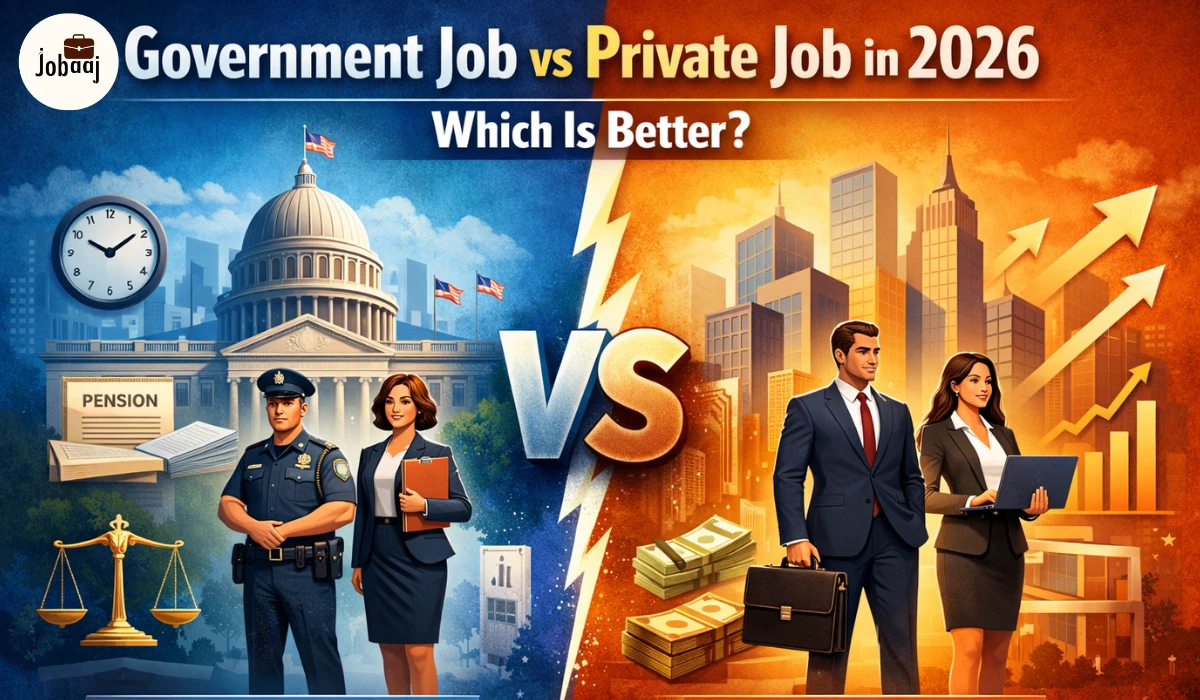
In 2026, the job market is evolving rapidly, driven by technological advancements, globalization, and shifting societal expectations. When it comes to choosing between a government job and a private sector job, there are several factors to consider. Both sectors offer unique opportunities, challenges, and rewards. But which is better for you in 2026? To answer this question, we will explore the key differences, benefits, challenges, and future trends in both government and private sector careers. By the end of this blog, you’ll have a clearer understanding of which job sector aligns with your personal goals, career aspirations, and lifestyle preferences.
What is a Government Job?
A government job refers to any position held within the public sector, where employees work for government institutions, local authorities, state, or national government agencies. These jobs tend to be highly structured, offering stable long-term career paths. Common government jobs include positions in departments such as law enforcement, public administration, healthcare, education, and national defense.
What is a Private Job?
Private jobs are positions within businesses or companies that operate under the private sector, away from government control. These positions are typically more dynamic, with a focus on profit generation, customer service, and competitive business practices. Jobs in private companies include positions in industries such as technology, finance, retail, marketing, and more.
Key Differences Between Government Jobs and Private Jobs in 2026
The choice between a government job and a private sector job largely depends on personal priorities such as job stability, career growth, salary, work-life balance, and job security. The table below summarizes some of the major differences:
| Aspect | Government Job | Private Job |
| Job Stability | Highly stable with guaranteed tenure | Less stable; vulnerable to market changes |
| Salary | Generally lower but with added perks like pensions and allowances | Typically higher salary, performance-based bonuses |
| Work-Life Balance | Better balance; fixed hours and holidays | Often demanding, longer work hours |
| Career Growth | Slow and predictable promotion path | Fast-paced, opportunities for growth based on performance |
| Job Security | Very secure; protected by government policies | Vulnerable to layoffs, market fluctuations |
| Perks & Benefits | Comprehensive health coverage, pension plans, job security | More limited, but can include health insurance, bonuses, and perks |
| Innovation & Creativity | Limited opportunities for innovation | More opportunities for creativity and innovation |
| Work Environment | Structured, routine work environment | Dynamic, fast-paced, with varying work environments |
Government Job: The Pros
1. Job Stability and Security:
In 2026, government jobs are still known for offering unparalleled job security. With the increasing reliance on public sector services, government roles are less susceptible to layoffs or economic downturns. Whether you’re working in law enforcement, public administration, or healthcare, you can count on a stable paycheck, pension, and guaranteed tenure. Government jobs are less likely to be impacted by market fluctuations or company profits.
2. Benefits and Perks:
Government employees enjoy robust benefits packages, including health insurance, pensions, paid holidays, and long-term security. These benefits provide a sense of financial stability, especially in your retirement years. In addition, government employees often receive more generous vacation time and paid leave compared to private sector workers.
3. Work-Life Balance:
In 2026, government jobs continue to be more family-friendly and supportive of work-life balance. With structured working hours, paid leave, and holidays, government employees can typically enjoy more time for their personal lives, making it an attractive option for those with families or those seeking a less demanding lifestyle.
4. Public Service and Community Impact:
Many people choose government jobs because they want to make a positive impact on society. Working for a government institution means contributing to public welfare, education, healthcare, and national security. If you value serving the community and being part of something bigger than yourself, a government career may be fulfilling.
The Cons
1. Slow Career Growth:
While government jobs offer stability, they tend to have slower career progression. Promotions are often based on seniority rather than performance. This can make it challenging for ambitious individuals to rise quickly within the organization.
2. Limited Innovation and Creativity:
In many government roles, the work can be routine and structured. There’s typically less room for innovation or out-of-the-box thinking, which can be a drawback for those who prefer fast-paced, creative environments.
3. Lower Salaries:
While government employees enjoy job security and benefits, their salaries are often lower than their private sector counterparts. In addition, raises and bonuses tend to be modest, which can make it harder to achieve a high standard of living.
Private Job: The Pros
1. Higher Salary and Performance-Based Pay:
Private sector jobs generally offer higher salaries and performance-based bonuses. In industries like technology, finance, and healthcare, the potential for high earnings is significant, especially for those in senior roles or specialized positions. Competitive pay is a major draw for individuals looking to maximize their income.
2. Career Growth and Opportunities:
The private sector offers faster career progression, especially for ambitious professionals. Promotions and pay raises are often tied to performance and results, meaning that individuals who work hard and excel in their roles can quickly climb the corporate ladder. The flexibility and autonomy in private sector roles also encourage employees to take on more responsibilities, providing faster growth and advancement opportunities.
3. Innovation and Creativity:
The private sector thrives on innovation. Companies are constantly pushing the envelope to develop new products, services, and solutions. If you enjoy fast-paced work environments, entrepreneurial thinking, and the ability to make decisions that directly impact the business, a private sector job will likely offer more creativity and freedom.
4. Dynamic Work Environment:
Private companies are known for their dynamic and diverse work environments. With cutting-edge technology, flexible office spaces, and an emphasis on collaboration, private sector employees often enjoy a modern and stimulating workplace.
The Cons
1. Job Insecurity:
Unlike government jobs, private sector roles can be unstable, especially during economic downturns. Private companies are more likely to lay off employees during tough times or when company profits suffer. Workers may be let go, even with strong performance, if the company experiences financial difficulties or restructuring.
2. Work-Life Imbalance:
Private sector jobs can be demanding, with long working hours, tight deadlines, and high expectations. Employees often find themselves working overtime, especially in industries like tech, consulting, and finance. Achieving a work-life balance may be challenging, particularly for those in senior positions.
3. Limited Benefits:
Although private sector jobs offer higher salaries, they generally provide fewer benefits compared to government roles. Pensions, healthcare, and paid time off may be less generous, and employees often have to work harder to secure their financial future through personal savings or retirement plans.
Future Outlook for Government and Private Jobs in 2026
As we head deeper into 2026, the job landscape continues to evolve. Technology will continue to shape both sectors. In government jobs, there will be more integration of technology for efficient public services, while in the private sector, automation, AI, and digital transformation will play a pivotal role in driving productivity and growth. Workers in both sectors will need to adapt to these changes and equip themselves with new skills to remain competitive.
Moreover, with the rise of the gig economy and remote work, both government and private sector jobs will see changes in the way work is done. Flexibility, work-from-home options, and digital tools will be crucial for the future workforce.
Conclusion
Deciding between a government job and a private sector job in 2026 ultimately depends on your personal preferences and career goals. If job stability, work-life balance, and long-term benefits are your top priorities, a government job may be the right fit. On the other hand, if you value higher salaries, rapid career advancement, and an innovative, fast-paced work environment, a private sector job may be more appealing.
In the end, it’s important to evaluate your own career aspirations, lifestyle preferences, and the type of work environment that motivates you the most. Both government and private jobs offer unique advantages, and choosing the right one for you will set the foundation for a fulfilling career.
FAQs
The primary differences between government and private jobs include job stability, salary, career growth opportunities, work-life balance, and benefits. Government jobs are known for offering better job security and long-term benefits, while private jobs often offer higher salaries and faster career progression.
Government jobs generally provide a better work-life balance due to fixed working hours, public holidays, and paid leave. In contrast, private sector jobs can demand longer working hours and may be more stressful, especially in fast-paced industries.
Yes, government jobs are typically more secure as they are less affected by market fluctuations or company performance. In contrast, private sector jobs can be vulnerable to layoffs, economic downturns, and company restructuring.
Private sector jobs generally offer higher salaries, with opportunities for performance-based bonuses and raises. Government jobs offer lower salaries but compensate with long-term benefits such as pensions and job security.
Yes, private sector jobs tend to offer faster career progression, with promotions and salary increases often based on performance. Government jobs typically have a slower promotion process, with advancements often based on seniority rather than merit.