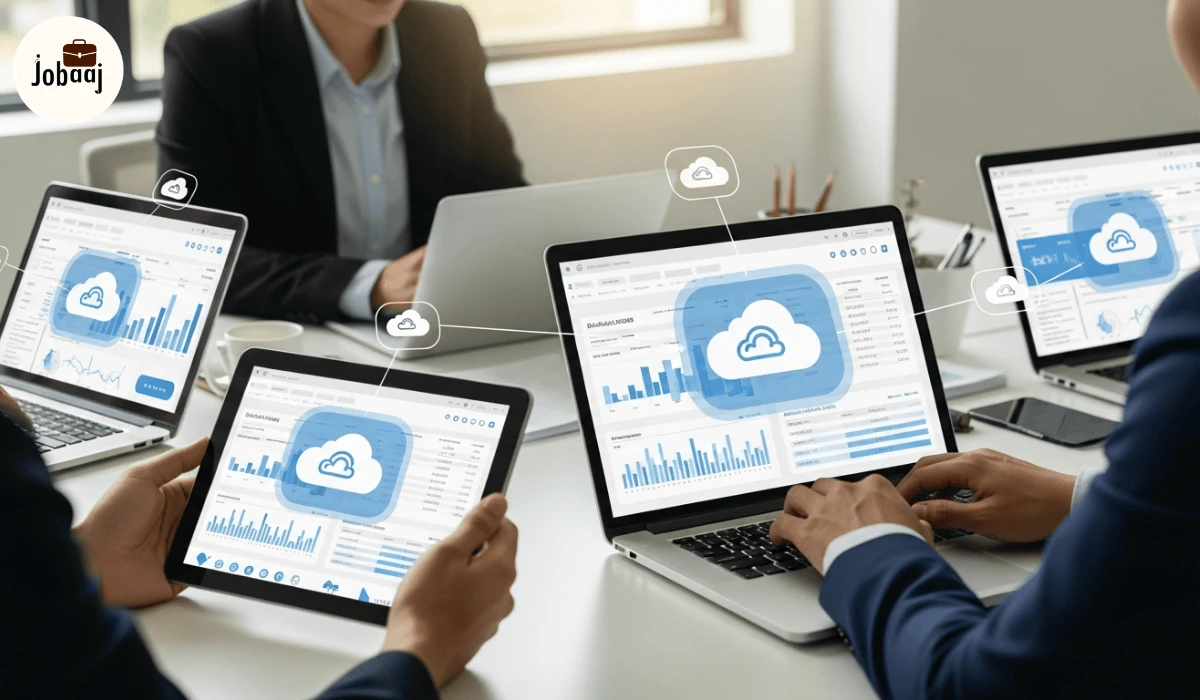
As the world of accounting continues to evolve, more chartered accountants are moving towards cloud accounting to improve their operational efficiency. Traditional accounting processes often involve a lot of manual work, outdated software, and a dependence on physical documents. This creates a bottleneck in workflow and increases the potential for errors. But cloud accounting is changing the game. It offers real-time data, automated tasks, and collaboration tools that benefit both CAs and their clients.
This case study will explore how a leading chartered accounting firm embraced cloud accounting to streamline its operations, reduce costs, and improve client satisfaction. By incorporating data-driven insights and advanced accounting software, the firm was able to tackle long-standing challenges in managing client records, inventory, and communication.
Smith & Co. Chartered Accountants
Smith & Co. is a well-established mid-sized accounting firm that has been offering financial services, including tax advisory, auditing, and consulting, to a broad spectrum of clients, from small businesses to large corporations. As the firm grew, so did the complexity of managing increasing client data, generating timely reports, and ensuring the accuracy of financial documents.
Prior to adopting cloud accounting, Smith & Co. used traditional accounting software installed on desktops, which limited real-time collaboration and made remote access a challenge. The process of managing vast amounts of client data was slow, prone to errors, and lacked flexibility. As the firm took on more clients, it became clear that its outdated accounting system was hindering its growth and its ability to provide superior service.
The Challenge: Overcoming Traditional Accounting Hurdles
Smith & Co. faced several operational issues due to its reliance on legacy accounting systems:
-
Manual Data Entry: A lot of time was spent on entering data manually, which was not only tedious but also prone to mistakes.
-
Limited Client Interaction: The firm struggled to offer clients real-time access to their financial data, which led to delays in decision-making.
-
Data Security: With traditional accounting software, data was stored locally, making it vulnerable to security breaches and difficult to access remotely.
-
Slow Reporting: Financial reports took time to compile, slowing down the firm’s ability to make timely decisions and communicate with clients.
Recognizing that these challenges were affecting their efficiency and client relationships, Smith & Co. decided it was time to move to a more agile and scalable solution—cloud accounting.
Objective: Transforming Operations with Cloud Accounting
The goal of adopting cloud accounting was simple: streamline operations, reduce errors, and improve service delivery to clients. Key objectives included:
-
Automating Data Entry: Eliminating manual data entry to reduce errors and free up time for more strategic work.
-
Improving Client Collaboration: Providing clients with real-time access to their financial data, enhancing transparency and collaboration.
-
Increasing Operational Efficiency: Reducing the time spent on compiling reports and streamlining accounting processes.
-
Enhancing Data Security: Securing sensitive client information by storing it on cloud-based systems with high-end encryption.
Approach: Transitioning to Cloud-Based Accounting
Smith & Co. embarked on a structured approach to adopting cloud accounting to meet the goals outlined above. They carefully evaluated several cloud accounting platforms before choosing one that would best align with their needs.
1. Choosing the Right Cloud Accounting Platform
The firm’s team of accountants worked closely with IT consultants to evaluate several cloud-based accounting software options. They selected Xero, a popular cloud accounting solution, due to its user-friendly interface, secure data storage, and the ability to integrate with other business tools.
The transition was made easier because Xero allowed for seamless integration with the firm’s existing tax software, payroll systems, and banking interfaces, making it a perfect fit for Smith & Co.
2. Data Migration and Integration
After selecting the platform, the firm focused on migrating data from their old systems to the cloud. The migration process involved:
-
Mapping and transferring client data, including historical financial information.
-
Integrating the firm’s accounting tools and banking systems to sync with the new platform.
-
Training the team on how to effectively use the platform’s features, such as real-time invoicing, automated bank reconciliations, and cloud-based financial reporting.
3. Training and Onboarding Clients
To ensure a smooth transition, Smith & Co. held training sessions for both their internal team and their clients. They guided their clients through the platform, showing them how to access financial data, track expenses, and generate reports in real time.
Results: What Happened After Implementing Cloud Accounting?
The firm experienced a number of positive outcomes after integrating cloud accounting into their workflow. Here’s a look at the major results:
-
Increased Efficiency: Smith & Co. reduced the time spent on manual data entry by 30%. With real-time syncing and automation of basic accounting tasks, the team was able to focus on more complex work, such as strategic financial planning and client consultation.
-
Faster Reporting: Generating financial reports used to take days, but with cloud accounting, reports were available at the click of a button. This allowed the firm to provide timely updates to clients, improving decision-making and reducing delays.
-
Better Client Collaboration: With clients now having 24/7 access to their financial data, the relationship became more transparent and collaborative. Clients appreciated the ability to monitor their financial situation in real-time, ask questions, and receive updates without the typical delays of traditional accounting methods.
-
Improved Data Security: The firm’s data was now stored on highly secure cloud servers, with built-in encryption and backups, reducing the risk of data loss or unauthorized access. This provided peace of mind to both the firm and its clients.
-
Cost Reduction: With cloud storage and automated invoicing, Smith & Co. saw a 15% reduction in operational costs. They also reduced the need for physical infrastructure to store documents, cutting down on overhead expenses.
Conclusion: Cloud Accounting as a Game Changer for Chartered Accountants
This case study illustrates the transformational power of cloud accounting for chartered accountants. For Smith & Co., the shift to the cloud wasn’t just about modernizing their systems—it was about improving their efficiency, enhancing client satisfaction, and setting themselves up for future growth.
By embracing cloud accounting, chartered accountants can automate routine tasks, provide better service to clients, and improve decision-making with real-time data. As the world of finance continues to evolve, cloud-based accounting platforms are undoubtedly going to be a key factor in helping firms stay competitive and deliver value to their clients.
FAQs
Cloud accounting is a modern approach to accounting where financial data is stored online, allowing businesses and accountants to access it remotely, in real-time.
Cloud accounting allows CAs to automate tasks, collaborate with clients in real-time, reduce manual errors, and access data remotely for better decision-making and improved client service.
Cloud accounting software offers features like real-time financial data access, automated invoicing, tax calculations, financial reporting, and secure data storage, all accessible from any device.
Cloud accounting improves efficiency by automating repetitive tasks, enhances collaboration with clients, provides real-time insights, and improves data security, helping firms stay competitive.
Cloud accounting improves client relationships by offering transparency, allowing clients to access their financial data at any time, and enabling quick responses to their queries, fostering trust and satisfaction.
Yes, cloud accounting platforms use advanced encryption protocols to ensure that your financial data is stored securely and is protected against unauthorized access or breaches.