Look around you. Your smartwatch is silently tracking your heart rate, your home assistant is waiting for your next command, and in smart factories across the globe, machines are "talking" to each other to prevent breakdowns before they happen. This is the Internet of Things (IoT) a massive, invisible web of connectivity that has moved from a futuristic concept to a cornerstone of modern life.
But behind every "smart" device is a human architect. As the world becomes more data-driven, the demand for IoT Experts has shifted from "wanted" to "essential." If you’ve ever wanted to work at the intersection of physical hardware and digital intelligence, there has never been a better time to start.
What is IoT, Really? (Beyond the Buzzword)
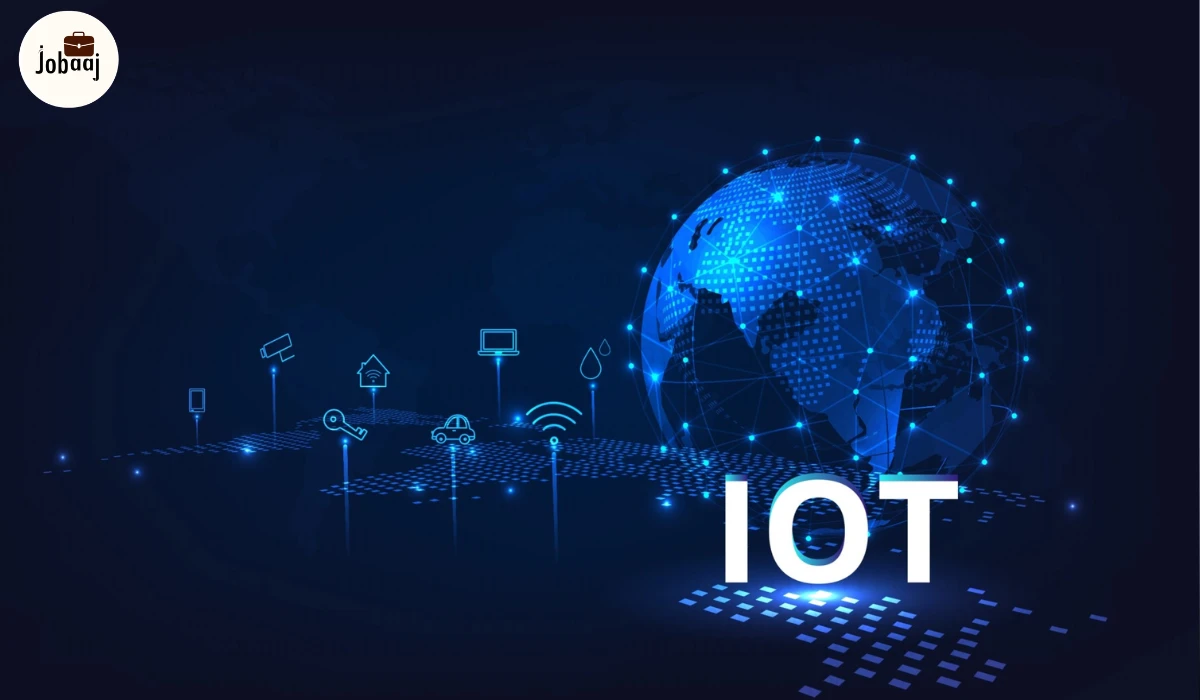
In its simplest form, the Internet of Things is a network of physical objects embedded with sensors, software, and other technologies for the purpose of connecting and exchanging data with other devices and systems over the internet.
It’s helpful to think of an IoT system in four layers:
-
The Perception Layer: The "Senses" (Sensors that collect data like temperature or motion).
-
The Network Layer: The "Nervous System" (Wi-Fi, 5G, or Bluetooth that transmits the data).
-
The Processing Layer: The "Brain" (Cloud or Edge servers that analyze the data).
-
The Application Layer: The "Action" (The app or interface where the user sees results).
Why a Career in IoT is a Future-Proof Bet
The reason IoT is a "recession-proof" skill is its versatility. You aren't just a coder; you are a problem solver for every industry imaginable:
-
Healthcare: Smart pacemakers and remote patient monitoring.
-
Sustainability: Smart grids that optimize energy consumption to fight climate change.
-
Manufacturing (Industry 4.0): Predictable maintenance that saves billions in factory downtime.
-
Agriculture: Sensors that tell farmers exactly when to water each individual plant.
The IoT Expert’s "Swiss Army Knife" Skill Set
To be an expert, you need to be a "T-shaped" professional: broad knowledge across many areas, with deep expertise in one.
1. Programming
-
Python: The go-to for data analysis and AI integration.
-
C/C++: Essential for writing code that runs on tiny, low-power microcontrollers (Embedded C).
-
JavaScript (Node.js): Popular for building the "bridge" between devices and web applications.
2. Hardware & Electronics
You don't need to be an electrical engineer, but you must understand:
-
Microcontrollers: The difference between an Arduino (simple logic) and a Raspberry Pi (mini-computer).
-
Sensors & Actuators: Knowing which sensor to use (Ultrasonic? Infrared? Humidity?) and how to trigger an action (motor, light, or valve).
3. Modern Networking Protocols
Standard "Internet" protocols aren't always enough. You need to master:
-
MQTT: The lightweight "standard" for IoT messaging.
-
LoRaWAN: For long-range, low-power communication (perfect for smart cities).
-
Edge Computing: Learning how to process data on the device instead of sending everything to the cloud.
Your Step-by-Step Roadmap to IoT Mastery
Step 1: Master the "Hello World" of Hardware
Start with an Arduino Starter Kit. Learn how to blink an LED, then move to reading a temperature sensor. This builds your "hardware intuition."
Step 2: Bridge the Gap with Networking
Learn how to connect your device to the internet. Try using an ESP32 chip (it has built-in Wi-Fi) to send sensor data to a simple web dashboard.
Step 3: Embrace the Cloud
This is where the "Big Data" happens. Learn how to use:
-
AWS IoT Core or Azure IoT Hub.
-
Learn how to store that data in a database and visualize it using tools like Grafana.
Step 4: Build a "Venture-Ready" Portfolio
Don't just build tutorials. Solve a real problem.
-
Project 1: An automated indoor garden that waters itself based on soil moisture.
-
Project 2: A wearable fall-detection device for the elderly that sends an SMS to family.
-
Project 3: An energy-monitoring system for your home that predicts your monthly bill.
The Challenges
Being an IoT expert isn't all easy. You will face:
-
Security Vulnerabilities: Every connected device is a potential entry point for hackers. Learning Encryption and Secure Boot is mandatory.
-
Fragmentation: There are hundreds of different standards; part of your job is picking the one that won't be obsolete in two years.
Career Outlook & Earnings (2026 Projections)
Because you bridge the gap between software and hardware, your value is higher than a standard developer.
-
IoT Developer / Embedded Engineer: 5–10 LPA (Entry) / 25+ LPA (Senior).
-
IoT Solutions Architect: This is the "End Game" role, designing massive city-wide systems, often earning 40–60 LPA+ in India or $160k+ globally.
Conclusion
The Internet of Things is more than just "smart" gadgets; it’s about making the physical world as intelligent and responsive as the digital one. It requires a curious mind, a bit of patience for debugging hardware, and a passion for real-world impact.
The next decade will be defined by how we connect the "unconnected." Will you be the one who builds those connections?
FAQs
You need programming, electronics, embedded systems, networking, and cloud computing knowledge to become an IoT expert.
Yes, IoT is a growing field with high demand across industries like healthcare, manufacturing, and smart cities.
Yes, basic understanding of electronics and microcontrollers is important because IoT involves physical devices.
Common languages include Python, C/C++, and JavaScript depending on the project and platform.
Yes, beginners can start with Arduino, simple projects, and gradually move to advanced IoT systems.