
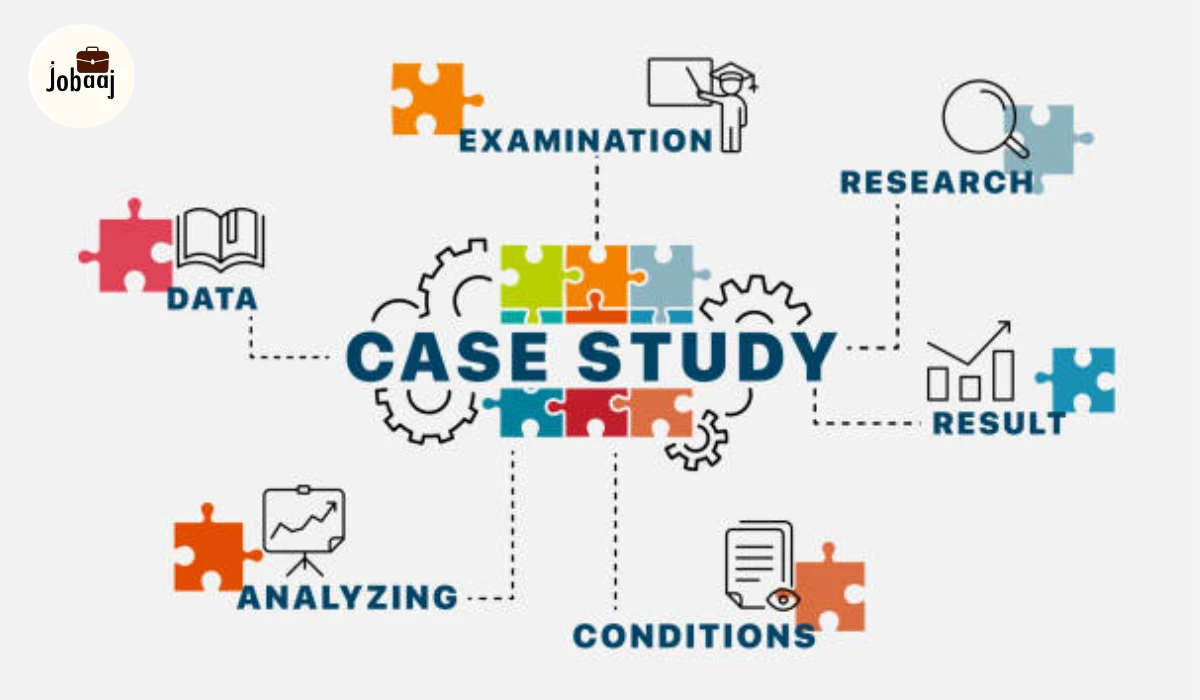
Business case studies can feel overwhelming at first. Whether you're preparing for a consulting interview, working on an MBA assignment, or solving real-world business problems, knowing how to approach these challenges systematically makes all the difference.
This guide will walk you through proven strategies to crack any business case study with confidence and precision.
What Is a Business Case Study?
A business case study presents a real or hypothetical business problem that needs solving. It tests your analytical thinking, problem-solving skills, and ability to communicate recommendations clearly.
These case studies appear in consulting interviews, business school programs, and corporate strategy sessions. They might involve declining sales, market entry decisions, pricing strategies, or operational inefficiencies.
The goal isn't just finding an answer - it's demonstrating structured thinking and business acumen throughout your approach.
Understanding the Case Study Framework
Before diving into solutions, you need the right framework. Think of frameworks as mental toolkits that organize your thinking and ensure you don't miss critical elements.
Popular frameworks include Porter's Five Forces for competitive analysis, the 4Ps of Marketing for marketing problems, and profitability frameworks for financial cases. Each framework serves specific problem types.
However, don't force-fit frameworks. The best consultants adapt and customize frameworks based on what the specific case demands.
Step 1: Listen Carefully and Take Notes
When the case is presented, active listening is crucial. Write down key facts, numbers, and the core problem statement as you hear them.
Many candidates rush to solve before fully understanding the problem. This leads to answers that miss the mark entirely.
Clarify any ambiguities immediately. Ask questions about unclear terms, confirm your understanding of objectives, and verify any constraints before proceeding.
Step 2: Structure Your Approach
Take 30-60 seconds to organize your thinking. This pause seems counterintuitive but saves time later and demonstrates professional discipline.
Outline the major areas you'll explore. For example, if it's a profitability case, you might structure it as: Revenue issues, Cost issues, and External factors.
Share your structure with the interviewer or team. This shows transparent thinking and allows them to guide you if you're heading off-track.
Step 3: Break Down the Problem
Complex business problems become manageable when broken into smaller components. Use logic trees or issue trees to decompose the main question into addressable parts.
For instance, declining profits can be broken into revenue problems and cost problems. Revenue further breaks into price and volume. Volume splits into market size and market share.
This hierarchical breakdown ensures you systematically cover all possibilities without getting overwhelmed or missing crucial angles.
Step 4: Analyze with Data and Logic
Now comes the analytical heavy lifting. Look at the data provided and identify what's most relevant to your hypothesis.
Perform calculations efficiently. In interviews, showing your math and explaining your thinking matters more than getting perfect numbers. Rough estimates with clear logic outperform silent calculations.
Look for patterns, anomalies, and trends. Compare figures across time periods, competitors, or segments to uncover insights that aren't immediately obvious.
Step 5: Develop Hypotheses
Great case solvers form hypotheses early and test them, rather than analyzing aimlessly. A hypothesis is an educated guess about what's causing the problem.
For example: "I hypothesize that our profitability decline is primarily driven by rising raw material costs rather than pricing pressure." Then you gather evidence to prove or disprove this.
Be willing to pivot. If data contradicts your hypothesis, acknowledge it and form a new one. Intellectual flexibility shows maturity and analytical rigor.
Step 6: Consider Multiple Perspectives
Business problems rarely have single-dimensional solutions. Consider financial, operational, competitive, and customer perspectives.
Think about short-term versus long-term implications. A solution that boosts quarterly profits might damage brand equity or customer relationships over time.
Also consider feasibility. Brilliant strategies that can't be implemented due to resource, regulatory, or organizational constraints aren't actually brilliant.
Step 7: Synthesize and Recommend
After analysis, synthesize your findings into clear, actionable recommendations. Start with your conclusion, then support it with key insights.
Use the "So what?" test. For every finding, ask yourself why it matters and what action it suggests. Numbers without implications are just data, not insights.
Prioritize your recommendations. If you have five suggestions, rank them by impact and ease of implementation. Decision-makers appreciate this clarity.
Step 8: Communicate Clearly
How you present matters as much as what you present. Use simple language and avoid unnecessary jargon that obscures your message.
Structure your communication using frameworks like the Pyramid Principle: lead with the answer, then provide supporting reasons and evidence.
In written case studies, use headlines, bullet points, and visuals to make your analysis scannable. In verbal presentations, maintain eye contact and engage your audience rather than reading from notes.
Tips for Consulting Interview Cases
In consulting interviews, your thought process matters more than your final answer. Interviewers want to see how you think, not just what you conclude.
Think out loud. Verbalize your reasoning, even when doing calculations. This gives interviewers insight into your analytical approach.
Stay calm under pressure. If you get stuck, acknowledge it and talk through possible approaches. Interviewers often provide hints if you show good reasoning.
Tips for Academic Case Studies
For business school cases, depth of research matters. Incorporate frameworks, theories, and real-world examples from your coursework.
Collaborate effectively if it's a group project. Divide work based on strengths but ensure everyone understands the full case to maintain consistency.
Pay attention to formatting requirements. Academic cases often have specific citation styles, word counts, and structural expectations that affect grades.
Building Your Case Study Skills
Practice is non-negotiable. Solve cases regularly from books, online platforms, or case study competitions to build pattern recognition.
Study real business news with a case study mindset. When you read about company challenges, pause and think how you'd approach solving them.
Get feedback from mentors, peers, or professional coaches. They'll catch blind spots in your thinking and suggest improvement areas you might miss alone.
Essential Resources and Tools
Case interview preparation books like "Case in Point" and "Crack the Case" provide frameworks and practice problems with solutions.
Online platforms like PrepLounge, Casecoach, and Management Consulted offer interactive case practice with peers and video tutorials.
Business publications like Harvard Business Review, McKinsey Quarterly, and The Economist help you understand current business challenges and solutions.
Developing Business Intuition
Read case studies from different industries to understand various business models and challenges. Each industry has unique dynamics worth learning.
Understand basic business metrics like gross margin, operating margin, customer acquisition cost, lifetime value, and market share. These appear constantly in cases.
Follow successful companies and study their strategies. Understanding why Amazon, Apple, or Toyota made certain decisions builds your strategic thinking muscles.
FAQs
A business case study is a detailed examination of a real-world business problem. It requires analyzing data, identifying issues, and proposing solutions. It helps improve decision-making and strategic thinking skills.
To analyze a business case study, start by understanding the case, breaking it into parts, and analyzing relevant data. Use frameworks like SWOT analysis to structure your approach.
Present a business case study clearly and logically. Start with the problem, followed by your analysis, and conclude with your well-reasoned solution, supported by data and examples.
Your case study solution should address the main problem, offer a feasible solution, and provide supporting data and recommendations for implementation. Make sure it's practical and tailored to the business context.
To improve your business case study skills, practice regularly, analyze various cases, and learn from others' solutions. Focus on improving your problem-solving, data analysis, and presentation abilities.