
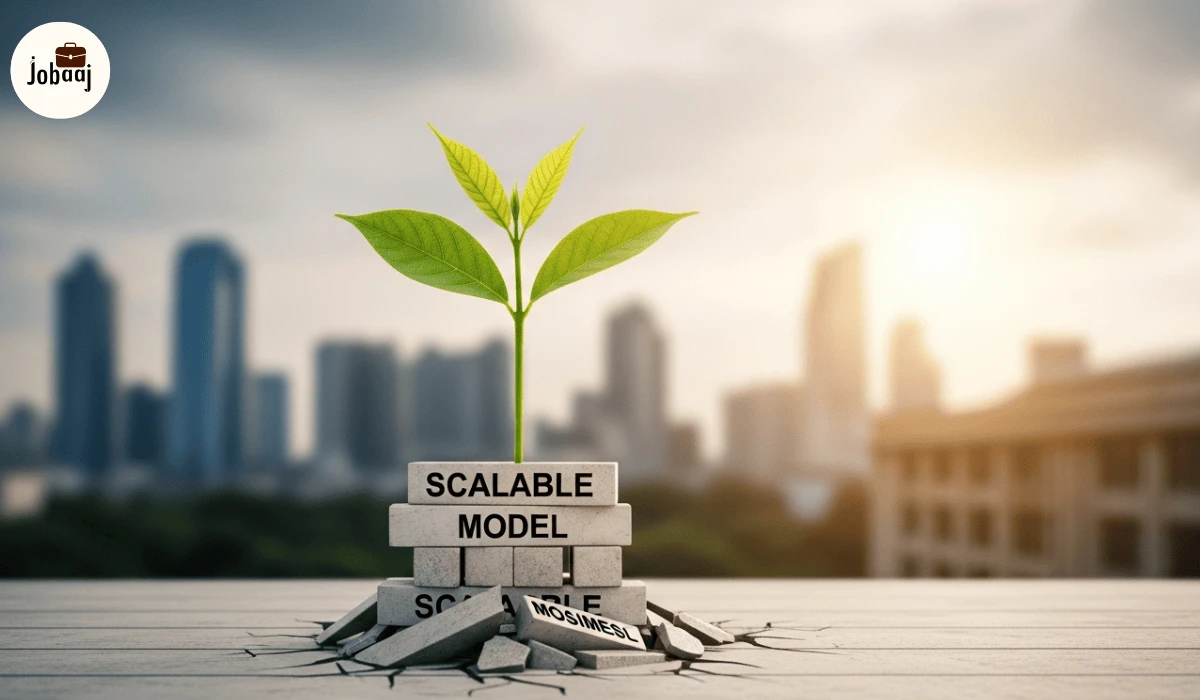
Starting a business is one of the most exciting journeys you can embark on. Imagine this: you’ve just launched your business, and you're filled with energy, passion, and a world of ideas. But here’s the catch while your excitement is infectious, there’s an underlying challenge every entrepreneur faces: how do you grow this business without losing yourself in the chaos?
Many entrepreneurs are so focused on getting their product or service out there that they miss the importance of creating a scalable business model right from the start. So, what exactly is scalability? Well, scalability in business is your ability to grow without your costs growing at the same rate. It’s about building a business that can handle more customers, more transactions, and more opportunities without breaking a sweat.
In this blog, we’ll dive into how to build a scalable business model from day one, setting the foundation for growth that can go the distance. Whether you're just starting or scaling your existing business, these insights will guide you to sustainable, long-term success.
Why Scalability Is the Key to Long-Term Growth
Think about it: growing your business means more customers, more orders, and more revenue. But what if that growth starts putting pressure on your resources? What if you find yourself scrambling to keep up with demand, only to see your profit margins shrinking because you have to hire more people or spend more money to meet that demand?
This is why scalability matters. It’s not just about making money; it’s about making money in a way that’s sustainable and efficient. A scalable business model allows you to grow faster without worrying about proportional increases in your costs.
Here’s why scalability is your golden ticket:
-
Sustainable Growth: It allows you to grow steadily without running into bottlenecks.
-
Increased Profitability: With the right model, you can increase revenue without significantly increasing costs.
-
Investor Appeal: Investors love businesses that are built for growth, as they represent lower risk and higher long-term returns.
Step 1: Understand Your Core Value Proposition
Before you even think about scaling, you need to understand why your business exists what value are you bringing to the table? Your value proposition is the heart and soul of your business. It's what makes customers choose you over the competition. If this isn’t crystal clear from the beginning, scaling will be much harder.
How to define your value proposition:
-
Research your market: What are your competitors offering, and how can you do it better or differently?
-
Know your audience: Who are you serving, and what problems are you solving for them? Understanding your audience’s pain points is key to crafting your offer.
-
Craft your message: What makes your product or service different? How do you communicate that to your customers in a way that resonates with them?
A strong value proposition is like the solid foundation of a house. If your foundation is strong, you can build up your business in the right way, which will be critical when it’s time to scale.
Step 2: Build Systems That Support Growth
When you’re in the early days of your business, things can feel manageable one or two people handling sales, customer service, inventory, and marketing. But as you grow, you need systems that can handle the load without losing quality or efficiency. Creating scalable systems is the key to not getting overwhelmed as your business expands.
How to build systems for scalability:
-
Automation is your friend: Automate repetitive tasks like invoicing, email marketing, and customer follow-ups. Tools like Zapier, Mailchimp, and QuickBooks can handle many administrative tasks, freeing you up to focus on growing the business.
-
Outsource wisely: As your workload increases, consider outsourcing tasks that aren’t core to your business. You can outsource everything from accounting to social media management, letting you focus on what you do best.
-
Invest in the right tools: Use cloud-based tools and software that can grow with you. Google Workspace, Salesforce, and Trello are great tools that can scale as your business expands.
These systems and tools will act as the backbone of your business, ensuring that even as you grow, you don’t lose control over quality and efficiency.
Step 3: Create a Scalable Sales and Marketing Strategy
It’s one thing to get a few customers. It’s another to scale customer acquisition without going crazy. A scalable sales and marketing strategy means you don’t have to rely on massive time investments or tons of new employees to increase your customer base.
How to scale your sales and marketing:
-
Content is king: Create valuable content that educates and attracts your target audience. Blog posts, videos, and infographics can work wonders, and they’re a great way to draw in new leads without constantly being on the grind.
-
Leverage digital marketing: Use platforms like Facebook Ads, Google Ads, and Instagram to reach a larger audience. With proper targeting, you can scale your marketing efforts effectively without having to significantly increase your marketing budget.
-
Referrals and testimonials: Word-of-mouth is one of the most powerful tools in marketing. Encourage referrals and collect customer testimonials that can be used in your marketing campaigns.
By using a mix of automated systems, smart marketing, and referrals, you can attract more customers while keeping your costs in check.
Step 4: Build a Team That Can Scale With You
As your business grows, you’ll need more hands on deck. However, scaling your team isn’t just about hiring more people it’s about building a team that can grow with the company. Having the right mix of in-house talent and outsourced partners is crucial to avoiding growing pains.
How to build a scalable team:
-
Hire strategically: In the early days, hire people who are flexible and can wear multiple hats. As you scale, bring in specialists who can handle specific tasks.
-
Outsource non-core tasks: Leverage contractors for tasks like marketing, IT support, and legal services to keep your overhead low.
-
Invest in training: As your team grows, provide ongoing training to ensure they understand your business’s core values and mission. This helps them scale with the business and maintain consistency.
By focusing on efficient team-building, you’ll have the talent you need without unnecessarily bloating your workforce.
Step 5: Ensure Robust Financial Management
The more you grow, the more complex your finances become. Scaling a business without sound financial management is like driving a car without brakes—you’ll eventually crash. To scale, you need to keep a close eye on cash flow, expenses, and profitability.
How to manage finances as you scale:
-
Monitor cash flow: Keep track of your incoming and outgoing cash. This helps ensure that you can cover your expenses even as you scale.
-
Reinvest in growth: Instead of taking profits out early on, reinvest them into the business to fund growth whether that’s through marketing, expanding your team, or improving your product.
-
Consider funding options: As your business grows, you may need external funding. Whether through loans, venture capital, or crowdfunding, securing funding at the right time can fuel your growth.
Proper financial management ensures that as your business scales, you don’t find yourself running into unexpected cash flow problems.
Step 6: Cultivate Strong Customer Relationships
Scaling your business means serving more customers, but with more customers comes more responsibility. You need to maintain strong relationships with your customers to keep them loyal and satisfied.
How to build customer loyalty:
-
Focus on customer service: Make sure your customers feel valued. Respond to inquiries promptly, offer personalized solutions, and be attentive to their needs.
-
Create loyalty programs: Encourage repeat business by offering rewards, discounts, or referral bonuses to customers who return or bring in new business.
-
Listen to feedback: Regularly ask for customer feedback to improve your products or services. When customers see you’re listening to them, they’re more likely to stick around.
Building strong customer relationships is crucial as you scale. Loyal customers are often your best advocates and can help you grow through referrals.
Conclusion:
Building a scalable business model from day one is all about laying a solid foundation. By focusing on your value proposition, creating efficient systems, and adopting a customer-first mentality, you’ll be ready for growth. Scaling isn’t just about increasing numbers it’s about building a business that can handle growth without breaking.
Take it step-by-step, and with the right strategies in place, you’ll set yourself up for long-term success. The future of your business is in your hands start scaling today, and watch your business soar to new heights.
FAQs
Scalability in business refers to the ability of a business to grow and handle increased demand without compromising efficiency or significantly increasing costs. It involves creating systems, processes, and strategies that allow the business to expand smoothly and sustainably.
Scalability is crucial because it enables a business to grow efficiently. A scalable business model allows for increased revenue without a proportional increase in costs, ensuring that the business can expand without overwhelming resources, personnel, or operations.
To create a scalable business model, start by defining your value proposition, building efficient systems for automation and operations, and crafting a sales and marketing strategy that can grow with your customer base. Additionally, focus on building a flexible team and managing finances effectively to support growth.
There are several tools that can help scale a business, including automation platforms like Zapier, marketing tools like Mailchimp and HubSpot, financial management tools like QuickBooks, and project management tools like Trello and Asana. These tools help streamline processes and reduce manual work, allowing for more efficient growth.
A scalable sales and marketing strategy can be built by creating valuable content that attracts customers, leveraging digital marketing platforms like Google Ads and social media, and encouraging referrals and testimonials. Automation and data-driven targeting can also help scale marketing efforts efficiently without increasing costs dramatically.
Focus on hiring strategic, adaptable employees in the early stages who can wear multiple hats. As you scale, bring in specialists to handle specific tasks. Outsourcing non-core functions and investing in employee training can also help build a team that can grow with your business.