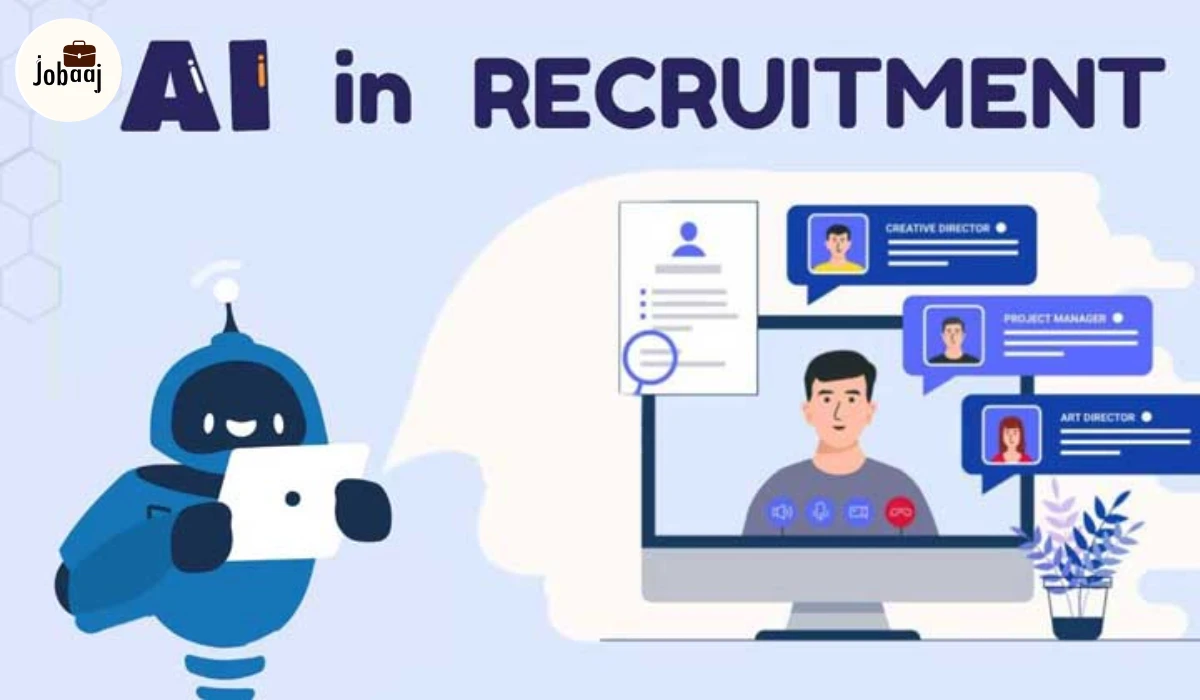
Artificial Intelligence is transforming how companies find, screen, and hire talent. In 2026, 87% of companies use AI for their recruitment process, and the technology has become essential for staying competitive in today's fast-paced hiring market.
The recruitment landscape has changed dramatically. Companies like Goldman Sachs receive over 300,000 applications for internships, while Google gets 3 million applications annually. Managing this volume manually is impossible, which is why AI has become a game-changer for recruitment teams worldwide.
This guide explains how AI works in recruitment, its benefits, practical applications, best tools available, and how to implement it successfully in your hiring process.
What is AI Recruitment?
AI recruitment uses artificial intelligence technologies like machine learning, natural language processing, and data analytics to automate and optimize hiring processes. It helps recruiters handle repetitive tasks, analyze candidate data, and make smarter hiring decisions faster.
Think of AI as a highly efficient assistant that never gets tired. It can screen thousands of resumes in minutes, schedule interviews automatically, engage with candidates through chatbots, and even predict which candidates are most likely to succeed in specific roles.
The AI in talent acquisition market is predicted to grow to $1.35 billion in 2026 at an 18.9% growth rate, and reach $2.67 billion by 2029, proving that this technology is here to stay and will only become more important for recruitment teams.
How AI is Changing Recruitment in 2026
Faster Hiring Processes
AI can help recruiters sort job applications in much shorter periods by scanning electronic applications for keywords relating to industry experience, qualifications, and particular skills, and quickly eliminating irrelevant candidates. What used to take days now happens in minutes.
Traditional resume screening takes 20-30 minutes per applicant. With AI, thousands of applications are processed simultaneously, dramatically reducing time-to-hire and allowing recruiters to focus on engaging with top candidates instead of drowning in paperwork.
Improved Candidate Experience
52% of candidates say they would decline an otherwise attractive offer if they have had some type of negative experience during the recruiting process. AI helps create better experiences through instant communication, personalized interactions, and faster response times.
Chatbots powered by AI can answer candidate questions 24/7, provide application status updates, and keep everyone informed throughout the hiring journey. This level of engagement was impossible with traditional manual processes.
Better Quality of Hire
AI doesn't just work faster - it works smarter. By analyzing data patterns from successful hires, AI can predict which candidates are most likely to perform well and stay with the company long-term. This data-driven approach leads to better hiring decisions than relying solely on gut feelings.
Reduced Bias and More Diversity
When properly trained, AI can help reduce unconscious bias in hiring. It evaluates candidates based on skills and qualifications rather than factors like name, gender, or educational background. Organizations that align AI recruiting tools with clear objectives report up to a 48% increase in diversity hiring effectiveness.
However, it's crucial to regularly audit AI systems to ensure they're not perpetuating historical biases from training data.
Key Benefits of Using AI in Recruitment
Time and Cost Savings
Organizations report up to a 30-40% drop in cost-per-hire when using AI recruitment tools. Using conversational AI in hiring led to an 87.64% reduction in financial costs compared to traditional methods in some scenarios.
Recruiters spend 20-30% of their time on administrative tasks that AI can automate. This freed-up time allows them to focus on relationship building, employer branding, and strategic initiatives that truly require human touch.
Enhanced Productivity
92% of firms say they are already seeing the benefits of AI in recruitment, and more than 10% report productivity gains of over 30%. Teams can handle more positions, engage with more candidates, and fill roles faster than ever before.
Better Candidate Matching
AI analyzes hundreds of data points to match candidates with roles. It goes beyond keyword matching to understand context, experience relevance, and skill transferability. This results in better fit and higher retention rates.
Proactive Talent Sourcing
Instead of waiting for applications, AI can surface high-potential candidates before they even apply, helping recruiters engage talent earlier and more meaningfully. This proactive approach is crucial for competitive roles and passive candidates.
Consistent Interview Quality
AI interviews showed significantly higher conversational quality and more relevant, well-structured questions than their human counterparts, with lower standard deviation in quality scores, ensuring higher consistency and creating a fairer process for all candidates.
How AI Works in Different Recruitment Stages
Job Description Creation
AI tools like Textio help write better job descriptions by analyzing language patterns and suggesting improvements. They ensure descriptions are inclusive, engaging, and optimized to attract diverse talent pools.
The AI recommends removing gender-coded words, suggests more compelling descriptions, and predicts how well the posting will perform based on historical data. This results in higher application rates from qualified candidates.
Candidate Sourcing
AI-powered sourcing tools search millions of profiles across multiple platforms to find candidates matching your requirements. Tools like Juicebox, HireEZ, and SeekOut use natural language processing to understand job requirements and find relevant candidates automatically.
Instead of spending hours on LinkedIn and job boards, recruiters can describe who they're looking for in plain language, and AI delivers a curated list of potential candidates.
Resume Screening
This is where AI shines brightest. 88% of companies already use some form of AI for initial candidate screening. AI screens resumes instantly, ranking candidates based on qualifications, experience, skills, and job fit.
It can identify transferable skills, understand context (like career breaks), and score candidates objectively. The best part? It eliminates human fatigue and bias that creep in when reviewing the 500th resume.
Pre-Employment Assessments
AI platforms like HackerRank and Codility assess technical skills objectively through automated coding challenges. Other tools evaluate soft skills, personality traits, and cultural fit through gamified assessments and video interviews.
These assessments provide objective data that complements traditional interviewing, helping make more informed decisions about candidate capabilities.
Interview Scheduling
Tools like GoodTime and Calendly with AI capabilities automate the entire scheduling process. They check availability across multiple calendars, suggest optimal times, send reminders, and handle rescheduling - all without human intervention.
This eliminates the back-and-forth emails that typically delay hiring processes and frustrate candidates.
AI-Powered Interviews
Platforms like Metaview and HireVue conduct initial video interviews, transcribe conversations in 90+ languages, analyze responses, and provide insights on candidate suitability. Some can even assess non-verbal cues and communication styles.
Recruiters receive detailed summaries and highlights, allowing them to review multiple interviews quickly and focus deeper attention on top candidates.
Candidate Engagement
AI chatbots maintain continuous engagement with candidates, answering questions, providing updates, collecting feedback, and nurturing relationships. They can handle hundreds of conversations simultaneously, ensuring no candidate feels ignored.
Automated email sequences keep candidates warm throughout long hiring processes, significantly reducing drop-off rates.
Predictive Analytics
Advanced AI analyzes historical hiring data to predict which candidates will succeed, how long they'll stay, and which sources yield the best hires. This intelligence helps optimize recruitment strategies continuously.
Popular AI Recruitment Tools in 2026
Comprehensive Platforms
Greenhouse - Full-featured ATS with AI-powered workflows, structured hiring processes, and extensive integrations. Ideal for mid-sized to large companies prioritizing consistency and compliance.
Lever - Combines ATS and CRM capabilities with AI candidate matching and relationship management. Great for companies focused on building talent pipelines.
Workable - User-friendly platform with AI resume parsing, candidate scoring, and automated workflows. Perfect for small to mid-sized businesses.
iCIMS - Enterprise-grade talent acquisition platform with advanced AI capabilities for screening, matching, and analytics.
AI Sourcing Tools
Juicebox (PeopleGPT) - Searches 800M+ profiles across 30+ sources using natural language queries. Excellent for finding hard-to-find technical talent.
HireEZ - AI-powered sourcing from web profiles with automated outreach capabilities. Strong for passive candidate engagement.
SeekOut - Specializes in diversity sourcing with deep search capabilities and extensive profile database.
Findem - Uses AI for talent finding, sourcing automation, and market insights. Good for data-driven recruitment strategies.
Resume Screening & Matching
Ideal - Automates resume screening and candidate ranking using machine learning. Integrates with major ATS systems.
Manatal - AI-based candidate recommendations with social media enrichment and powerful search functions.
Zoho Recruit - Affordable ATS with AI resume parsing and candidate matching. Starts at $25/user/month.
Interview Tools
Metaview - Automates interview note-taking and transcription with comparative candidate analysis. Integrates with major ATS platforms.
HireVue - Video interviewing platform with AI assessment capabilities. Trusted by large enterprises.
Hirevire - AI video interview tool with automated transcription in 90+ languages. Entry plans from $99/month.
Communication & Engagement
Textio - Optimizes job descriptions and recruitment communications for inclusivity and engagement using augmented writing.
Paradox (Olivia) - Conversational AI assistant handling screening, scheduling, and candidate engagement through chat.
Specialized Solutions
Eightfold - Talent intelligence platform with AI-driven talent matching and career pathing capabilities.
Phenom - AI-powered talent experience platform focusing on personalized candidate journeys.
Recruiterflow - AI-first platform built for recruiting agencies with end-to-end automation. Starts at $85/user/month.
How to Implement AI in Your Recruitment Process
Step 1: Identify Your Pain Points
Start by understanding where your current process needs improvement. Are you struggling with high application volumes? Slow time-to-hire? Poor candidate quality? Low diversity? High drop-off rates?
Organizations should start with clear objectives tied to business impact, not just process efficiency. Without specific goals, you can't measure success or choose the right tools.
Step 2: Map Your Current Process
Document your existing recruitment workflow from job posting to onboarding. Identify which stages are most time-consuming, where candidates drop off, and what tasks recruiters find most tedious.
Understanding your baseline helps you select tools that address actual needs rather than adding unnecessary complexity.
Step 3: Choose the Right Tools
Based on your pain points and budget, select tools that integrate well with your existing systems. Consider starting with one area - like resume screening or interview scheduling - before expanding to comprehensive solutions.
Look for tools with strong customer support, clear pricing, and proven results in your industry. Request demos and trial periods to test functionality before committing.
Step 4: Ensure Data Quality
AI is only as good as the data it learns from. Ensure your historical hiring data is clean, complete, and unbiased. Remove outdated information and standardize formats across your systems.
Poor data quality leads to poor AI recommendations, so invest time in data preparation before implementation.
Step 5: Train Your Team
Provide comprehensive training on new AI tools. Help recruiters understand how AI works, its limitations, and how to interpret its recommendations. Address concerns about job security proactively.
The goal is human-AI collaboration, not replacement. Successful implementations happen when teams embrace AI as a helpful assistant rather than viewing it as a threat.
Step 6: Start Small and Scale
Begin with a pilot program for one department or role type. Measure results carefully against your baseline metrics. Gather feedback from recruiters and candidates about their experience.
Once you've proven value and worked out initial issues, expand to other areas gradually. This minimizes disruption and allows continuous refinement.
Step 7: Monitor for Bias
Regularly audit AI systems to ensure they're not discriminating against protected groups. New York City's Local Law 144 requires an annual bias audit and candidate notices before using automated employment decision tools in hiring.
Test how AI treats resumes with different names, backgrounds, and career paths. Address any disparities immediately by retraining models or adjusting algorithms.
Step 8: Maintain Human Oversight
AI should augment human decision-making, not replace it entirely. Only 31% of recruiters let AI decide whether they should hire someone, while 75% would be open to the idea provided that human involvement exists in the process.
Keep humans involved in final decisions, especially for subjective assessments like cultural fit and leadership potential that AI struggles to evaluate accurately.
Step 9: Measure Results Continuously
Track key metrics like time-to-hire, cost-per-hire, quality of hire, diversity metrics, and candidate satisfaction. Compare these against your baseline to quantify AI's impact.
Most organizations see positive ROI within 3-6 months, with time savings of 30-50% and cost reductions of 30-40%.
Best Practices for AI Recruitment
Be Transparent with Candidates
66% of adults in the United States say they will not apply for a job that uses AI to help make hiring decisions, and only 26% of applicants trust AI to evaluate them fairly.
Combat this skepticism by clearly communicating how AI is used in your process, assuring candidates that humans make final decisions, and explaining how the technology ensures fairness. Transparency builds trust.
Focus on Candidate Experience
Don't let automation make your process feel robotic. Use AI to speed up responses and eliminate delays, but maintain personal touches. Have humans send personalized messages at key stages, conduct face-to-face interviews, and provide feedback.
AI should make your process faster and smoother, not more impersonal.
Regularly Update AI Models
Hiring needs and job markets evolve constantly. Retrain AI models regularly with fresh data to maintain accuracy. Update job requirements, skill priorities, and evaluation criteria as your business changes.
Stale models lead to poor recommendations and missed opportunities.
Combine AI with Human Judgment
Use AI for data-heavy tasks like screening and matching, but rely on humans for nuanced evaluations. AI-powered technology is meant to speed up time-consuming manual processes so recruiters can focus on more valuable human initiatives; AI is not meant to replace human recruiters.
The best results come from collaboration where AI handles volume and consistency while humans provide empathy, judgment, and strategic thinking.
Prioritize Data Security
Recruitment involves sensitive personal information. Ensure AI tools comply with data protection regulations like GDPR. Choose vendors with strong security practices, data encryption, and clear privacy policies.
Be transparent about data usage and give candidates control over their information.
Challenges and How to Overcome Them
Concern: AI Will Replace Recruiters
Reality: AI is more likely to complement, not replace, human workers. The most successful AI implementations amplify human judgment by handling routine tasks and surfacing insights that might otherwise be missed.
Solution: Position AI as a tool that elevates recruiters' roles, allowing them to focus on strategic activities like employer branding, relationship building, and candidate experience instead of administrative work.
Challenge: High Initial Costs
Reality: Enterprise AI tools can be expensive, especially for small businesses.
Solution: Start with affordable tools ($25-100/month) like Zoho Recruit or Hirevire. Calculate ROI based on time saved and improved hiring quality. Many tools offer free trials - use them to prove value before full investment.
Challenge: Resistance to Change
Reality: Teams comfortable with existing processes may resist new technology.
Solution: Involve recruiters early in tool selection. Provide comprehensive training. Share success stories and metrics showing how AI makes their jobs easier. Celebrate early wins to build momentum.
Challenge: Technical Integration Issues
Reality: AI tools need to work with existing ATS, HRIS, and other systems.
Solution: Prioritize tools with robust integration capabilities. Work with vendors' implementation teams. Start with standalone tools that don't require deep integration if your systems are complex.
Challenge: Algorithmic Bias
Reality: AI can perpetuate biases from historical hiring data.
Solution: Conduct regular bias audits. Use diverse training data. Test AI recommendations against real-world outcomes across demographic groups. Maintain human oversight of AI decisions. Choose vendors transparent about bias mitigation efforts.
Challenge: Candidate Distrust
Reality: Many candidates are skeptical of AI evaluation.
Solution: Communicate clearly about AI usage. Emphasize human involvement in final decisions. Provide personalized feedback. Ensure candidates can contact real people with questions. Demonstrate how AI ensures fairness.
The Future of AI in Recruitment
Conversational AI Agents
The next evolution involves agentic AI systems that independently handle sourcing, recruiting, and hiring workflow-dependent tasks. These agents will autonomously execute complex recruitment strategies with minimal human intervention.
Hyper-Personalization
AI will create unique candidate experiences tailored to individual preferences, communication styles, and career goals. Every interaction will feel personally crafted rather than mass-produced.
Predictive Workforce Planning
Advanced AI will forecast future skill needs, predict turnover, identify internal mobility opportunities, and recommend proactive hiring strategies before positions become critical.
Skills-Based Hiring
AI will shift focus from credentials to demonstrated skills and potential. It will identify transferable skills from non-traditional backgrounds, opening opportunities to diverse talent pools currently overlooked.
Continuous Learning Systems
AI models will learn from every hiring decision, constantly improving recommendations. They'll identify what characteristics predict success in your specific organization and adapt strategies accordingly.
Real-World Success Metrics
Companies successfully implementing AI in recruitment report impressive results:
- Time Savings: 40-50% reduction in time spent on administrative tasks
- Cost Reduction: 30-40% decrease in cost-per-hire
- Quality Improvement: 14% more AI-selected candidates pass interviews
- Diversity Gains: Up to 48% increase in diversity hiring effectiveness
- Faster Hiring: Average time-to-hire reduced by 30-50%
- Better Experience: Significant improvement in candidate satisfaction scores
These aren't just theoretical benefits - they're proven outcomes from organizations across industries and sizes.
FAQs
AI helps in recruitment by automating tasks like resume screening, candidate engagement, and interview scheduling. It also provides predictive analytics to help HR teams make better hiring decisions.
AI streamlines hiring by reducing the time spent on manual tasks, cutting costs, improving decision-making, and ensuring a bias-free hiring process.
Yes, AI helps reduce unconscious bias by focusing on job-relevant qualifications and eliminating factors like age, gender, and ethnicity from the selection process.
AI improves candidate experience by providing faster responses, clearer communication, and more transparency throughout the hiring process.
AI tools like chatbots, resume screening software, and predictive analytics platforms can help streamline various stages of recruitment, from candidate sourcing to selection.