
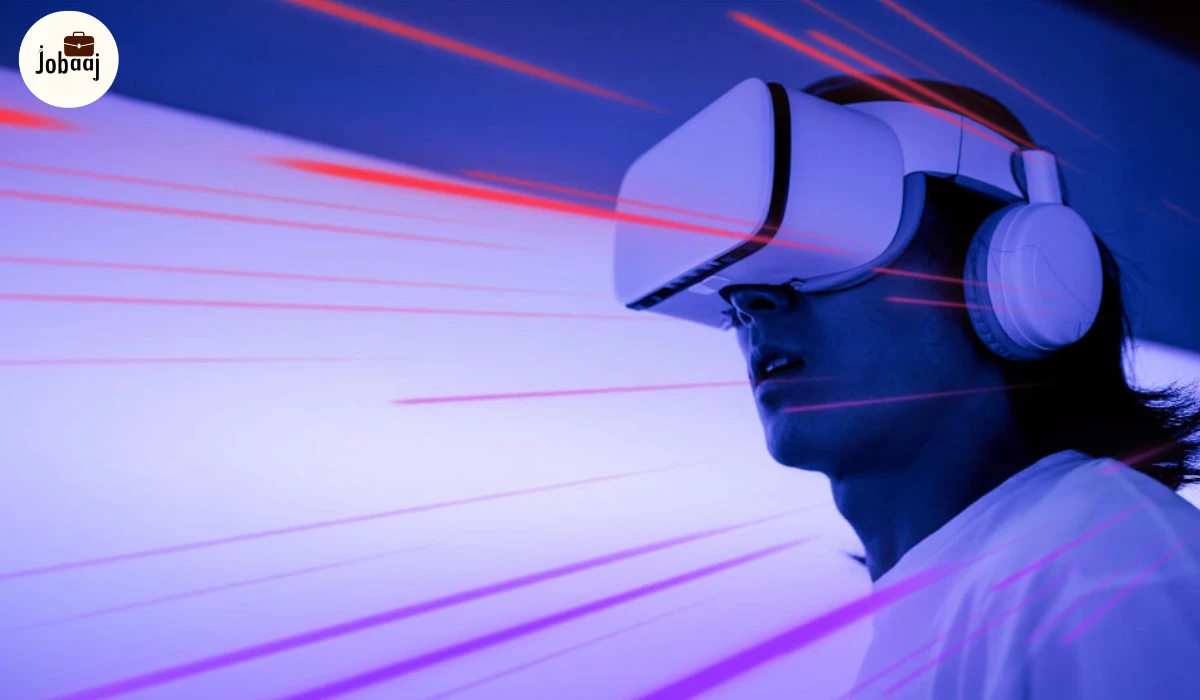
A few years ago, technologies like Augmented Reality (AR) and Virtual Reality (VR) felt like something straight out of science fiction. Today, they are shaping real industries from gaming and healthcare to education and e-commerce.
You might have already experienced AR while using Instagram filters or VR while watching immersive 360-degree videos. But beyond these experiences lies a fast-growing career space where professionals are building interactive, immersive digital worlds.
Companies are now investing heavily in AR/VR to create better user experiences, train employees, and even perform complex surgeries. This has opened up exciting career opportunities for students and professionals who want to work at the intersection of technology, creativity, and innovation.
If you’re wondering how to start a career in AR/VR, what skills you need, and how to actually enter this field, this guide will walk you through everything step by step.
What is AR and VR?
Before jumping into the career path, let’s understand the basics.
Augmented Reality (AR) adds digital elements to the real world.
Example: Snapchat filters, Pokémon Go
Virtual Reality (VR) creates a completely immersive digital environment.
Example: VR gaming, virtual simulations
Both technologies aim to enhance user interaction, but in different ways.
Why AR/VR is a Growing Career Field
The demand for AR/VR professionals is increasing rapidly because:
- Companies want immersive user experiences
- Gaming and entertainment industries are expanding
- Healthcare uses VR for training and therapy
- Education is becoming more interactive
- E-commerce uses AR for virtual product trials
This means more job opportunities, higher salaries, and long-term career growth.
Skills Required to Work in AR/VR
To build a career in AR/VR, you need a mix of technical and creative skills.
1. Programming Skills
Languages commonly used:
- C# (for Unity)
- C++ (for Unreal Engine)
- JavaScript (for WebAR/WebVR)
Programming is essential because AR/VR applications are interactive and dynamic.
2. Understanding of 3D Concepts
You should be familiar with:
- 3D modeling
- Animation basics
- Spatial design
Tools like Blender or Maya are often used.
3. AR/VR Development Platforms
You must learn how to work with industry tools such as:
- Unity
- Unreal Engine
These platforms help you build immersive environments and applications.
4. UX/UI Design for AR/VR
Designing for AR/VR is different from normal apps.
You need to understand:
- User interaction in 3D space
- Gesture-based controls
- Immersive experience design
5. Problem-Solving and Creativity
AR/VR is not just about coding. It’s about creating experiences.
You need to think:
- How users will interact
- How to make experiences realistic
- How to solve real-world problems
Step-by-Step Guide to Start a Career in AR/VR
Let’s break this into clear steps you can actually follow.
Step 1: Understand the Basics
Start with fundamentals:
- What is AR and VR
- How they are used in industries
- Differences between AR, VR, and MR
Watch tutorials, read blogs, and explore examples.
Step 2: Learn Programming
Pick one language to start:
- C# if you choose Unity
- C++ if you prefer Unreal Engine
Focus on:
- Logic building
- Object-oriented programming
Step 3: Learn a Development Engine
Choose one engine and go deep into it.
Unity (Beginner Friendly)
- Widely used
- Strong community support
Unreal Engine (Advanced Graphics)
- Better for high-quality visuals
- Used in gaming and simulations
Step 4: Explore AR/VR Tools and SDKs
You’ll need to work with specific tools:
- ARKit (iOS)
- ARCore (Android)
- Oculus SDK (VR development)
These help you build real-world AR/VR applications.
Step 5: Build Projects
This is the most important step.
Start small:
- Simple AR app (place objects in real world)
- Basic VR environment (virtual room or game)
Then move to advanced projects.
Projects prove your skills more than certificates.
Step 6: Create a Portfolio
Your portfolio should include:
- 2–4 strong AR/VR projects
- Screenshots and demo videos
- Explanation of your work
This is what recruiters care about.
Step 7: Apply for Roles
Common job roles in AR/VR:
- AR Developer
- VR Developer
- XR Engineer
- Unity Developer
- 3D Designer
You can apply through:
- Job portals
- Freelancing platforms
Career Opportunities in AR/VR
You can work in multiple industries:
- Gaming
- Healthcare
- Education
- Real estate
- Retail and e-commerce
This makes AR/VR a very versatile career path.
Salary Expectations (India)
Here’s a rough idea:
- Freshers: 4–8 LPA
- Mid-level: 8–18 LPA
- Experienced: 20+ LPA
Freelancers and specialists can earn even more depending on projects.
Challenges in AR/VR Careers
It’s not all easy. You should also know the challenges:
- High learning curve
- Requires both technical and creative skills
- Hardware dependency (VR headsets, devices)
- Rapidly evolving technology
But these challenges also make the field exciting.
Tips to Succeed in AR/VR
- Focus on hands-on projects
- Stay updated with new tools and trends
- Join developer communities
- Learn from real-world applications
- Keep experimenting
Conclusion
Working in Augmented and Virtual Reality is no longer just a niche career option. It is becoming one of the most exciting and high-growth fields in technology.
If you are someone who enjoys building interactive experiences, solving problems creatively, and working on cutting-edge technology, AR/VR could be the perfect career path for you.
Start small, stay consistent, and focus on building real projects. Over time, you’ll develop the skills needed to work in this future-driven industry.
FAQs
Start by learning programming, understanding AR/VR basics, mastering tools like Unity or Unreal Engine, and building practical projects to showcase your skills.
Yes, coding is important. Languages like C#, C++, and JavaScript are commonly used to build AR/VR applications.
Unity is generally easier for beginners due to its simplicity and strong community support, while Unreal Engine is better for advanced graphics.
You can work as an AR Developer, VR Developer, XR Engineer, Unity Developer, or 3D Designer in industries like gaming, healthcare, and education.
Yes, AR/VR is a rapidly growing field with increasing demand, making it a strong and future-proof career option.