
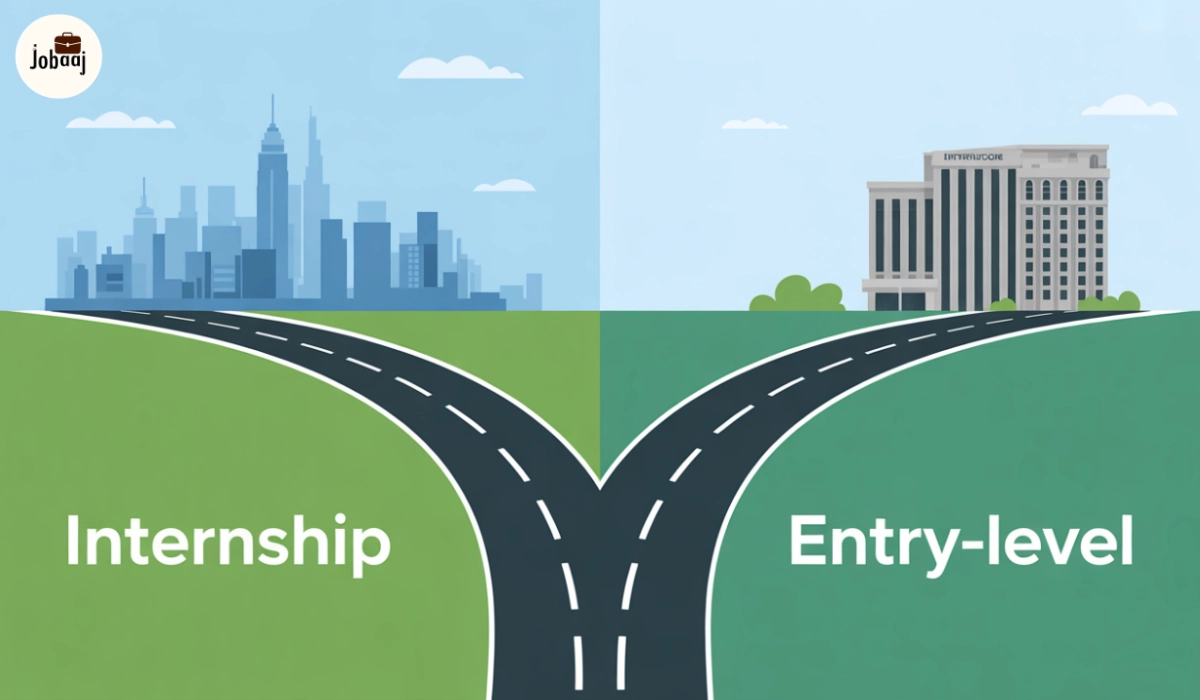
Ever felt like you’re standing at a crossroads, wondering whether to take an internship or jump straight into an entry-level job? You’re not alone. The career journey can feel like a maze, with so many options to choose from. It’s like standing in front of a menu with so many delicious choices and trying to figure out what’s best for you.
Think of it this way: choosing between an internship and an entry-level job is like deciding between a test drive and actually buying the car. One lets you get a feel for the ride without the commitment, and the other puts you behind the wheel for the long haul. If you’re unsure which path to take, this guide will help clear up the confusion and steer you in the right direction.
Exploring the Internship Route
Picture an internship as your golden ticket to the career world. It’s the perfect way to dip your toes in without diving headfirst. You get a taste of what the job is really like – the daily grind, the challenges, and the company culture. It’s a chance to learn, grow, and see if the field is the right fit for you.
Internships come in all shapes and sizes. Some are paid, others are unpaid. They can last anywhere from a few weeks to several months, depending on the company and role. But what’s common across all internships is the chance to gain hands-on experience. You’re not just sitting around; you’re actively involved, whether that’s assisting in projects, conducting research, or learning new skills. It’s practical, and it’s invaluable.
Let’s say you’re interning at a tech company. Your job might include testing software, assisting developers, or even contributing to a live project. This isn’t just busywork; you’re part of the team, learning the ropes while adding value. That’s something future employers will notice. Internships give you real-world experience that sets your resume apart from the crowd.
But there’s more to internships than just skills. They’re a networking goldmine. Building relationships with industry professionals can unlock doors to future job opportunities. The connections you make during an internship could very well lead to a full-time offer down the road.
Diving into Entry-Level Jobs
Now, an entry-level job is a whole different ballgame. This is where you step up and officially start your career. Unlike internships, you’re no longer learning the ropes – you’re expected to perform. You have real responsibilities, and your work directly impacts the company.
The biggest perk of entry-level jobs? They always come with a salary and benefits. No more relying on pocket change or a stipend. As a full-fledged employee, you get the stability of a regular paycheck and the chance to grow within the company. You’re not just testing the waters anymore; you’re swimming in the deep end.
Imagine landing your first marketing job. As an entry-level marketing associate, you might find yourself managing social media campaigns, writing content, or handling analytics. You’re not just assisting; you’re contributing to the success of the team. And with a solid work ethic, entry-level roles can offer clear opportunities for career advancement. With time, you can climb the ladder and move into higher positions.
One of the most attractive aspects of entry-level jobs is the structure they offer. There’s a clear path forward, and the benefits – from health insurance to paid time off – provide a sense of stability that internships can’t always match.
Making the Right Choice for You
So, which path should you choose? Internship or entry-level job? The answer isn’t always straightforward, and it really depends on where you are in life and what your career goals are.
Still in school or just finishing up your degree? An internship might be the perfect choice. It’s a chance to gain valuable experience while still in the safety of academia. Plus, it can help you build the skills and connections you need to land that first full-time job.
On the other hand, if you’ve graduated and are ready to dive into the workforce, an entry-level job could be your best bet. You’ll be earning a paycheck, building your career, and gaining experience all at once. It’s a more structured approach, but it comes with stability.
Your financial situation is also worth considering. Can you afford an unpaid internship, or do you need the immediate income that comes with an entry-level job? Think about what works best for you right now.
Also, think about your long-term goals. What experience will set you up for success in your dream role? An internship might be the bridge to an entry-level job, allowing you to showcase your skills and impress the company. Or, if you’re ready for the full-time grind, an entry-level role will give you that official start.
At the end of the day, the choice is yours. Whether you choose to dip your toes in with an internship or take the plunge into an entry-level job, remember that both are important steps in your career journey. Every experience, no matter how small, is a building block towards your future.
In the world of internships vs. entry-level jobs, there’s no right or wrong path – only the one that feels right for you.
FAQs
Internships are typically short-term, often unpaid, for experience. Entry-level jobs are full-time, paid positions with defined responsibilities and career progression.
It depends on your goals. Internships build skills and connections; entry-level jobs offer immediate income and responsibility. Consider your financial needs and career aspirations.
Unpaid internships can be valuable for gaining experience and networking, especially in competitive fields. Weigh the benefits against the opportunity cost of foregoing paid work.
Entry-level responsibilities vary by field, but generally involve basic tasks within a specific role, allowing for skill development and professional growth under supervision.
Utilize online job boards, company websites, university career services, and networking events to find suitable opportunities. Tailor your resume and cover letter to each application.