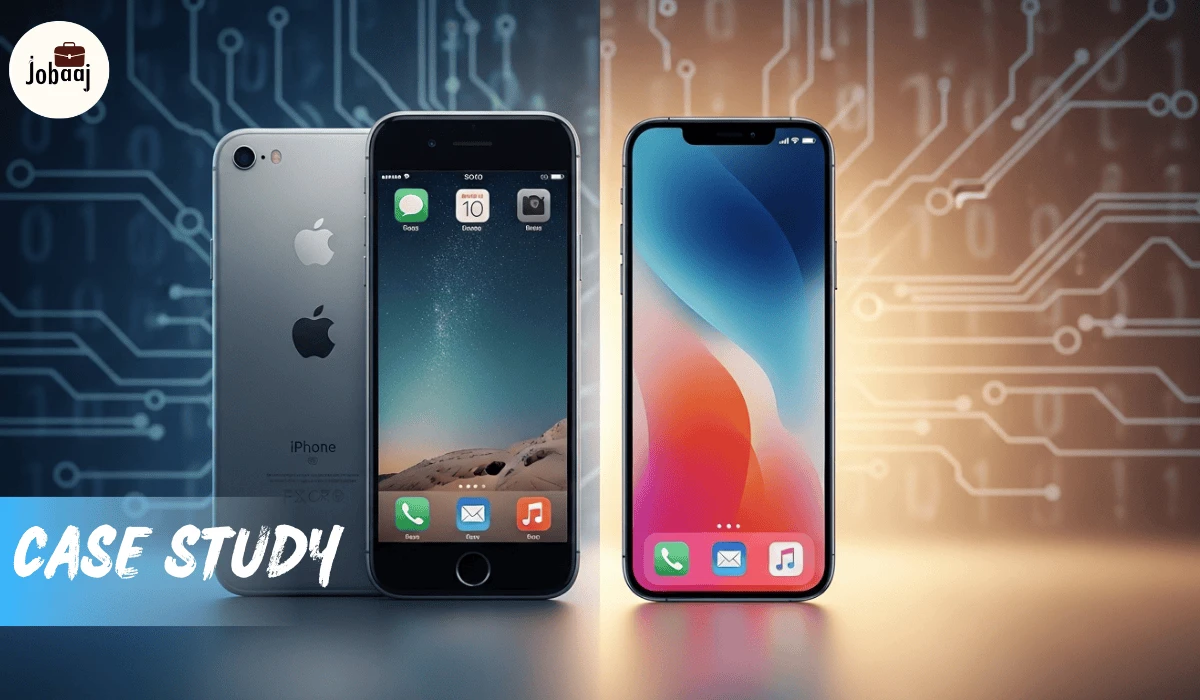
Apple’s innovation with the iPhone didn’t just stop at improving the hardware or the software; it fundamentally changed the mobile experience for billions of people. What started as a phone that combined touchscreen technology, internet access, and multimedia features soon became a cornerstone of mobile technology evolution.
This case study explores the pivotal role the iPhone played in shaping mobile technology, its key innovations, and how it influenced the broader tech landscape, making smartphones an essential part of modern life.
The Problem
Before the iPhone, the mobile industry was defined by companies like Nokia and BlackBerry, whose focus was on communication rather than overall user experience. Mobile phones were primarily seen as communication devices, and there was little focus on how the phone could be used for broader tasks like entertainment, productivity, or even commerce.
While phones were getting smarter, there was a major gap in terms of user-friendly interfaces, integration of internet functionality, and multimedia experiences. Existing phones had clunky buttons, small screens, and limited functionality beyond basic communication.\
There was a significant need for a game-changing device that could deliver a more seamless, intuitive, and multifunctional experience for users. And the iPhone did exactly that, addressing these issues in ways that redefined the mobile phone industry.
Implementation
When Apple unveiled the iPhone in 2007, it introduced a series of groundbreaking innovations that would go on to change the mobile industry for good:
1.Touchscreen Technology: The iPhone’s fully touch-responsive screen was the game-changer. Unlike the physical buttons that were common at the time, the iPhone’s touchscreen made interacting with your phone much more intuitive, allowing for an easier and more personalized user experience.
2.The App Store: One of the biggest contributions to mobile technology was the launch of the App Store in 2008, just a year after the iPhone’s debut. The App Store created a new ecosystem for developers, enabling them to create innovative apps for a wide range of purposes, from social networking to gaming, fitness, finance, and productivity. This not only expanded the phone’s capabilities but also created an entirely new economy around mobile applications.
3.Integration of Internet Access: The iPhone brought full internet capabilities to mobile devices, making it possible for users to browse the web, check emails, and access information anywhere, at any time. The Safari browser optimized for the small screen made browsing smooth and efficient.
4.Multimedia and Entertainment: The iPhone wasn’t just a phone; it was a multimedia device. With its high-quality camera, access to music through iTunes, and video playback, the iPhone allowed users to capture, consume, and share content like never before.
5.Sleek Design: Beyond functionality, the iPhone redefined device design. Its minimalist, sleek, and elegant design became a hallmark of Apple’s approach to product aesthetics. It set new standards for how phones should look and feel, influencing designs across the entire mobile industry.
6.Face ID and Touch ID: In later iterations, the iPhone introduced biometric security features, such as Touch ID (fingerprint recognition) and Face ID (facial recognition). These features set a new standard for security and user convenience, further distinguishing Apple from competitors.
Key Findings and Insights
From its launch, the iPhone proved to be more than just a device it was a pioneering force in technology. Here are some of the key insights from its impact:
- Mobile Devices as Multifunctional Tools: The iPhone proved that a mobile phone could do much more than just make calls. It became a universal tool for communication, entertainment, productivity, and even financial transactions. The introduction of the App Store sparked the rise of mobile-first businesses and transformed industries like gaming, fitness, and e-commerce.
- The Shift Toward Touchscreen Interfaces: The iPhone’s touchscreen interface became the new standard. Devices across the world, from tablets to smartphones, adopted similar interfaces. The iPhone made touch gestures like pinch-to-zoom and swiping familiar and mainstream.
- Disruption of Traditional Industries: The iPhone disrupted several industries, such as photography, music, and navigation. The iPhone’s camera replaced digital cameras for many, the iTunes Store replaced traditional music stores, and apps like Google Maps transformed the GPS market.
- Seamless Integration of Hardware and Software: Apple’s design philosophy combining cutting-edge hardware with tailored software became a defining characteristic of the iPhone. This seamless integration led to better performance and smoother user experiences compared to competitors.
- The Ecosystem Effect: The iPhone wasn’t just a standalone product it was part of the larger Apple ecosystem. Devices like the iPad, MacBook, and Apple Watch work harmoniously with the iPhone, creating a connected experience for users that no other company could replicate.
Results and Impact
The impact of the iPhone has been immense, affecting nearly every facet of life and technology:
1.Market Dominance: Since its launch, the iPhone has become the most popular smartphone worldwide, with millions of units sold each year. It has helped Apple become the world’s most valuable company by market capitalization.
2.Innovation in Mobile Technology: The iPhone sparked the smartphone revolution, with companies around the world striving to match Apple’s advancements. It set the standard for what a smartphone should be, pushing competitors to innovate.
3.Changing Consumer Behavior: The iPhone revolutionized how we interact with technology. The app ecosystem encouraged a mobile-first mindset, where apps became central to everything from shopping to entertainment, health, and social interactions.
4.Ecosystem Expansion: The success of the iPhone led to the growth of Apple’s ecosystem, which includes products like the Apple Watch, AirPods, and Apple Pay. The integrated ecosystem has fostered customer loyalty, ensuring Apple remains at the top of the tech world.
Lessons Learned
1.Design and User Experience Matter: The iPhone’s success underscores the importance of designing for the user experience. Apple’s focus on making the iPhone not only functional but also easy and enjoyable to use set it apart from its competitors.
2.Ecosystems Drive Growth: The iPhone’s success wasn’t just about the hardware or software—it was about creating an entire ecosystem of products that work seamlessly together. This is a lesson for businesses in any industry: integration and interconnectedness lead to customer loyalty and sustained growth.
3.Innovation is Key: The iPhone teaches us that innovation isn’t just about creating something new; it’s about reinventing existing concepts and making them better. Apple took the mobile phone and turned it into a multifunctional device that changed the way we live.
4.Anticipating Consumer Needs: The iPhone didn’t just respond to market demands—it anticipated what consumers wanted, even before they knew it. Whether it was a touchscreen interface or the ability to watch movies and browse the web, Apple’s foresight has been a major factor in its success.
Conclusion
The iPhone’s impact on mobile technology is undeniable. It didn’t just change the phone industry it redefined how we use technology in our everyday lives. From its innovative design to its multifunctionality, the iPhone has set the standard for what mobile technology should be.
More than a smartphone, the iPhone became a cultural phenomenon that transformed everything from communication to entertainment, and it has inspired countless innovations in mobile tech. As we look to the future, it’s clear that Apple’s influence will continue to shape mobile technology for years to come.
FAQs
The iPhone revolutionized mobile technology by combining a touchscreen interface, internet access, multimedia features, and a sleek design, making smartphones a multifunctional device for communication, entertainment, and productivity.
The App Store, launched in 2008, created a new ecosystem for developers to build and distribute apps. It allowed iPhone users to personalize their devices and introduced a new mobile economy, transforming industries like gaming, finance, and social networking.
The iPhone set new standards for mobile design with its minimalist, sleek, and elegant aesthetic. Its clean, button-free interface and seamless integration of hardware and software influenced mobile phone designs across the industry.
The Apple ecosystem refers to the interconnected range of Apple products, such as the iPad, MacBook, and Apple Watch, which work seamlessly with the iPhone. This ecosystem creates a more unified and user-friendly experience, fostering customer loyalty and providing convenience across devices.
The iPhone disrupted several industries, including photography, music, and navigation. Its camera replaced digital cameras for many, the iTunes Store transformed music consumption, and apps like Google Maps revolutionized GPS navigation.