
Interviews can be stressful. Many candidates feel pressure to give “perfect” answers, but the truth is that clarity, structure, and relevance matter more than memorized scripts. This is where the STAR method comes in.
The STAR method is a proven framework for answering behavioral and situational interview questions. It allows you to communicate your experiences effectively, demonstrate problem-solving abilities, and highlight measurable results in a clear, concise way.
By mastering STAR, you can confidently tackle any behavioral question and ensure your answers leave a lasting impression on interviewers.
What is the STAR Method?
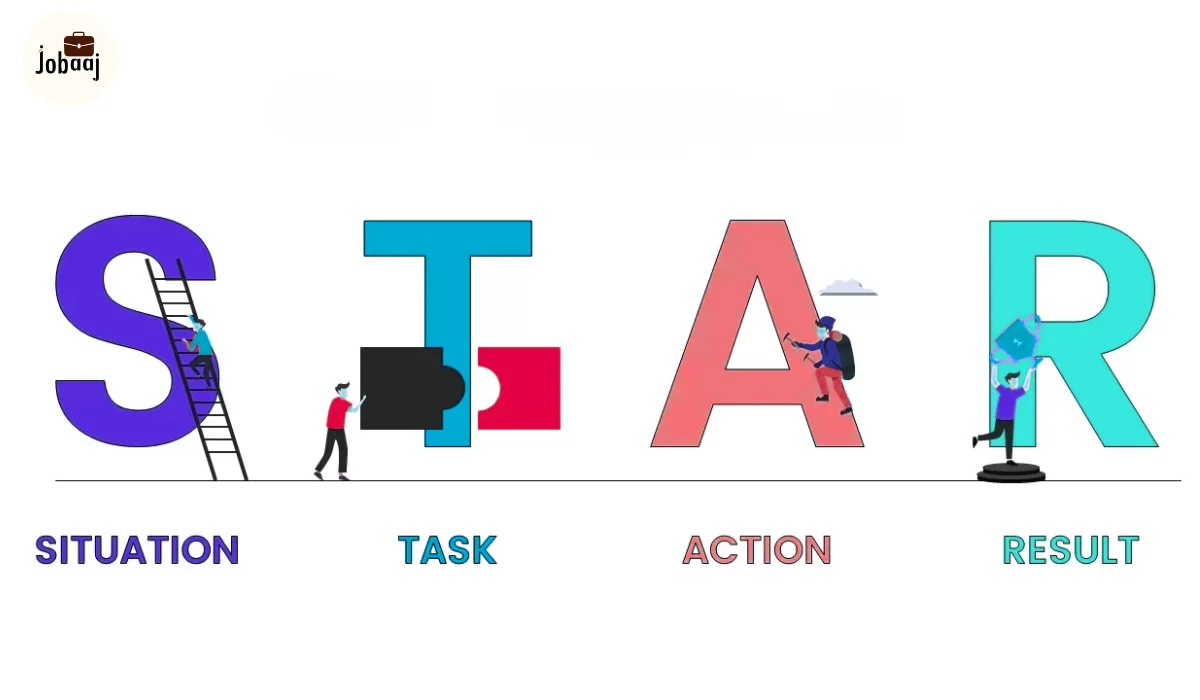
The STAR method is an acronym that helps structure your responses:
- S – Situation: Set the scene by describing the context. Where and when did the scenario occur? Who was involved?
- T – Task: Explain the specific responsibility, challenge, or goal you faced. What was expected of you?
- A – Action: Highlight the steps you personally took to address the task. Be specific about your approach.
- R – Result: Share the outcome, impact, or learning. Use measurable results whenever possible.
Why STAR works:
- Ensures answers are organized logically.
- Helps you stay focused and avoid rambling.
- Highlights personal contributions and tangible results.
- Makes your answers memorable and persuasive.
Why Employers Ask Behavioral Questions
Behavioral interviews are based on the idea that past behavior predicts future behavior. Employers want to understand how you:
- Handle challenges or conflicts
- Work in teams and collaborate
- Solve problems creatively
- Adapt to changing circumstances
- Demonstrate leadership under pressure
By using STAR, you show not only what you did but how and why, giving interviewers a full picture of your skills and approach.
Step-by-Step Guide to STAR
Step 1: Situation
- Describe the context clearly. Provide enough background so the interviewer understands the scenario.
- Include timeframes, team dynamics, or project details if relevant.
Example:
"During my internship at a digital marketing agency, we were assigned a client who wanted a social media campaign launched within a week, despite having limited historical data."
Tip: Keep it concise 1–2 sentences is usually enough.
Step 2: Task
- Explain your specific responsibility. What challenge were you addressing?
- Clarify your role so the interviewer understands your contribution, not just the team’s.
Example:
"I was responsible for analyzing previous campaign metrics, identifying content strategies, and proposing a creative plan that would engage the client’s target audience within the limited timeframe."
Tip: Focus on a task that highlights skills relevant to the job you’re applying for.
Step 3: Action
- Detail the specific steps you took. Focus on your role, not what others did.
- Include problem-solving approaches, tools used, collaboration, or leadership skills.
Example:
"I reviewed the client’s previous engagement data, identified top-performing content types, and collaborated with the design team to create targeted posts. I also scheduled posts for optimal engagement and suggested A/B testing to refine messaging during the campaign."
Tip: Be specific but concise. Avoid generic statements like “I worked hard” or “I did my best.”
Step 4: Result
- Conclude with the outcome. What happened because of your actions?
- Whenever possible, quantify results: percentages, numbers, growth metrics.
- Highlight positive impact on team, project, or company.
Example:
"The campaign led to a 40% increase in engagement compared to previous efforts and was praised by the client for exceeding their expectations. I also learned how to quickly adapt strategies under tight deadlines."
Tip: If the outcome wasn’t ideal, focus on what you learned and how you improved.
Advanced Tips for Using STAR
- Tailor Your Examples: Choose experiences most relevant to the role you’re applying for.
- Be Honest: Authentic examples resonate more than fabricated stories.
- Highlight Soft Skills: Leadership, teamwork, adaptability, and communication matter as much as technical achievements.
- Practice Without Memorizing: Understand your stories so you can speak naturally.
- Use Metrics: Numbers make your results tangible and impressive.
- Prepare Multiple Stories: Have 4–6 examples ready covering different competencies.
Common Behavioral Questions You Can Answer with STAR
- Tell me about a time you overcame a challenge.
- Describe a situation where you had to work under pressure.
- Give an example of a team project you contributed to.
- Share a time when you made a mistake and how you handled it.
- Explain a scenario where you implemented a creative solution.
How STAR Can Be Used Beyond Behavioral Interviews
- Technical Roles: Explain problem-solving processes, debugging approaches, or project contributions.
- Consulting or Case Interviews: Present a structured solution using STAR to describe analysis, actions, and outcomes.
- Leadership & Management Roles: Highlight leadership, strategy implementation, and team results.
Conclusion
The STAR method is a powerful tool for structuring interview answers, ensuring clarity, focus, and impact. It allows candidates to tell compelling stories that demonstrate skills, initiative, and measurable results.
By mastering STAR:
- You communicate your experiences clearly.
- Highlight both skills and results.
- Build confidence to tackle interviews with ease.
In 2026, structured, authentic, and results-driven answers will set candidates apart. The STAR method ensures your story resonates, your skills shine, and your impact is undeniable.
FAQs
The STAR method is a framework for answering interview questions by structuring responses around Situation, Task, Action, and Result to communicate clearly and effectively.
It helps candidates organize answers logically, highlight personal contributions, quantify results, and demonstrate soft skills in a structured manner.
Use STAR to explain problem-solving steps, project contributions, and results in a clear, structured way, making your approach easy to follow.
Behavioral, situational, leadership, teamwork, conflict resolution, and problem-solving questions are ideal for STAR answers.
Prepare multiple examples from past experiences, practice telling the story aloud, and ensure your responses highlight action and measurable results.