Let's be honest - investing has never felt more complicated. Between rising interest rates, geopolitical uncertainty, and technology reshaping entire industries overnight, knowing where to put your money in 2026 feels like trying to read a map in the dark.
But here's the good news: the trends shaping markets right now are not random. They're driven by deep, structural forces - shifts in energy, technology, demographics, and capital flows that have been building for years. Once you understand them, the picture gets a lot clearer.
This isn't financial advice. It's a grounded, human look at where the most informed investors are turning their attention - and why it matters for your portfolio.
1. AI-Driven Investing & Smart Portfolios (Technology)
Artificial intelligence isn't just changing how companies operate - it's changing how investors make decisions. AI-powered portfolio management tools are now accessible to everyday investors, not just hedge funds. They analyse thousands of data points in real time, rebalance automatically, and flag risk before humans even notice it.
But the bigger opportunity is investing in AI itself. Semiconductor companies, cloud infrastructure providers, and enterprise AI software firms are seeing sustained capital inflows. The key is looking beyond the headline names and finding the companies building the pick-and-shovel infrastructure that makes AI run.
2. Green Energy & the Climate Economy (Sustainability)
The energy transition is no longer a distant promise - it's happening right now, at scale, and it's creating enormous investment opportunities. Solar, wind, battery storage, and green hydrogen are attracting record levels of capital as governments worldwide race to meet climate commitments.
What makes this trend particularly compelling in 2026 is the combination of policy tailwinds and improving economics. Clean energy is now often cheaper to produce than fossil fuels in many markets. Investors who positioned early in renewable energy infrastructure are already seeing strong returns - and analysts believe the runway is still long.
3. Real Estate Tokenization & Fractional Ownership (Real Estate)
Real estate has always been one of the most reliable wealth-building assets - but it's also been one of the least accessible. Tokenization is changing that. Blockchain technology now allows properties to be divided into digital tokens, letting investors own a fraction of a commercial building or rental property for as little as a few hundred dollars.
In 2026, several major platforms are making real estate tokenization mainstream. This opens up a historically closed asset class to a much wider pool of investors while also improving liquidity - one of real estate's biggest traditional drawbacks. It's a genuine structural shift, not just a tech gimmick.
"The biggest investment mistakes of the next decade won't be made by people who took risks — they'll be made by people who stood still while the world restructured around them."
4. Emerging Markets & the Global South (Global Growth)
While Western markets wrestle with slowing growth and aging populations, a different story is unfolding in Southeast Asia, India, Africa, and Latin America. A growing middle class, rapid urbanization, and improving digital infrastructure are creating new consumer markets and investment opportunities at a pace Western economies simply can't match right now.
India, in particular, is one of the most watched investment destinations of 2026 - with a young workforce, booming tech sector, and strong domestic consumption. Investors looking for growth, rather than stability, are increasingly looking south and east. Currency risk and political volatility remain real considerations, but so does the opportunity.
5. Alternative Assets: Gold, Crypto & Private Credit (Alternatives)
In a world of persistent uncertainty, investors are diversifying beyond stocks and bonds like never before. Gold has reasserted itself as a safe-haven asset, reaching record highs as central banks and individual investors alike pile in during periods of volatility. Meanwhile, institutional adoption of Bitcoin has legitimised crypto as a portfolio allocation - not just a speculation.
Perhaps the quietest but most significant trend is the rise of private credit. With banks pulling back from certain lending markets, private credit funds are stepping in - and delivering returns that traditional fixed income simply can't match right now. It's an asset class that was once reserved for the ultra-wealthy, but is now increasingly accessible through new fund structures.
What Should You Do With All This?
Here's the honest truth: knowing about these trends is only useful if you act with intention. That doesn't mean chasing every new opportunity or overhauling your entire portfolio overnight. It means being informed, staying curious, and making sure your investments reflect the world as it actually is - not the one from five years ago.
Start small if you need to. Research one trend deeply. Talk to a financial advisor before making major moves. The investors who do well in 2026 won't necessarily be the boldest - they'll be the most thoughtful.
The world is changing fast. Your money should at least keep up with the conversation
Disclaimer: This blog is for informational purposes only and does not constitute financial advice. Always consult a qualified financial advisor before making investment decisions.
FAQs
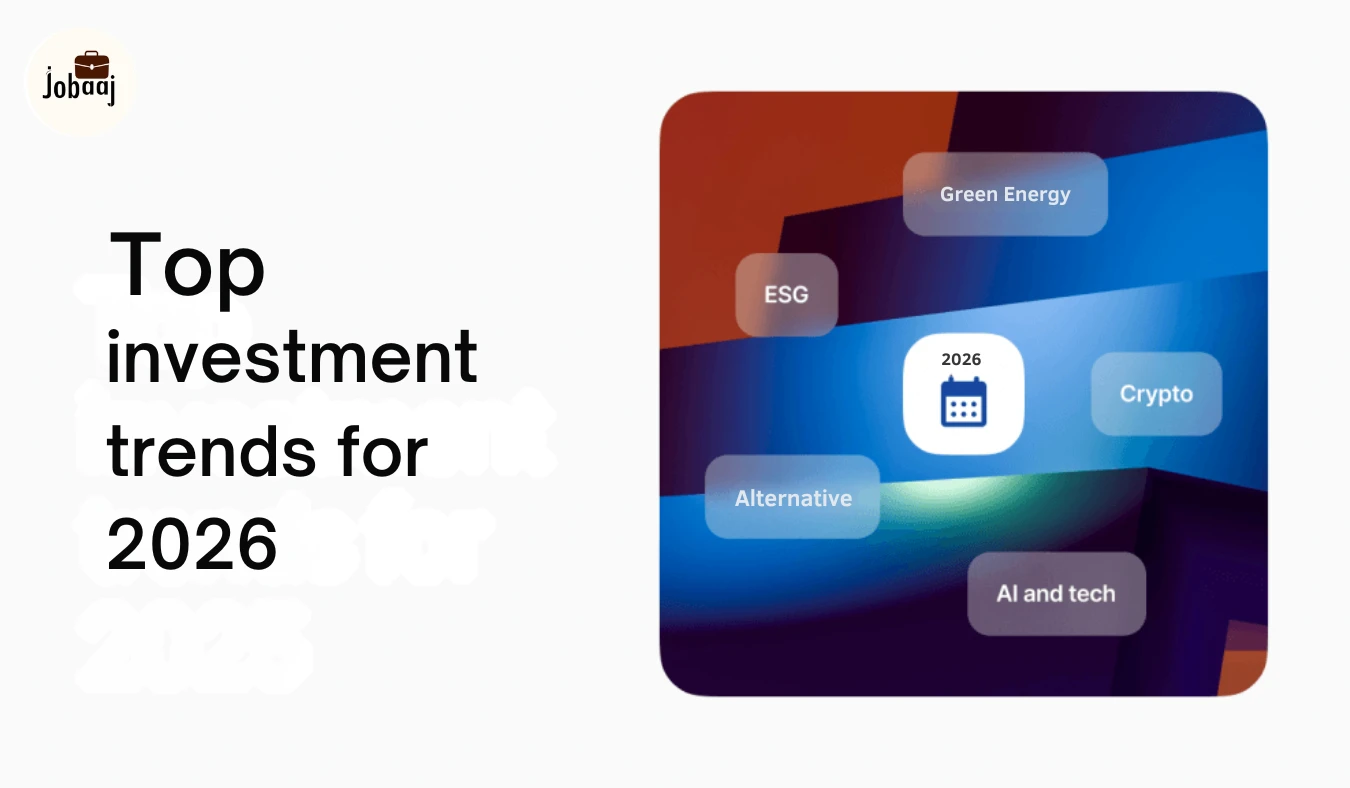
The top investment trends for 2026 include AI-driven investing, green energy, real estate tokenization, emerging markets, and alternative assets like gold and crypto. These trends combine technology, sustainability, and global growth opportunities for diversified wealth-building strategies.
AI-driven investing uses algorithms and smart portfolios to analyze data, rebalance investments, and predict risks in real time. Investors can access AI tools for both managing portfolios and investing in AI-focused companies, making technology a key growth area in 2026.
Green energy, including solar, wind, and green hydrogen, is growing rapidly in 2026. Policy support, falling production costs, and global climate initiatives make renewable energy a profitable, sustainable investment opportunity.
Real estate tokenization divides properties into digital tokens using blockchain. Investors can buy fractions of commercial or rental properties for smaller amounts, improving liquidity and accessibility in 2026’s real estate market.
Alternative assets like gold, cryptocurrency, and private credit provide portfolio diversification during uncertain markets. They offer safe-haven value, institutional adoption opportunities, and high returns compared to traditional stocks and bonds.