
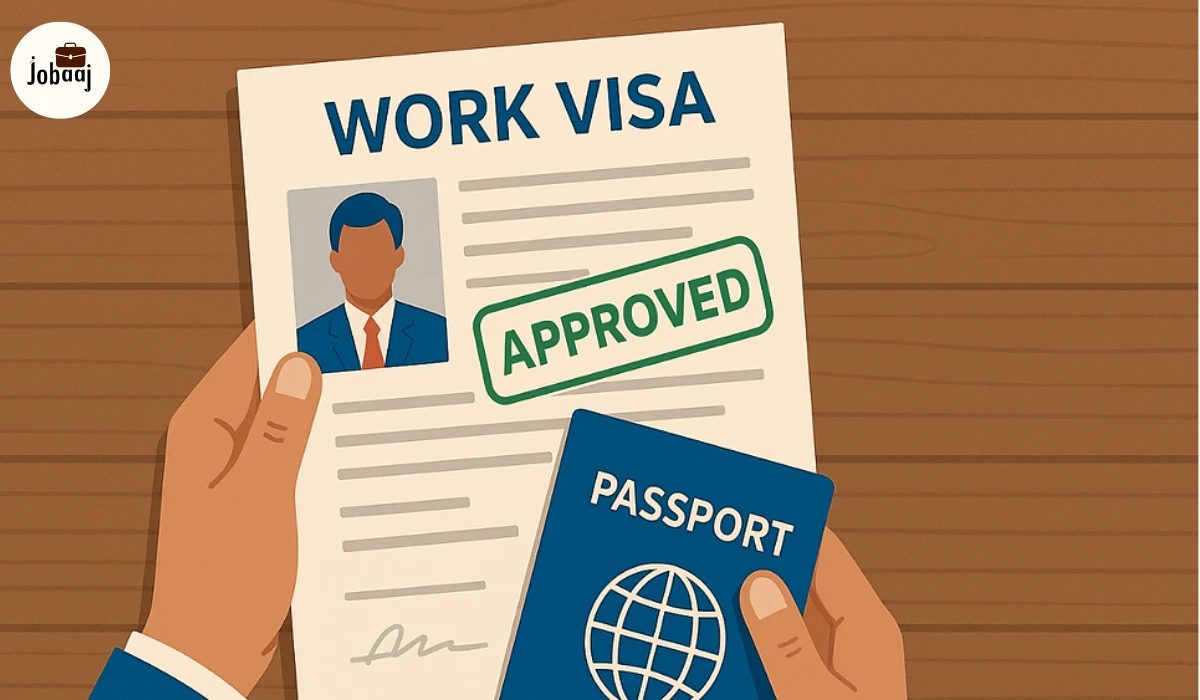
Working in a different country is one of the biggest career goals for many students and professionals today. Whether it is the USA, UK, Canada, Germany, Australia, or the Middle East, global job opportunities are increasing rapidly.
But before you can start working abroad, one thing matters more than anything else your work visa.
A work visa is not just a travel document. It is a legal permission that allows you to work in a foreign country for a specific employer and duration. Without it, even a job offer from a top company is not valid.
In 2026, countries have become more structured with visa rules due to increasing global migration and skill-based hiring systems. This makes it important to clearly understand what is required, how the process works, and what improves your chances of approval.
What is a Work Visa?
A work visa is an official authorization issued by a country that allows a foreign national to work legally within its borders.
Unlike a tourist visa, which only allows travel, a work visa is directly linked to employment. In most cases, it is tied to:
- A specific job role
- A sponsoring employer
- A fixed duration of stay
Some countries also offer flexible work visas for skilled professionals, but most still require employer sponsorship.
Basic Requirements for a Work Visa
Although each country has its own rules, most work visa systems follow a similar structure.
1. Job Offer from an Employer
In most countries, you must first secure a valid job offer. The employer usually acts as your sponsor and supports your visa application.
Without a job offer, work visa approval is very limited in most regions.
2. Valid Passport
A valid passport is mandatory. It should usually be valid for at least 6 months beyond your planned stay.
3. Educational Qualifications
Countries verify your academic background to ensure you are qualified for the job role.
For example:
- IT roles require technical degrees or certifications
- Finance roles require relevant commerce or business background
- Skilled trades require vocational training
4. Relevant Work Experience
Most skilled work visas require prior experience in the same field.
Entry-level visas exist, but competition is high. Experienced candidates have a much higher approval rate.
5. Proof of Skills and Certifications
Some countries require additional proof such as:
- Professional certifications
- Language proficiency tests (IELTS, TOEFL)
- Technical assessments
This ensures you can perform the job effectively.
6. Employer Sponsorship Documents
Your employer usually provides:
- Employment contract
- Sponsorship letter
- Job description
- Salary details
These documents are critical for visa approval.
7. Health and Background Checks
Most countries require:
- Medical examination
- Police clearance certificate
This ensures safety and legal compliance.
Step-by-Step Work Visa Process
Although it varies by country, the general process looks like this:
Step 1: Secure a Job Offer
You apply and get selected by an international employer.
Step 2: Employer Applies for Sponsorship
The company submits documents to support your visa.
Step 3: Submit Visa Application
You submit personal documents, education proof, and job details.
Step 4: Attend Interview (if required)
Some countries require a visa interview.
Step 5: Visa Approval
Once approved, you receive permission to work and travel.
Types of Work Visas
Different countries offer different categories:
Skilled Worker Visa
For professionals with specialized skills like IT, engineering, finance, etc.
Temporary Work Visa
Short-term employment opportunities.
Permanent Work Visa
Long-term residency and employment rights.
Post-Study Work Visa
For international students who want to work after graduation.
Countries with High Work Visa Demand
Some of the most popular destinations for global careers include:
- Canada (Express Entry, PR pathways)
- USA (H-1B visa for skilled workers)
- UK (Skilled Worker visa)
- Germany (EU Blue Card)
- Australia (Skilled Migration visa)
Each country has its own point-based or sponsorship-based system.
Factors That Improve Work Visa Approval Chances
Approval is not random. It depends on several important factors:
1. High-demand skills
Skills like AI, data science, healthcare, and engineering have higher approval chances.
2. Strong education profile
Degrees from recognized universities improve credibility.
3. Relevant experience
More experience increases trust in your ability to perform.
4. Job role alignment
Your skills must match the job description clearly.
5. Employer credibility
Well-established companies improve approval chances.
Common Challenges in Work Visa Process
Many applicants face difficulties such as:
- Visa rejection due to incomplete documents
- Lack of relevant experience
- Low-demand job roles
- Poor alignment between job and qualification
- Complex documentation requirements
Understanding requirements properly reduces these risks significantly.
Why Work Visas Are Becoming More Competitive
In 2026, global hiring is becoming skill-based, but visa rules are also becoming stricter due to:
- Increased global migration
- Demand-supply imbalance in jobs
- Government regulations on foreign workforce
- Focus on skilled immigration
This means only well-prepared candidates with strong profiles succeed.
Conclusion
A work visa is the gateway to global career opportunities. It is not just a document but a structured approval system that ensures skilled professionals can work legally in another country.
While the process may look complex, it becomes manageable when you understand the requirements clearly job offer, qualifications, skills, experience, and documentation.
In 2026, global careers are more accessible than ever, but success depends on preparation and skill alignment.
If you focus on building relevant skills and meeting visa requirements properly, international job opportunities become a realistic and achievable career path.
FAQs
A work visa is an official document that allows a foreign national to legally work in another country for a specific employer and duration.
In most countries, yes. A valid job offer from a registered employer is required as part of the visa sponsorship process.
Countries like Canada, Germany, Australia, and the UK are popular because they have structured skilled worker visa programs.
High-demand skills like IT, data analytics, engineering, healthcare, and AI-related roles improve visa approval chances.
It is possible, but highly competitive. Most work visas require some level of experience or specialized qualifications.