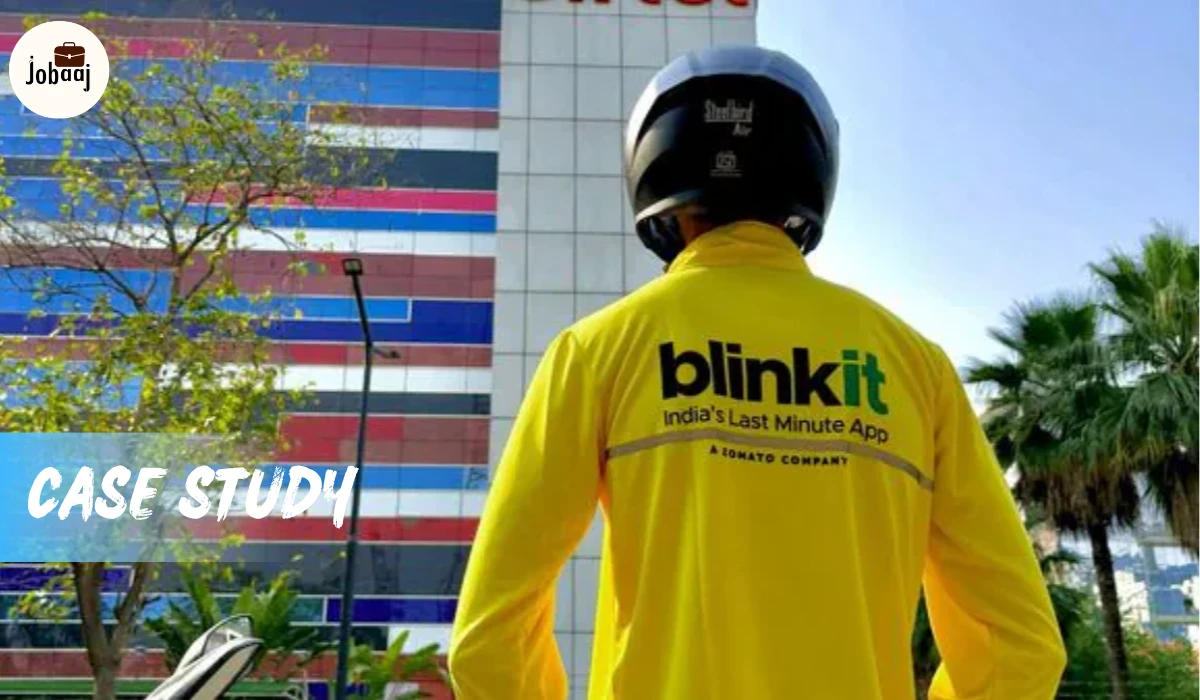
Blinkit, formerly known as Grofers, is one of India’s most remarkable startup turnaround stories. Initially launched as an online grocery delivery platform in 2013, it faced operational inefficiencies, intense competition, and financial stress during its early years.
By 2026, Blinkit has transformed into a leading quick commerce player, delivering essentials in minutes. This case study explores Blinkit’s journey, highlighting the strategies, operational shifts, and lessons that made this turnaround possible.
Problem Statement
Blinkit’s early challenges included:
- High delivery and logistics costs leading to low profit margins
- Slow delivery timelines reducing customer retention
- Operational inefficiencies in warehouse management and inventory
- Intense competition from BigBasket, Amazon Pantry, and emerging quick commerce startups
- Misalignment of the product offering with changing urban consumer expectations
The primary problem was sustainable growth. While order volumes were increasing, profitability was elusive, and the business model needed urgent innovation.
Objective of the Case Study
The purpose of this case study is to analyze:
- How Blinkit identified key operational challenges
- What strategic shifts enabled the company to pivot
- How AI, logistics, and business model innovation played a role
- Lessons for startups, investors, and operational leaders
Approach
The approach to understanding Blinkit’s turnaround involved:
- Business Model Analysis
- Examining Grofers’ original model of scheduled grocery delivery
- Mapping costs, revenue, and operational inefficiencies
- Market Analysis
- Studying competitor strategies including BigBasket, Amazon Pantry, and Swiggy Instamart
- Understanding consumer expectations for delivery speed
- Operational Review
- Evaluating warehouse management, dark store strategy, and delivery logistics
- Identifying bottlenecks in order fulfillment and inventory control
- Strategic Shift Assessment
- Tracking Blinkit’s rebranding from Grofers to Blinkit
- Reviewing adoption of quick commerce and hyperlocal delivery strategy
- Examining technology integration for predictive inventory and route optimization
- Outcome Evaluation
- Assessing growth in order volume, customer retention, and market position post-turnaround
- Comparing pre- and post-turnaround operational KPIs
Implementation and Strategy
1. Rebranding and Market Positioning
- Grofers was rebranded as Blinkit in 2021
- Core focus shifted to ultra-fast delivery (10–20 minutes)
- Marketing emphasized speed and convenience, differentiating it from competitors
2. Quick Commerce Model
- Hyperlocal “dark stores” were established close to customer clusters
- Inventory was limited to fast-moving essentials
- Orders were fulfilled from nearest dark store for faster delivery
3. Technology and Logistics Optimization
- AI-driven route optimization for delivery personnel
- Real-time inventory tracking to reduce stockouts
- Predictive demand forecasting to optimize stock allocation
4. Strategic Acquisition
- Acquisition by Zomato in 2022 provided capital support, brand synergy, and enhanced logistics integration
Key Findings
From analyzing Blinkit’s turnaround, several critical insights emerge:
- Speed as a Core Differentiator
- Focusing on delivery speed created a clear value proposition that resonated with urban customers
- Focusing on delivery speed created a clear value proposition that resonated with urban customers
- Operational Efficiency is Critical
- Dense dark store networks reduced delivery distance and costs
- Inventory optimization minimized wastage and stockouts
- Technology Enables Scalability
- AI-driven route planning and predictive analytics improved order fulfillment efficiency
- AI-driven route planning and predictive analytics improved order fulfillment efficiency
- Brand and Market Repositioning Matter
- Rebranding to Blinkit aligned the company with modern quick commerce expectations
- Rebranding to Blinkit aligned the company with modern quick commerce expectations
- Strategic Partnerships and Funding
- Zomato acquisition provided financial stability and operational support, accelerating growth
Results
The turnaround led to measurable improvements:
| Metric | Pre-Turnaround (Grofers) | Post-Turnaround (Blinkit) |
| Average Delivery Time | 3–6 hours | 10–20 minutes |
| Order Volume | Moderate | Significant growth |
| Customer Retention | Low | Increased due to speed |
| Operational Efficiency | Low | Optimized with AI and dark stores |
| Market Position | One of many grocery apps | Leading quick commerce player in urban India |
The company now holds a competitive edge in the hyperlocal delivery segment, showing that a clear focus and operational innovation can overcome early-stage struggles.
Lessons Learned
- Adapt to Customer Expectations
- Business models must evolve as consumer needs change. Blinkit pivoted to ultra-fast delivery to meet urban expectations.
- Business models must evolve as consumer needs change. Blinkit pivoted to ultra-fast delivery to meet urban expectations.
- Focus on Core Strengths
- Rather than overextending, limiting inventory to fast-moving essentials improved efficiency.
- Rather than overextending, limiting inventory to fast-moving essentials improved efficiency.
- Leverage Technology Effectively
- AI and predictive analytics were critical in optimizing logistics and inventory management.
- AI and predictive analytics were critical in optimizing logistics and inventory management.
- Branding and Market Positioning
- Rebranding can support a strategic pivot and create new consumer perceptions.
- Rebranding can support a strategic pivot and create new consumer perceptions.
- Strategic Partnerships Accelerate Growth
- Acquisition by a larger platform provided financial stability and operational synergy.
- Acquisition by a larger platform provided financial stability and operational synergy.
- Sustainable Growth Over Aggressive Expansion
- Focusing on operational efficiency and profitability first ensures long-term stability.
Conclusion
Blinkit’s journey from Grofers to a quick commerce leader is a textbook example of a startup turnaround. It shows how operational inefficiencies, market misalignment, and competition can be overcome through a combination of:
- Strategic repositioning
- Technology integration
- Operational innovation
- Customer-centric thinking
- Smart partnerships
For startups, investors, and business strategists, Blinkit demonstrates that adaptability, speed, and execution matter as much as funding and initial ideas.
It also emphasizes that in fast-moving sectors like e-commerce and quick commerce, continuous innovation is critical for survival and long-term growth.
FAQs
Blinkit operates on a quick commerce model using hyperlocal dark stores to deliver groceries and essentials within minutes to customers in urban areas.
Grofers rebranded to Blinkit to shift its focus from scheduled grocery delivery to ultra-fast quick commerce delivery within minutes.
The biggest challenge was high delivery costs, low margins, and inefficient logistics that made profitability difficult in the traditional grocery delivery model.
Blinkit became successful by adopting quick commerce, using dark stores, improving logistics efficiency, and focusing on speed as its main value proposition.
Key lessons include adapting to customer demand, focusing on operational efficiency, using technology smartly, and pivoting business models when needed.