For years, India’s fashion market had a clear gap.
On one side were premium brands offering stylish clothing at high prices. On the other side were local markets where customers could find affordable options but often with limited consistency in quality, shopping experience, and brand trust.
Millions of young Indian consumers wanted something in between:
Trendy fashion. Affordable prices. Modern stores. Reliable quality.
This created an opportunity in India’s growing value fashion segment.
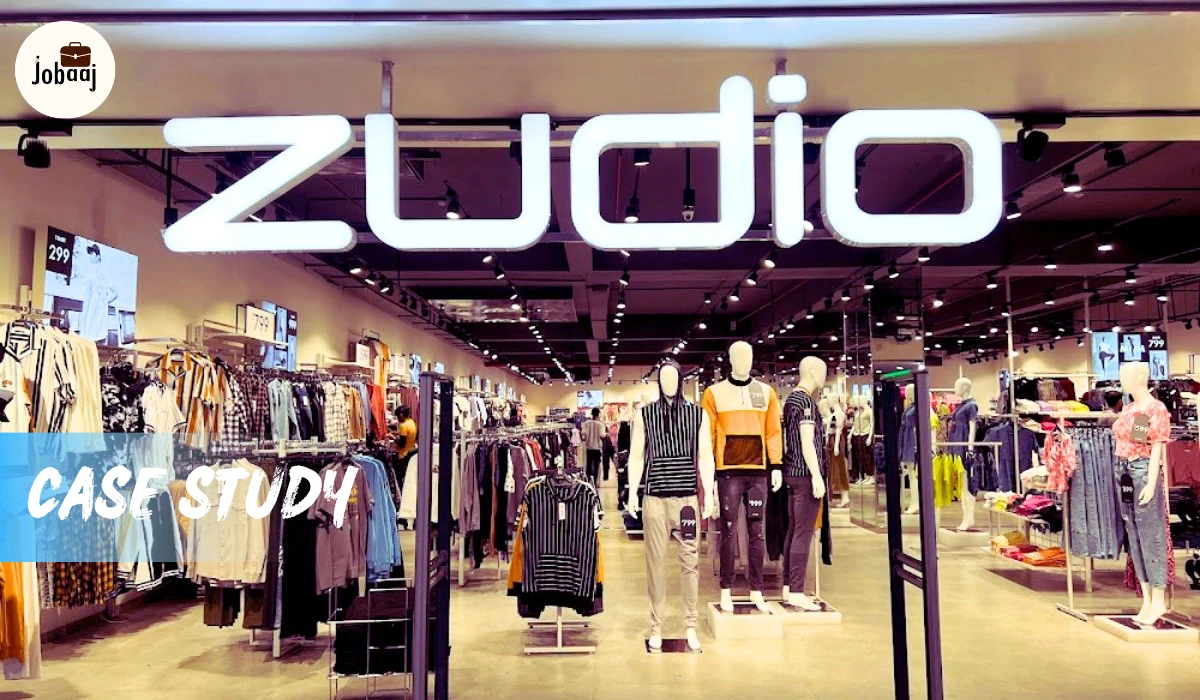
Trent Limited, part of the Tata Group, identified this opportunity and launched Zudio, a fashion brand designed around affordable clothing for young Indian consumers.
In a short period, Zudio became one of India’s fastest-growing fashion retailers, competing with established names in the value fashion space.
But Zudio’s success was not only because of low prices.
It was built on a combination of:
- Understanding customer behaviour
- Efficient operations
- Smart pricing
- Store expansion strategy
- Fast fashion principles
This case study explores how Zudio created a strong position in India’s competitive fashion market.
Company Background
Zudio is a fashion retail brand owned by Trent Limited, the retail arm of the Tata Group.
Trent already had experience in fashion retail through brands such as Westside.
While Westside focused more on a premium and lifestyle-oriented customer segment, Zudio was created to target a wider audience looking for affordable fashion.
The brand focuses on:
- Women's wear
- Men's wear
- Kids' clothing
- Footwear
- Accessories
- Beauty products
Zudio's core promise is simple:
Fashionable products at affordable prices.
The Market Opportunity
India has a large young population with increasing fashion awareness.
Social media, influencers, and global fashion trends have changed how consumers think about clothing.
Young customers increasingly want:
- New styles frequently
- Affordable pricing
- Instagram-friendly fashion
- Convenient shopping experiences
However, many consumers could not regularly afford premium fashion brands.
This created a large opportunity for value fashion retailers.
The challenge was to provide fashion similar to premium brands but at prices accessible to middle-income consumers.
The Business Problem: What Challenge Was Zudio Solving?
Before Zudio’s growth, the Indian fashion market had a few challenges.
1. Affordable Fashion Was Often Unorganised
Local markets offered low prices but lacked:
- Brand consistency
- Store experience
- Standardised quality
Customers wanted affordability with trust.
2. Premium Fashion Was Expensive
Brands offering modern designs often targeted higher-income customers.
Many young consumers wanted fashionable clothing without spending heavily.
3. Changing Consumer Behaviour
Young shoppers were moving towards:
- Frequent purchases
- Trend-based fashion
- Affordable experimentation
The traditional model of buying fewer expensive clothes was changing.
Zudio’s Approach: The Strategy Behind Its Growth
Zudio focused on creating a business model specifically designed for India’s value-conscious consumers.
1. Affordable Pricing Strategy
The biggest attraction of Zudio is its pricing.
Instead of positioning itself as a luxury or premium fashion brand, Zudio focused on accessibility.
Its pricing strategy encouraged customers to buy more products without feeling a major financial burden.
This created a strong value proposition:
More fashion choices at lower prices.
2. Understanding Young Consumers
Zudio successfully targeted young Indian shoppers.
The brand understood that modern consumers wanted:
- Trendy designs
- Affordable experimentation
- Frequent style updates
Instead of creating expensive collections with long cycles, Zudio followed a faster fashion approach.
3. Store-First Retail Strategy
Physical stores became a major part of Zudio’s success.
The stores were designed to provide:
- Modern shopping experience
- Easy product discovery
- Youth-focused environment
Unlike traditional low-cost fashion shopping, customers experienced a branded retail environment.
4. Efficient Product and Supply Chain Management
A major reason behind Zudio’s success was operational efficiency.
The brand focused on:
- Fast product cycles
- Cost control
- Efficient inventory management
Lower operational costs allowed Zudio to maintain affordable pricing.
5. Strategic Store Expansion
Zudio expanded aggressively across Indian cities.
Instead of only focusing on major metropolitan areas, the brand entered:
- Tier 1 cities
- Tier 2 cities
- Emerging markets
This helped the brand reach a much larger customer base.
Zudio’s Business Model Explained
Zudio follows a value fashion retail model.
The business model focuses on:
High Volume Sales
Lower prices encourage customers to purchase more frequently.
Cost Efficiency
The brand controls costs through:
- Supply chain optimisation
- Standardised stores
- Efficient operations
Rapid Fashion Rotation
Frequent product updates encourage customers to revisit stores regularly.
Marketing Strategy: How Zudio Built Brand Awareness
Unlike many fashion brands that rely heavily on celebrity marketing, Zudio focused more on:
Store Visibility
Large-format stores in high-footfall locations created strong brand awareness.
Word-of-Mouth Marketing
Affordable pricing and trendy products encouraged customers to share their experiences.
Social Media Influence
Young customers helped spread awareness through:
- Fashion content
- Shopping videos
- Reviews
Findings: Why Did Zudio Become Successful?
The success of Zudio can be explained through several key findings.
Finding 1: Zudio Identified a Real Consumer Gap
The brand understood that millions of consumers wanted affordable but fashionable clothing.
It did not compete directly with luxury brands.
Instead, it created its own category between:
- Local markets
- Premium fashion retailers
Finding 2: Price Was Important, But Experience Created Differentiation
Many brands can offer low prices.
However, Zudio combined affordability with:
- Attractive stores
- Brand trust
- Better shopping experience
This created stronger customer loyalty.
Finding 3: Operational Efficiency Was a Competitive Advantage
Retail success depends heavily on execution.
Zudio’s ability to manage:
- Inventory
- Pricing
- Expansion
- Supply chain
helped maintain profitability while keeping prices low.
Finding 4: Understanding Indian Consumers Was Critical
Zudio succeeded because it adapted to Indian consumer behaviour.
It understood that customers wanted:
- Fashion updates
- Affordable choices
- Brand experience
Business Lessons From Zudio Case Study
1. Find an Unserved Customer Segment
Successful businesses often identify gaps ignored by existing players.
Zudio focused on consumers who wanted fashion but found existing options either too expensive or too unorganised.
2. Affordable Does Not Mean Low Quality
A strong value proposition is not only about reducing prices.
It is about delivering maximum value at the right price point.
3. Execution Matters as Much as Strategy
Many businesses have good ideas.
The difference comes from execution:
- Supply chain
- Operations
- Customer experience
4. Build According to Consumer Behaviour
Successful brands adapt to how customers actually shop.
Zudio aligned itself with:
- Youth trends
- Social media influence
- Frequent fashion purchases
SWOT Analysis of Zudio
Strengths
- Strong Tata Group backing
- Affordable pricing
- Strong retail execution
- Growing brand recognition
Weaknesses
- Heavy dependence on physical stores
- Competition in value fashion
Opportunities
- Expansion into smaller cities
- Growing young consumer market
- Digital commerce growth
Threats
- Competition from other fashion retailers
- Changing consumer preferences
- Rising operational costs
Impact on India’s Fashion Industry
Zudio changed expectations in India’s value fashion market.
It showed that affordable fashion could also provide:
- Brand experience
- Modern retail environment
- Trend-driven products
Its growth encouraged more competition in the affordable fashion segment.
What Management Students Can Learn From Zudio
This case study provides lessons in:
Market Segmentation
Identifying a specific customer group with unmet needs.
Pricing Strategy
Creating value without damaging profitability.
Retail Operations
Managing stores, inventory, and expansion.
Consumer Behaviour
Understanding why customers make purchasing decisions.
Business Scaling
Growing quickly while maintaining operational efficiency.
Conclusion
Zudio’s success was not created by simply selling cheaper clothes.
The brand succeeded because it understood a major shift in Indian consumer behaviour.
Young customers wanted fashion that was:
Affordable + Trendy + Accessible + Reliable
Zudio built its strategy around this exact requirement.
The biggest lesson from the case study is that successful businesses do not always need to create something completely new.
Sometimes, they win by understanding an existing customer problem better than anyone else and solving it at scale.
FAQs
Zudio follows a value fashion retail model focused on affordable clothing, efficient operations, high sales volume, and rapid product rotation.
Zudio succeeded because it combined affordable pricing with trendy fashion, strong retail experience, and efficient expansion.
Zudio is owned by Trent Limited, the retail company of the Tata Group.
The main strategy includes affordable pricing, understanding young consumers, efficient supply chains, and expansion across Indian cities.
Businesses can learn the importance of identifying customer gaps, creating strong value propositions, and executing strategies efficiently.