
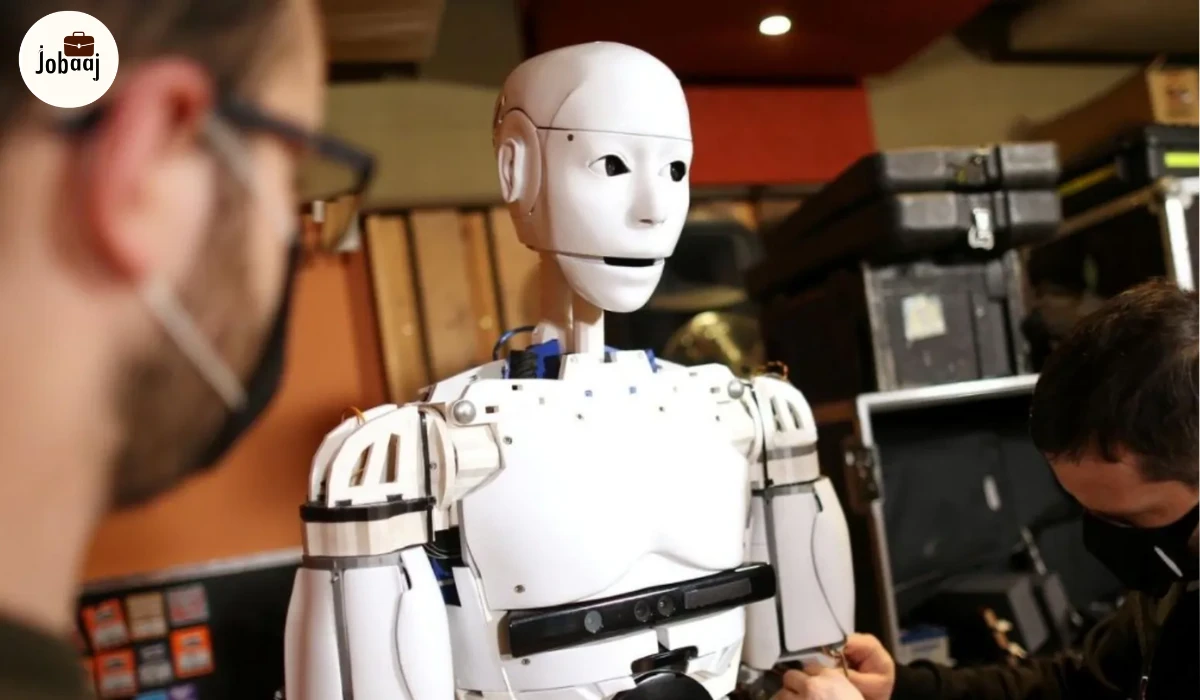
There is something naturally fascinating about machines that can think, move, and act on their own. Whether it is a robotic arm assembling cars, a drone mapping land, or a smart warehouse running with minimal human intervention, robotics and automation are quietly reshaping how the world works.
What makes this field even more interesting is that it is no longer limited to science fiction or advanced research labs. Robotics and automation are now part of everyday industries like manufacturing, healthcare, logistics, agriculture, and even retail. Companies are constantly looking for people who can build, program, maintain, and improve these systems.
Because of this growing demand, many students and professionals are now asking a simple question: how can someone actually start a career in robotics and automation?
The answer is not about following one fixed path. It is about building the right understanding step by step and gradually developing the skills that this field requires.
Understanding What Robotics and Automation Really Mean
Before jumping into courses or skills, it is important to understand what this field actually involves.
Robotics focuses on designing and building machines that can perform tasks, often with some level of intelligence or autonomy. Automation, on the other hand, focuses on using technology to perform tasks with minimal human intervention.
These two areas often overlap. For example, a robotic arm on a production line is both a robot and part of an automated system.
Working in this field can involve designing hardware, writing software, integrating systems, analyzing performance, or even managing entire automated processes.
This means robotics and automation are not just about machines. They are about solving real-world problems using a mix of engineering, programming, and logical thinking.
Step 1: Build a Strong Foundation in Core Concepts
Every career in robotics and automation begins with understanding the basics.
This includes subjects like mathematics, physics, and basic engineering principles. Concepts such as motion, force, control systems, and electricity form the backbone of how machines work.
Along with this, programming becomes equally important. Robots and automated systems rely heavily on software to function. Learning languages like Python or C++ helps in understanding how instructions are given to machines.
At this stage, the goal is not to master everything, but to become comfortable with how systems behave and how they are controlled.
Step 2: Understand the Key Areas Within Robotics
Robotics is not a single skill. It is a combination of multiple areas working together.
One part involves hardware, which includes sensors, motors, circuits, and mechanical design. Another part involves software, which includes programming, algorithms, and control logic. There is also system integration, where different components are connected and made to work together.
Understanding these areas helps in identifying personal interests.
Some people enjoy working with physical systems like building circuits or assembling robots. Others prefer programming and controlling how systems behave. Both paths are valuable, and many roles require a mix of both.
Step 3: Learn Programming and Control Systems
Programming is one of the most important skills in this field.
Robots and automated systems do not work on their own. They follow instructions. These instructions are written in code.
Learning programming helps in controlling movement, processing sensor data, and making decisions. Python is often a good starting point because it is simple and widely used. C++ is also important, especially for performance-heavy applications.
Along with programming, understanding control systems is essential. This involves learning how systems maintain stability, respond to inputs, and achieve desired outcomes.
For example, when a robotic arm moves to a specific position, control systems ensure that it reaches the correct point smoothly and accurately.
Step 4: Gain Hands-On Experience with Projects
One of the most effective ways to learn robotics is by building things.
Working on small projects helps in connecting theory with practice. It could be as simple as building a line-following robot, creating a basic automation system, or working with platforms like Arduino or Raspberry Pi.
Projects make learning real. They show how different components come together and how problems are solved in practical situations.
For example, building a simple robot may involve writing code, connecting sensors, and troubleshooting issues when things do not work as expected.
This process builds confidence and understanding in a way that theory alone cannot.
Step 5: Learn About Sensors, Actuators, and Systems
Robots interact with the world through sensors and actuators.
Sensors collect information from the environment, such as distance, temperature, or light. Actuators convert commands into physical actions, such as movement or rotation.
Understanding how these components work and how they are used is a key part of robotics.
For example, a robot navigating a room uses sensors to detect obstacles and actuators to change direction. Knowing how these parts function helps in designing effective systems.
Step 6: Explore Automation and Industrial Applications
Automation is widely used in industries.
Factories use automated systems for assembly, packaging, and quality control. Warehouses use robots for sorting and moving goods. Even offices use automation for repetitive tasks.
Understanding how automation works in real-world environments is important.
This includes learning about industrial systems, process automation, and how efficiency is improved through technology.
For example, an automated production line is designed to reduce manual effort while maintaining speed and accuracy.
Seeing how these systems operate helps in understanding the practical side of the field.
Step 7: Develop Problem-Solving and Analytical Thinking
Robotics and automation are problem-solving fields.
Machines do not always behave as expected. Systems may fail, sensors may give incorrect readings, or processes may not work efficiently.
Being able to analyze problems, identify causes, and fix issues is a critical skill.
For example, if a robot is not moving correctly, the issue could be in the code, the hardware, or the control system. Finding the root cause requires logical thinking and patience.
Strong problem-solving skills make a big difference in this field.
Step 8: Stay Updated with Tools and Technologies
This field is constantly evolving.
New tools, frameworks, and technologies are introduced regularly. Robotics software like ROS, simulation tools, and AI-based automation are becoming more common.
Staying updated helps in staying relevant.
This does not mean learning everything at once, but gradually becoming familiar with tools that are widely used in the industry.
Being open to learning new technologies is part of growing in this field.
Step 9: Gain Practical Exposure Through Internships
Practical experience is highly valuable in robotics and automation.
Internships, workshops, and industry projects provide exposure to real-world systems.
They help in understanding how concepts are applied in professional settings and how teams work together to build solutions.
Even a short internship can provide insights that are difficult to gain from classroom learning alone.
Step 10: Explore Career Roles and Opportunities
Once the basics are in place, it becomes easier to understand career paths.
Some common roles include robotics engineer, automation engineer, control systems engineer, and embedded systems developer.
These roles exist across industries such as manufacturing, healthcare, logistics, aerospace, and technology.
Each role may focus on different aspects, but the core skills remain similar.
Final Thoughts
Starting a career in robotics and automation is not about learning one thing perfectly. It is about gradually building a combination of knowledge and practical skills.
The field rewards curiosity, patience, and the willingness to experiment.
What makes this career exciting is that it sits at the intersection of technology and real-world impact. It involves building systems that make processes faster, safer, and more efficient.
For anyone interested in understanding how machines work and how they can be improved, this field offers both challenge and opportunity.
FAQs
Key skills include programming, understanding of electronics and mechanics, problem-solving ability, and knowledge of control systems. Hands-on project experience is also important.
Yes, it is a growing field with opportunities across industries such as manufacturing, healthcare, logistics, and technology. Demand is expected to increase in the future.
Languages like Python and C++ are widely used in robotics for controlling systems, processing data, and building applications.
An engineering background is helpful, but not always mandatory. Practical skills, projects, and knowledge of systems can also open opportunities in the field.
Common roles include robotics engineer, automation engineer, control systems engineer, and embedded systems developer.
Beginners can start by learning programming, understanding basic electronics, and working on small projects using platforms like Arduino or Raspberry Pi.
Yes, internships provide practical experience and help in understanding how real-world systems are designed and managed.