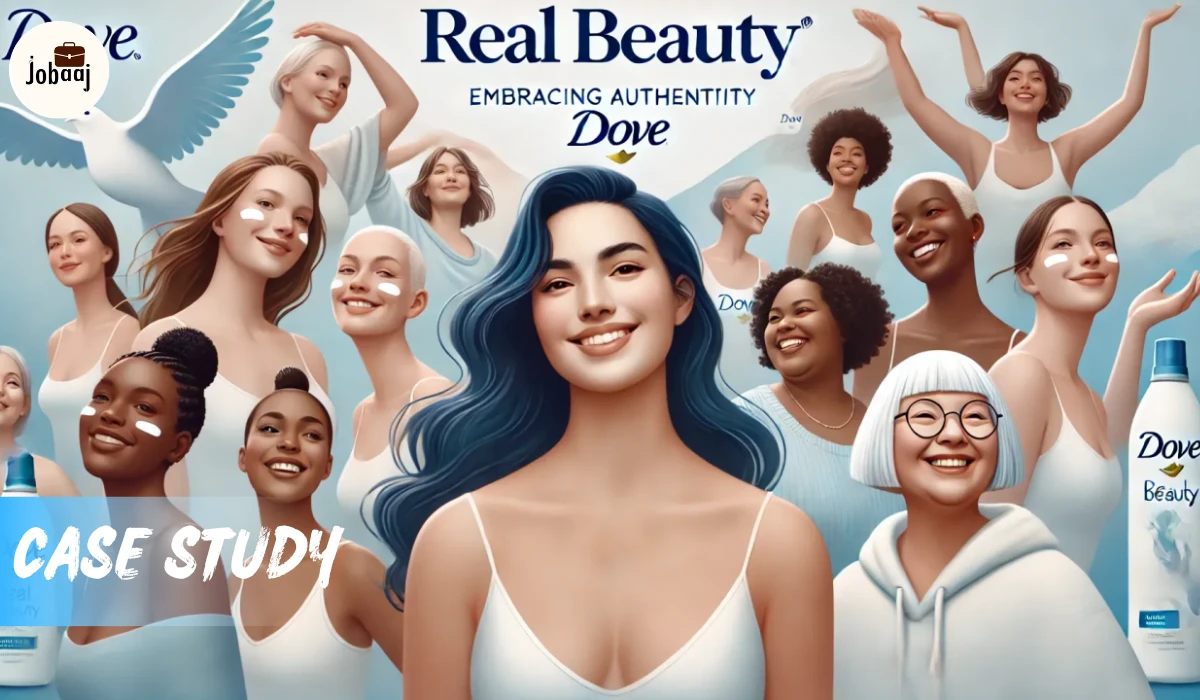
In 2004, Dove’s Real Beauty Campaign disrupted the beauty industry by challenging traditional beauty standards. Rather than using typical models with unrealistic body types, Dove embraced real women of all shapes, sizes, and ages. This campaign became one of the most successful marketing strategies, using emotional storytelling to connect with consumers on a deeply personal level. It wasn’t just about selling products; it was about shifting the way society perceives beauty.
The campaign was an instant success, sparking a social media frenzy and dramatically increasing sales. Dove’s Real Beauty campaign is widely recognized as one of the most successful personalized marketing strategies ever implemented. This case study explores the strategy behind the campaign, the challenges Dove faced, and the extraordinary results it achieved.
The Challenge
Before Dove’s Real Beauty campaign, beauty brands were dominated by airbrushed models who embodied a narrow, unrealistic idea of beauty. The beauty industry was focused on selling products through perfection. Dove faced a major challenge: how to differentiate itself in an overcrowded market and create a brand message that would resonate emotionally with consumers.
Dove needed to break away from the typical beauty standards that were dominating advertising and connect with women in a way that felt genuine and authentic. It wasn’t enough to just advertise beauty products—they needed to empower women and redefine what real beauty means.
Key Findings
Through consumer research, brand analysis, and a deep understanding of the changing marketing landscape, Dove discovered several insights that became the foundation of the Real Beauty campaign:
-
Consumers Want Realness: Dove learned that consumers were increasingly drawn to brands that made them feel special. Personalized experiences were emerging as a powerful tool in marketing, especially among younger audiences who valued individuality and personal connections.
-
Emotional Appeal: Dove identified that the brand’s success wasn’t just about the product—it was about the emotional connection consumers had with the brand. Dove had to find a way to trigger positive emotions and foster a sense of community.
-
Power of Social Media: Dove recognized the growing power of social media and how it could be leveraged to amplify marketing campaigns. Sharing, tagging, and personalized content were all viral in nature, creating massive opportunities for word-of-mouth marketing.
-
A Simple, Yet Bold Idea: Instead of going with flashy designs or complicated messaging, Dove realized that simplicity could be its strength. A bottle with a person’s name was a personal and straightforward way to connect with the customer—something everyone could understand and engage with.
Approach & Execution
Dove implemented the Real Beauty campaign with the following strategy:
-
Personalized Packaging: Dove replaced its classic logo with 150 of the most popular names in each market. In some countries, additional names were added based on local demographics. This allowed Dove to create a hyper-localized campaign where people could find bottles with their own names, or the names of friends and family, right on the label.
-
Social Media Integration: Dove actively encouraged consumers to share pictures of their personalized bottles on social media platforms, using the hashtag #ShareACoke. This not only built excitement but also created a sense of community among consumers, making the campaign feel like a social event rather than just a product push.
-
Engaging Consumers in a Personal Way: In addition to the bottles, Dove created interactive experiences in stores and online. They introduced digital kiosks where consumers could print their own names on cans, and they even launched a mobile app that allowed people to share virtual Cokes with friends online.
-
Mass Media & Event Activations: The campaign was not only confined to the physical products. Dove used TV ads, billboards, and outdoor advertisements that continued the theme of personalization. They also partnered with major events, like music festivals and sporting events, where people could experience personalized Coke bottles in person.
-
Global Execution, Local Customization: While the core idea was global, Dove made sure to customize the campaign for each market. Local names and cultural nuances were taken into account when choosing which names to feature on bottles, ensuring relevance and a deeper connection with consumers.
Results
The Real Beauty campaign exceeded all expectations and delivered remarkable results across various metrics:
-
Increased Sales: Dove saw a 7% increase in sales in the first year of the campaign’s launch in Australia. In many other markets, the campaign led to similar increases in both sales and market share.
-
Boosted Social Media Engagement: The hashtag #ShareACoke trended globally, with millions of people sharing their personalized Coke moments on social media. The campaign generated over 500,000 photos shared across social media platforms, resulting in substantial user-generated content.
-
Enhanced Brand Loyalty: The campaign led to a significant increase in brand loyalty. Consumers felt a deeper connection to Coca-Cola because of the personal experience it offered. Many consumers even started to collect the different bottles with names, further reinforcing brand engagement.
-
Positive Media Coverage: Coca-Cola’s campaign was widely praised for its creativity, simplicity, and emotional appeal. Media coverage and public relations efforts were enhanced by the sheer viral success of the campaign, bringing even more attention to the brand.
-
Expansion to New Markets: Following the success in Australia, the Share a Coke campaign expanded globally, reaching over 80 countries, including the United States, Europe, and Latin America. In each market, Coca-Cola tailored the campaign to resonate with local preferences.
Key Takeaways
From the success of the Share a Coke campaign, several valuable lessons can be applied to any brand looking to create a personalized, viral marketing campaign:
-
Personalization is Powerful: Offering a personalized experience can create emotional connections with consumers and encourage them to engage with your brand in meaningful ways.
-
Simplicity Can Be Revolutionary: Sometimes, the simplest ideas can make the biggest impact. Coca-Cola’s use of names on bottles was a straightforward idea but one that resonated deeply with customers.
-
Leverage Social Media: Social media can amplify any campaign, especially when it involves user-generated content. Encouraging consumers to share their experiences turns them into active brand advocates.
-
Cultural Relevance is Key: Global campaigns should be adapted to fit local preferences. By personalizing the campaign with locally relevant names, Coca-Cola made the campaign feel more accessible and connected to each consumer.
-
Create Experiences, Not Just Products: The Share a Coke campaign wasn’t just about selling more beverages; it was about creating an experience that people wanted to share. This helped turn the campaign into a cultural moment rather than just a marketing tactic.
Conclusion
Coca-Cola’s Share a Coke campaign demonstrates the incredible power of personalization and emotional connection in marketing. By moving away from traditional advertising and embracing a personalized, real-time engagement strategy, Coca-Cola not only boosted sales but also created a social media phenomenon. The campaign proved that when you connect with your customers on a personal level, the results can be extraordinary.
For brands looking to build stronger customer relationships and achieve viral success, the Share a Coke campaign is a powerful example of how creativity, relevance, and personalization can transform marketing efforts.
FAQs
Dove's Real Beauty campaign, launched in 2004, aimed to challenge conventional beauty standards by featuring real women of various body types, sizes, and ages instead of traditional models. It focuses on promoting self-esteem and body positivity, celebrating real beauty in all its forms.
Dove’s campaign leveraged emotional storytelling by focusing on women’s real experiences with beauty and self-esteem. Through authentic, relatable content, Dove addressed the challenges many women face regarding body image, creating a deep emotional connection with its audience.
The campaign led to a significant increase in sales and brand loyalty for Dove. It boosted Dove’s brand image as a champion of self-esteem and women’s empowerment. The campaign also generated widespread social media buzz and was praised globally for its innovative approach to beauty advertising.
By featuring real women in their advertisements, Dove challenged the stereotypical portrayal of beauty in the media. The campaign helped shift public perception and made beauty standards more inclusive, focusing on authenticity and self-confidence rather than perfection.
The campaign had a major impact on the beauty industry, sparking conversations about body positivity and the need for diversity in advertising. Many other brands followed Dove’s lead, embracing more inclusive marketing strategies and representing a broader range of beauty standards.
Brands can learn the importance of authenticity, emotional connection, and standing up for a meaningful cause. Dove’s Real Beauty campaign shows that marketing isn’t just about selling products—it’s about telling stories that resonate with your audience and align with their values.