
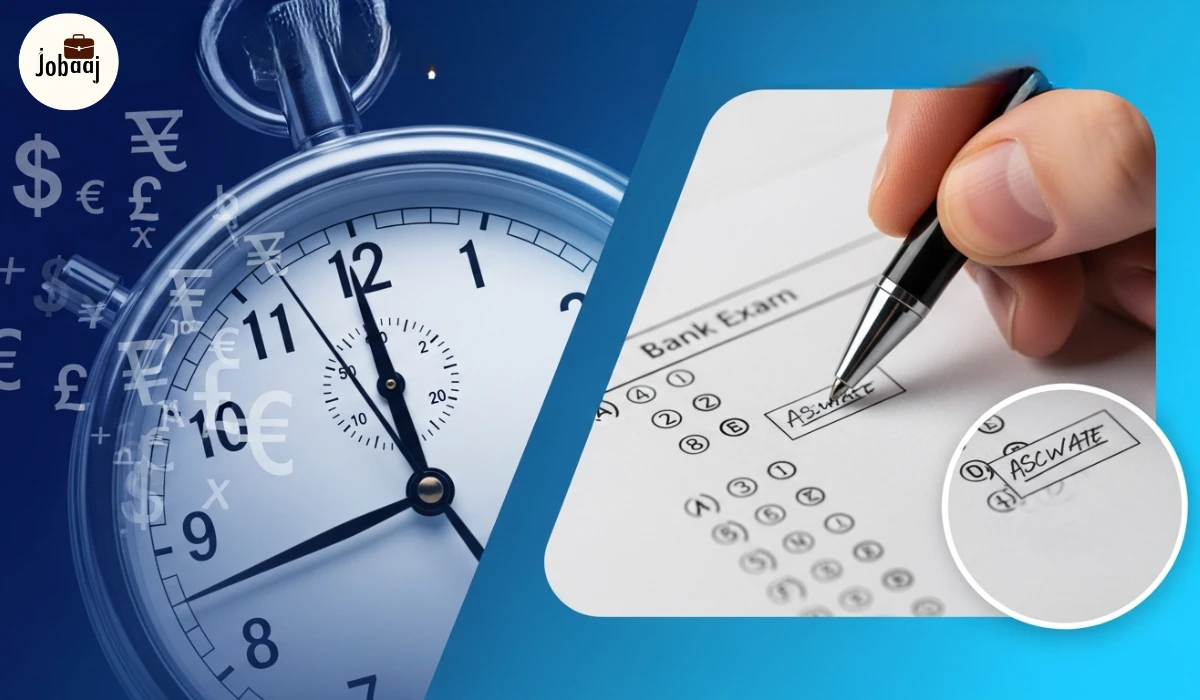
Bank exams in India, like the IBPS PO, SBI Clerk, RBI Assistant, and many others, are a gateway to a promising career in the financial sector. But here’s the reality: the road to success is often filled with challenges. The pressure to complete each section within a strict time limit makes speed and accuracy two of the most crucial factors in determining whether you succeed or not.
You can’t afford to take your time with every question, but you also can’t afford to be careless. Speed without accuracy is as bad as being too slow, and accuracy without speed can leave you with incomplete sections. So, how do you strike the right balance between these two?
In this blog, we’ll explore practical tips and strategies that will help you improve both speed and accuracy in your bank exam preparation. Whether you’re a beginner or someone looking to refine your skills, these tips will guide you through the preparation process to ensure you’re ready to face the challenge head-on.
Understand the Exam Structure and Syllabus
Before diving into your study materials, it’s crucial to have a clear understanding of the exam structure. Knowing what you’re up against gives you a sense of direction and ensures that your preparation is aligned with the actual exam.
For example, if you’re preparing for an IBPS PO exam, you need to be aware that it has three stages:
-
Prelims: Consists of English Language, Quantitative Aptitude, and Reasoning Ability.
-
Mains: Includes General Awareness, Computer Knowledge, Data Interpretation, Reasoning Ability, and English Language.
-
Interview: Focuses on assessing your personality, communication skills, and how well you handle pressure.
By knowing the structure, you can plan your preparation and prioritize sections that need more focus.
Actionable Tips:
-
Study the syllabus thoroughly: Break down the syllabus into manageable sections and allocate time based on the difficulty level of each section.
-
Track the weightage: Some sections like Quantitative Aptitude and Reasoning may carry more weightage in the exam, so make sure to allocate more time to these.
Make Time Management Your Best Friend
Time is of the essence in bank exams. With strict time limits for each section, how you manage your time can directly impact your performance. Managing your time wisely is the secret to balancing speed and accuracy effectively.
Actionable Tips:
-
Create a time-bound study plan: Break down your study schedule into time slots and assign specific hours for each section. For example, allocate 2 hours for Quantitative Aptitude and 1.5 hours for Reasoning.
-
Time yourself during practice: Take mock tests under timed conditions to simulate real exam scenarios. This will help you practice maintaining speed while being accurate in your responses.
-
Prioritize sections during the exam: Start with the sections that are easier for you and that you can complete quickly. Don’t get stuck on difficult questions.
By practicing time management, you’ll be able to finish each section on time without feeling rushed or overwhelmed.
Focus on Accuracy First, Speed Will Follow
While speed is important, accuracy should always be your top priority. It’s better to attempt fewer questions correctly than to attempt more and get them wrong. Making too many mistakes will hurt your score more than missing a few questions.
Actionable Tips:
-
Don’t guess blindly: Avoid random guesses, especially in sections like Quantitative Aptitude or Reasoning, where incorrect answers can penalize you.
-
Slow down and focus: When you encounter tricky questions, take a moment to read them carefully. A well-thought-out answer is always better than a rushed one.
-
Track your errors: After every mock test, review your incorrect answers. Understand why you made those mistakes and work on improving those areas.
Focusing on accuracy initially will help build your confidence. Once you get comfortable with the accuracy, speed will naturally improve over time.
Master Shortcuts and Techniques
One of the easiest ways to improve your speed is by mastering shortcuts and techniques for solving common problems, especially in sections like Quantitative Aptitude and Reasoning Ability. These shortcuts help you quickly reach the correct answer without doing lengthy calculations.
Actionable Tips:
-
Learn mathematical shortcuts: Master tricks for quick multiplication, percentages, and division. Techniques like Vedic Mathematics can be extremely helpful.
-
Memorize reasoning patterns: Whether it’s for puzzles, seating arrangements, or blood relations, understanding common reasoning patterns will help you solve questions faster.
-
Use approximation: In Data Interpretation or Quantitative Aptitude, approximation techniques can save you time and give you a reasonably accurate answer without getting bogged down in complex calculations.
Incorporating shortcut techniques will not only improve your speed but also increase your accuracy.
Practice with Mock Tests and Previous Year Papers
Nothing beats practice. Taking mock tests regularly helps you get used to the exam format, manage time effectively, and assess your strengths and weaknesses. It also helps you understand the types of questions that commonly appear in exams.
Actionable Tips:
-
Take regular mock tests: Set aside at least one or two mock tests per week. Gradually increase the frequency as you approach the exam.
-
Solve previous year papers: These will help you identify frequently asked questions and familiar question patterns.
-
Analyze your performance: After each test, take time to understand your mistakes. Learn from them and track your improvement over time.
By practicing regularly, you’ll improve both speed and accuracy, while building confidence for the real exam.
Stay Physically and Mentally Fit
While studying hard is essential, you must also take care of your physical and mental well-being. When you’re well-rested and healthy, your mind stays sharp and focused, helping you improve speed and accuracy.
Actionable Tips:
-
Get enough sleep: Don’t compromise on sleep, especially as the exam day approaches. Aim for 7-8 hours of rest.
-
Exercise regularly: Physical activity helps reduce stress and improves brain function, making it easier to concentrate.
-
Eat healthy: A balanced diet rich in fruits, vegetables, and proteins can boost your energy levels, ensuring you stay focused during long study sessions.
Stay Motivated and Confident
The road to success in bank exams can be tough, but maintaining the right mindset is crucial. Stay positive and keep reminding yourself of your long-term goals. Motivation is key to overcoming challenges and pushing through difficult sections.
Tips For It:
-
Set small, achievable goals: Every time you complete a chapter or score well in a mock test, celebrate that small victory.
-
Visualize success: Imagine yourself walking into the exam room with confidence. Visualize your success, and let that image keep you motivated.
-
Stay positive: Avoid negative self-talk. Whenever doubt creeps in, remind yourself that you’ve put in the effort and are prepared for success.
When you stay motivated and believe in yourself, it’s easier to stay calm, focused, and confident during the exam.
Conclusion
Improving speed and accuracy for bank exams is a process that requires consistent effort, smart strategies, and dedication. By understanding the exam pattern, practicing mock tests, learning shortcuts, and focusing on your health and well-being, you can dramatically improve your performance.
Remember, speed is important, but accuracy should always be your top priority. By following these actionable tips, you’ll find that both speed and accuracy become natural for you over time. Stay focused, stay consistent, and keep believing in your preparation. Success is just a few steps away!
FAQs
Practice solving questions under timed conditions, master shortcuts, and take mock tests regularly to enhance your speed and confidence.
Start by mastering the basics and solving questions carefully. Avoid random guessing and focus on solving questions you’re sure about.
Yes, mock tests are essential. They simulate real exam conditions and help you practice time management, build speed, and improve accuracy.
Allocate specific time for each section, identify difficult questions and skip them initially, and make sure to review your answers in the final minutes.
Stay focused, read each question carefully, and avoid rushing through answers. Practice accuracy over quantity and take time to understand the problem.
Regular revision helps reinforce concepts, improve retention, and increase recall speed during the exam. This reduces errors and helps with quicker problem-solving.