
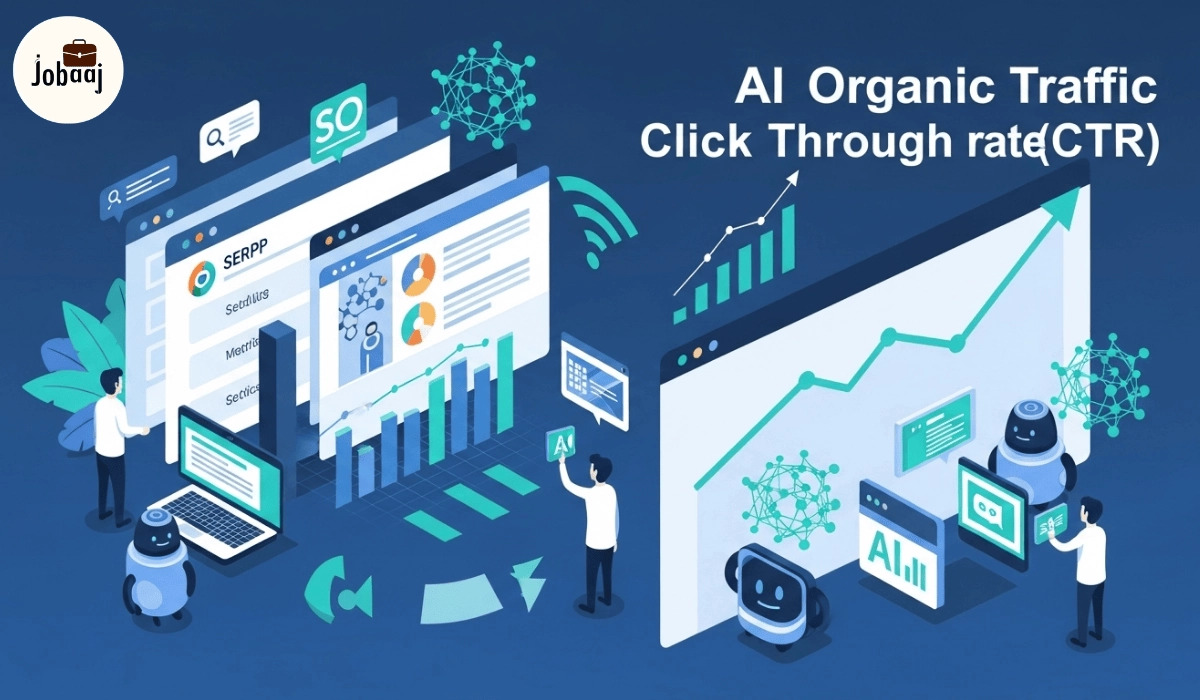
In today’s digital world, standing out online can feel like a challenge. With so many websites competing for attention, getting the right people to visit your site and keep them engaged is tough. The key to success often lies in two things: organic traffic and click-through rates (CTR).
For marketers, driving organic traffic and boosting CTR has always been crucial. But in recent years, artificial intelligence (AI) has changed the game. What once required guesswork is now becoming more efficient and predictable, thanks to AI tools.
We’ll explore how AI is transforming the way websites attract visitors and reshape click-through rates. From content optimization to predicting user behavior, AI is becoming essential for businesses that want to stay ahead in 2026 and beyond. Curious about how AI can boost your organic traffic and CTR? Keep reading to find out!
What Exactly Are Organic Traffic and Click-Through Rates?
Before diving into how AI is changing the game, it’s important to define these key terms so we’re all on the same page.
Organic Traffic refers to the visitors who land on your website as a result of unpaid search results. These visitors don’t come via ads; instead, they find you through search engines like Google after typing in relevant keywords. The better your content and SEO strategies, the more organic traffic you’ll get.
Click-Through Rate (CTR) measures the percentage of people who click on a link after seeing it. In the context of a website, it’s how often your listing gets clicked when shown in search engine results. Whether it’s an organic search result, an email campaign, or an ad, CTR is an essential metric for evaluating how compelling your content is and how effectively it’s attracting clicks.
Now that we have an understanding of organic traffic and CTR, let’s explore how artificial intelligence is transforming both of these metrics.
AI’s Influence on Organic Traffic
AI is revolutionizing search engine optimization (SEO), one of the most effective ways to drive organic traffic. It’s doing so by providing smarter, data-driven insights and automation that were once manual, time-consuming tasks. Here’s how AI impacts organic traffic:
1. Content Optimization Powered by AI
Gone are the days when SEO was simply about stuffing articles with keywords. Now, AI is making content optimization more intelligent. AI-driven tools analyze vast datasets to understand user intent and suggest keywords that are not just trending but also relevant to your audience. Tools like Surfer SEO or Frase use machine learning to predict what search queries people are likely to type and recommend content strategies accordingly.
For example, AI-powered platforms can automatically suggest the best keywords, helping you rank higher by aligning your content with what people are actively searching for. Moreover, AI can guide how to structure the content in a way that ranks better, by advising on subheadings, bullet points, and even writing style—creating a more effective and readable experience for users.
2. Personalization of Content
AI has the ability to analyze user behavior and tailor content to suit specific needs. By understanding the browsing history, preferences, and patterns of users, AI can optimize content to deliver what the audience wants, enhancing the chances of attracting relevant organic traffic.
Imagine a website that dynamically changes based on your previous searches, showing you content that is tailored to your interests. This level of personalization makes it easier for visitors to find exactly what they’re looking for, encouraging them to stay on the site longer and explore further.
AI’s ability to serve highly personalized content increases the likelihood of visitors clicking on your site in the first place, boosting your organic traffic. This is a huge advantage in an era where user experience and engagement are prioritized by search engines like Google.
3. Voice Search Optimization
With the rise of voice assistants like Siri, Alexa, and Google Assistant, optimizing content for voice search is becoming crucial. AI is helping businesses by analyzing voice search patterns, which are often longer and more conversational. AI tools help marketers optimize their content to align with these natural language patterns, ensuring their sites rank well for voice search queries.
As more people use voice search to look up information, businesses that are not prepared for this shift may miss out on significant traffic. AI tools that optimize for voice search can give you a competitive edge in capturing this growing segment of users.
How AI is Shaping Click-Through Rates
While organic traffic is crucial, it’s the click-through rate that tells you how well your content is resonating with users. AI is significantly impacting how we improve CTR, from content presentation to user interaction. Here’s how AI helps:
1. Optimized Meta Descriptions and Snippets
One of the first things users see when they search for something is the meta description and rich snippets in search results. These elements play a huge role in whether or not users will click on your link. AI tools can analyze the top-performing pages for a particular keyword and generate optimized, engaging meta descriptions that are more likely to grab attention.
For instance, AI can help craft descriptions that are clear, concise, and actionable, addressing the user’s query directly. It can also provide suggestions for adding relevant details, such as ratings or numbers, that make your listing more appealing compared to others. This can increase the likelihood of clicks, directly boosting your CTR.
2. Personalization of Titles and Headlines
We know that the headline or title of a page is the most important element for attracting clicks. With AI, dynamic titles can be generated based on search trends, seasonal demand, and the intent behind a user’s query. By continuously optimizing these titles for relevance, AI can ensure that your content stands out in a crowded search result, increasing the chances of a click.
AI-powered tools can also suggest improvements for your titles by analyzing engagement data from similar content. This makes it easier for marketers to stay ahead of trends and create headlines that drive clicks.
3. A/B Testing and Optimization
In the past, A/B testing required manual intervention, but with AI, it’s now automated and more insightful. AI tools can test various elements—such as page layouts, CTAs (Call to Actions), and images—simultaneously, and immediately suggest changes based on real-time data. This optimization process is continuous, allowing businesses to make small adjustments that can have a large impact on CTR over time.
By leveraging AI for A/B testing, you can rapidly improve the performance of your content, ensuring that your audience is always presented with the most appealing version of your page, leading to higher CTR.
The Future of AI in Organic Traffic and CTR
As we look ahead to 2026, AI will continue to drive the evolution of SEO and digital marketing strategies. AI technologies like machine learning, natural language processing, and predictive analytics will be central to refining organic traffic strategies and improving CTR. Businesses that embrace AI will have a significant advantage in creating content that not only ranks well but also delivers a personalized, engaging experience for users.
The continuous advancements in AI are opening doors to new possibilities in SEO and CTR optimization. With AI helping businesses understand their customers better, content personalization will reach new heights, ensuring that the right content reaches the right people at the right time.
In conclusion, the impact of AI on organic traffic and CTR is undeniable. As AI technologies continue to evolve, businesses that stay ahead of the curve will likely see exponential growth in both traffic and user engagement. Embracing AI today will not only help you perform better in search rankings but will also enhance the overall user experience, paving the way for more meaningful interactions and greater success in the future.
FAQs
AI helps optimize content by analyzing user intent, improving SEO strategies, and personalizing content, which leads to higher organic traffic.
AI enhances click-through rates by optimizing snippets, titles, and meta descriptions, making them more relevant and engaging for users.
Predictive analytics analyzes user behavior to recommend content that resonates with the audience, increasing the chances of higher CTR.
Yes, AI optimizes content for voice search by analyzing conversational language and natural speech patterns, helping businesses attract traffic from voice searches.
A/B testing helps identify the most effective strategies for improving CTR by testing different elements of a page and adapting based on real-time data.
AI will continue to play a significant role in SEO by providing deeper insights into user behavior, creating personalized experiences, and improving content optimization strategies.