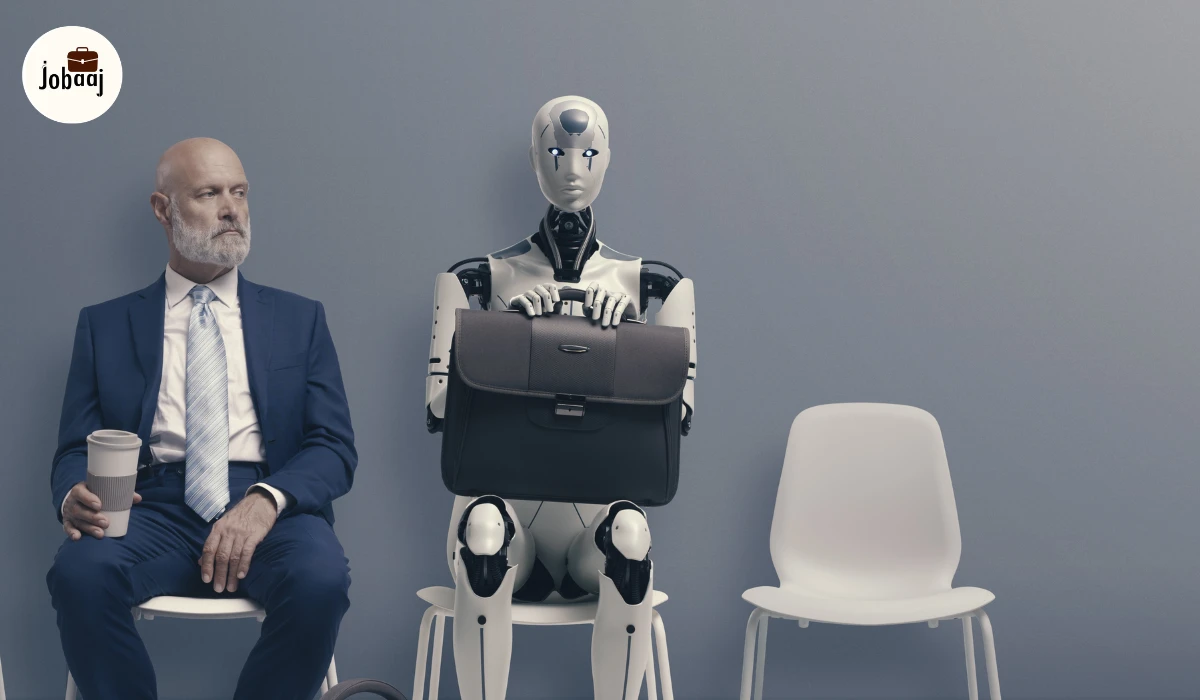
Artificial Intelligence is rapidly changing the job market. Many roles involving repetitive tasks, data processing, and basic analysis are already being automated.
But this does not mean AI will replace all jobs. In reality, some careers are far more resistant to automation because they require human judgment, emotional intelligence, physical adaptability, or complex decision-making in unpredictable environments.
Understanding which jobs are less likely to be replaced helps in choosing a safer and more future-proof career path.
Healthcare and Medical Professionals
Healthcare is one of the strongest job sectors resistant to AI because it involves human responsibility, emotional care, and real-time decision-making.
Even though AI can assist in diagnosis or imaging, it cannot replace human doctors, nurses, or surgeons.
Why these jobs are safe
- Requires human empathy and patient interaction
- High-risk decisions need accountability
- Every patient case is unique
- Physical procedures require human precision
Examples of AI-resistant roles
- Doctors and Surgeons
- Nurses
- Physiotherapists
- Mental Health Therapists
2. Skilled Trades and Field Jobs
Skilled trade jobs involve physical work in unpredictable real-world environments. These are extremely difficult to automate because they require adaptability and hands-on execution.
Why these jobs are safe
- Work happens in uncontrolled environments
- Requires physical dexterity
- Every task is different
- AI and robots struggle with real-world variability
Examples
- Electricians
- Plumbers
- Carpenters
- Mechanics
- Construction workers
3. Creative and Content-Based Roles
While AI can generate content, it still struggles with originality, emotional depth, and cultural understanding at a human level.
Creativity is not just output it is context, emotion, and storytelling.
Why these jobs are safe
- Requires originality and imagination
- Strong emotional and cultural understanding
- Brand storytelling needs human thinking
- AI lacks lived experiences
Examples
- Writers and Authors
- Film Directors
- Designers (UX/UI, Branding)
- Advertising Creatives
- Content Strategists
4. Leadership and Management Roles
Leadership roles require decision-making, negotiation, people management, and accountability areas where AI cannot take responsibility.
AI can support decisions, but cannot lead teams or handle human conflicts.
Why these jobs are safe
- Requires human judgment and leadership
- Involves managing people and emotions
- Strategic thinking depends on context
- Accountability cannot be automated
Examples
- CEOs and Founders
- Product Managers
- Project Managers
- Business Leaders
- HR Managers
5. Education and Training Roles
Teaching is deeply human because it involves emotional understanding, motivation, and adapting to individual learning needs.
AI can assist in learning, but it cannot replace teachers completely.
Why these jobs are safe
- Requires emotional connection with students
- Each learner has different needs
- Motivation and mentorship is human-driven
- Real-time adaptation is needed
Examples
- Teachers
- Professors
- Corporate Trainers
- Career Coaches
6. Psychology and Human Behavior Roles
Understanding human emotions, behavior, and mental health requires deep empathy and trust, which AI cannot fully replicate.
Why these jobs are safe
- Requires emotional intelligence
- Human trust is essential
- Complex psychological conditions vary widely
- Therapy requires human connection
Examples
- Psychologists
- Counselors
- Psychiatrists
- Social Workers
7. High-Level Strategy and Research Roles
Strategic roles involve ambiguity, uncertainty, and decision-making based on incomplete information something AI cannot fully handle independently.
Why these jobs are safe
- Requires strategic thinking
- High uncertainty environments
- Business intuition plays key role
- Cross-functional decision-making needed
Examples
- Strategy Consultants
- Research Scientists
- Policy Makers
- Investment Strategists
Key Insight: Why These Jobs Are Safe
The common pattern across all AI-resistant jobs is simple:
- Human emotion is required
- Real-world unpredictability exists
- Accountability matters
- Creativity or judgment is needed
- Physical interaction is involved
AI works best in structured environments, but these jobs operate in complex human environments.
Will AI Replace All Jobs?
No. AI will not replace all jobs it will replace tasks, not entire careers.
Most roles will evolve into hybrid roles where humans + AI work together instead of full replacement.
Conclusion
Jobs most resistant to AI are not defined by technology, but by human nature itself.
Healthcare, skilled trades, creative work, leadership, education, and psychology remain strong career paths even in an AI-driven world.
The safest careers are those that require human judgment, emotion, and real-world interaction.
FAQs
Healthcare, skilled trades, leadership roles, education, and creative professions are most resistant to AI.
AI will automate repetitive office tasks but not fully replace decision-making or leadership roles.
Jobs requiring human emotion, physical work, creativity, and strategy will survive AI disruption.
Partially. AI will automate parts of data science, but human interpretation and decision-making will still be needed.
Yes, but focus more on skill growth and adaptability rather than fear-based decisions.