
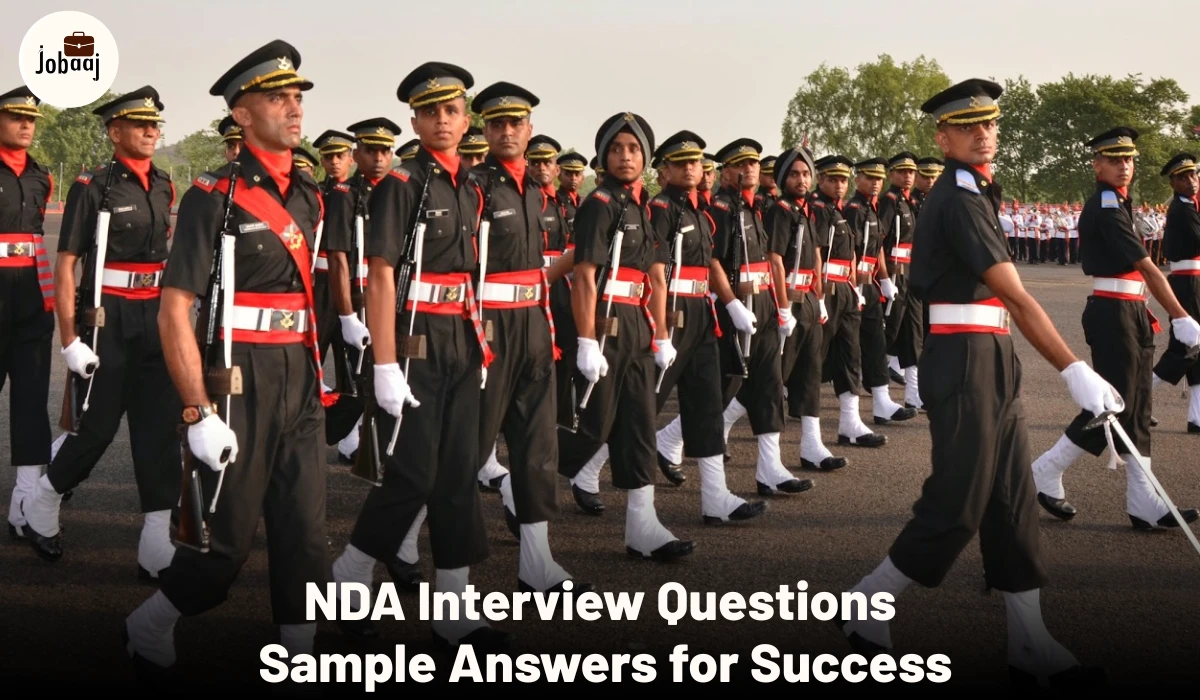
The National Defence Academy (NDA) interview is an important phase for candidates who aspire to serve in the Indian Armed Forces. After successfully clearing the written exam, the NDA interview evaluates a candidate's personality, knowledge, and overall preparedness for the challenges of the armed forces. This stage tests not just your academic knowledge, but also your physical and mental strength, leadership qualities, and ability to work under pressure.
In this blog, we will cover the Top 30 NDA Interview Topics that are commonly asked during the interview process. Along with the topics, we’ll also provide tips on how to answer each question and share sample answers to help candidates prepare effectively and confidently.
Top 30 NDA Interview Topics
1. Tell us about yourself.
This is typically the first question asked in the interview. Keep your answer concise and relevant, mentioning your background, education, interests, and why you want to join the armed forces.
Sample answer:
"Good morning, Sir/Madam. My name is [Your Name], and I am from [Your Hometown]. I completed my schooling from [School Name] and currently, I am preparing for the NDA exam. I’ve always been passionate about serving my country and the idea of contributing to national defense excites me. I am a disciplined individual who enjoys sports, especially [mention any sports], and I aim to serve in the Indian Army to utilize my strengths in leadership and determination."
2. Why do you want to join the Indian Armed Forces?
This question assesses your motivation for choosing a career in the defense services. Be genuine and explain why you're drawn to a life of service and the values of the armed forces.
Sample answer:
"I’ve always been fascinated by the discipline, structure, and sense of responsibility that comes with being a part of the armed forces. Joining the Indian Army allows me to serve my country and protect its sovereignty, which is a noble cause. The values of loyalty, integrity, and honor resonate with me deeply. I want to challenge myself and work towards the defense of the nation while also contributing to its security and well-being."
3. What are the qualities required to be a good officer in the Indian Army?
Discuss essential qualities like leadership, decision-making skills, physical fitness, adaptability, and courage. Link these qualities to the responsibilities of an officer.
Sample answer:
"A good officer in the Indian Army should possess leadership qualities, strong decision-making skills, and the ability to remain calm under pressure. Officers must be physically fit, mentally resilient, and capable of adapting to various challenges. Integrity, loyalty, and a strong sense of responsibility towards the country are essential traits for an officer. Officers must lead by example, inspire their troops, and make sound judgments in the face of adversity."
4. How would you contribute to the Indian Army as an officer?
Discuss your skills, strengths, and qualities that align with the role of an officer. Show your commitment to serving the country with dedication and professionalism.
Sample answer:
"As an officer, I would contribute by leading my team with integrity and dedication. I believe that an officer must be a motivator and a role model for their subordinates. I would focus on maintaining high standards of discipline, ensuring that my team is well-prepared both physically and mentally. I would also emphasize teamwork, communication, and strategic planning to overcome challenges and achieve objectives."
5. What is your understanding of the role of the NDA in national defense?
Explain the significance of the National Defence Academy in shaping future leaders for the Indian Armed Forces. Talk about the rigorous training and holistic development NDA offers.
Sample answer:
"The National Defence Academy plays a crucial role in preparing future leaders of the Indian Armed Forces. The NDA provides a comprehensive training program that focuses on physical fitness, mental strength, leadership, and academics. It trains cadets to become officers with the knowledge and skills required to handle complex situations in defense and security. The academy’s training instills discipline, teamwork, and a strong sense of patriotism, ensuring that officers are ready to lead in the challenging world of defense."
6. What do you know about the history of the Indian Army?
Provide a brief overview of the Indian Army’s history, including key events and battles. Mention its role in national security and peacekeeping missions.
Sample answer:
"The Indian Army has a rich history dating back to ancient times. It played a significant role during the Indian independence struggle, particularly in the two world wars, where Indian soldiers fought bravely. Post-independence, the Indian Army has been involved in several conflicts, including wars with Pakistan in 1947, 1965, and 1971. The Army also plays a vital role in peacekeeping operations and humanitarian aid across the world. Its primary mission remains the protection of India’s sovereignty and security."
7. What is your opinion on the importance of discipline in the Indian Armed Forces?
Discipline is a cornerstone of the military, and this question assesses your understanding of its importance in the armed forces.
Sample answer:
"Discipline is essential in the Indian Armed Forces as it is the foundation on which everything is built. It ensures that soldiers perform their duties with precision, responsibility, and commitment. A disciplined army is one that can act quickly and efficiently in the face of danger. Discipline also fosters unity and respect among officers and soldiers, creating a cohesive force that can tackle challenges effectively."
8. What physical activities do you engage in to stay fit?
Discuss your fitness routine, which may include sports, running, gym workouts, or any other physical activity that helps you maintain a healthy body and mind.
Sample answer:
"I engage in regular physical activity to maintain my fitness, which includes jogging in the mornings, followed by strength training at the gym. I also participate in team sports like cricket and football, which help improve coordination, teamwork, and endurance. I believe that maintaining physical fitness is essential, especially for a career in the armed forces, as it enables you to handle the physical demands of the job."
9. How do you handle stress and pressure?
Discuss your stress management techniques and provide examples of how you have dealt with pressure in the past.
Sample answer:
"I handle stress by staying calm and focused on the task at hand. When faced with a challenging situation, I break it down into smaller, manageable parts and tackle each one step by step. I also practice relaxation techniques like deep breathing and meditation to keep my mind clear. During stressful situations, I make sure to communicate effectively with others, ensuring we work together to find solutions."
10. How do you stay updated with current affairs?
Mention the resources you use to stay informed about national and international news, such as newspapers, websites, or news apps.
Sample answer:
"I stay updated with current affairs by reading newspapers such as The Hindu and The Times of India. I also follow credible news websites like BBC, NDTV, and Reuters for real-time updates. Additionally, I use mobile news apps and watch news channels to keep myself informed about global events and issues that might affect national security."
11. How do you manage your time effectively?
Discuss your time management skills and the methods you use to stay organized and prioritize tasks.
Sample answer:
"I manage my time effectively by setting daily and weekly goals, creating to-do lists, and prioritizing tasks based on importance and deadlines. I also break larger tasks into smaller, manageable parts to stay focused and avoid feeling overwhelmed. I make sure to allocate time for study, physical fitness, and relaxation, ensuring that I maintain a balanced routine."
12. What do you think is the greatest strength of the Indian Armed Forces?
Discuss the qualities that make the Indian Armed Forces exceptional, such as leadership, discipline, resilience, and adaptability.
Sample answer:
"The greatest strength of the Indian Armed Forces lies in its discipline, leadership, and resilience. The training and the spirit of camaraderie among the personnel make the armed forces a cohesive and powerful force. The ability to adapt to changing environments and challenges, as well as the deep sense of patriotism and commitment to the nation, make the Indian Army stand out globally."
13. Do you think the role of women in the Indian Army should be expanded?
Discuss the growing importance of gender equality and the valuable contributions of women in the military.
Sample answer:
"Yes, the role of women in the Indian Army should definitely be expanded. Women have already proven their capabilities in various fields, including the air force and paramilitary forces. It’s essential to ensure that women have equal opportunities in the Indian Army, as their involvement will bring diversity, strength, and new perspectives to the forces. The increasing participation of women will help in creating a more inclusive and robust defense force."
14. How would you prepare for a leadership role in the armed forces?
Discuss your approach to leadership, focusing on qualities such as communication, decision-making, and emotional intelligence.
Sample answer:
"I would prepare for a leadership role by focusing on building strong communication and interpersonal skills. Leadership requires the ability to make clear decisions under pressure and manage people effectively. I would also work on developing emotional intelligence, understanding the needs of my team, and making sure that their morale remains high, especially in tough situations. Continuous learning and self-reflection are also crucial to becoming a good leader."
15. What do you think about India's nuclear policy?
Discuss India’s nuclear deterrence policy and its role in maintaining regional stability and security.
Sample answer:
"India’s nuclear policy is focused on maintaining credible deterrence while ensuring that nuclear weapons are only used as a last resort. The no-first-use policy reflects India’s commitment to peace, but it also serves as a strong deterrent against any potential threat. India’s nuclear policy is designed to ensure security while promoting global disarmament and peace."
16. How would you handle a leadership role in a high-pressure situation?
This question assesses your leadership and decision-making skills under pressure. Focus on how you maintain composure, stay calm, and prioritize tasks.
Sample answer:
"In a high-pressure situation, I would first remain calm and assess the situation critically. I believe in prioritizing tasks based on urgency and importance, and ensuring that my team has clear directions to follow. Open communication is key to maintaining order and addressing any concerns promptly. As a leader, I would lead by example, ensuring that my team stays motivated and focused on achieving the goal."
17. How would you resolve a conflict within your team?
Discuss your approach to conflict resolution, which involves understanding both sides, promoting open dialogue, and finding a solution that benefits everyone.
Sample answer:
"If there is a conflict within the team, I would first listen to both sides to understand the perspectives involved. I would encourage open communication between the team members and ensure that everyone feels heard. My goal would be to mediate and find a mutually acceptable solution, while ensuring that the team remains cohesive and focused on the task at hand."
18. What is your understanding of India’s defense strategy?
Discuss India's defense policy, focusing on deterrence, defense modernization, and national security.
Sample answer:
"India’s defense strategy focuses on maintaining a credible deterrence against potential threats while emphasizing the need for peace and stability in the region. The no-first-use policy of nuclear weapons is central to India’s approach. India has also focused on modernizing its defense forces through procurement of advanced technology and strengthening its partnerships with friendly nations. Additionally, India’s defense policy includes addressing both conventional and asymmetric threats."
19. How do you think technology is shaping the future of defense?
Talk about advancements like AI, drones, cyber defense, and how they are changing the defense sector.
Sample answer:
"Technology plays a pivotal role in shaping the future of defense. Advanced technologies like artificial intelligence, cybersecurity, drones, and hypersonic missiles are enhancing defense capabilities. These innovations allow for faster decision-making, enhanced surveillance, and better operational efficiency. As technology continues to evolve, it’s crucial for defense forces to adopt these technologies to maintain a strategic edge."
20. What is your opinion on military training in India?
Discuss how military training in India equips candidates with necessary skills like leadership, discipline, and resilience.
Sample answer:
"Military training in India is essential in molding cadets into disciplined, resilient, and skilled individuals capable of facing the challenges of defense services. It focuses on both physical fitness and mental toughness, preparing individuals for leadership roles in the Armed Forces. The training instills a sense of duty, responsibility, and teamwork, which are crucial for success in the defense forces."
21. How would you handle an ethical dilemma in the armed forces?
Discuss your understanding of ethics, honesty, and integrity. Explain how you would approach a situation where moral judgment is required.
Sample answer:
"In the armed forces, integrity and ethical conduct are paramount. If faced with an ethical dilemma, I would adhere to the principles of honesty, fairness, and responsibility. I would consult with my senior officers and peers to ensure that the decision I make aligns with the values of the armed forces and national interest. It’s crucial to always act in the best interest of the team and the nation."
22. How do you deal with criticism or feedback?
Discuss your openness to constructive criticism and your approach to self-improvement.
Sample answer:
"I view criticism as an opportunity to learn and grow. I am always open to constructive feedback and believe that it helps me improve my performance. When I receive feedback, I analyze it, reflect on it, and take necessary actions to implement changes. My goal is to continuously improve and ensure that I’m performing at my best in any situation."
23. What is your understanding of the chain of command in the armed forces?
Discuss the hierarchy of command and its importance in ensuring smooth operations and decision-making.
Sample answer:
"The chain of command in the armed forces refers to the structured hierarchy of authority and decision-making. It ensures that instructions and directives flow smoothly from senior officers to subordinates, maintaining order and discipline. The chain of command is crucial for effective communication, coordinated action, and operational efficiency, as it helps in making quick and organized decisions, especially in high-pressure situations."
24. How do you stay motivated during challenging situations?
Talk about your resilience, mindset, and strategies for staying focused during tough times.
Sample answer:
"I stay motivated by focusing on my goals and the bigger picture. In challenging situations, I remind myself of the purpose of my work and the positive impact I can make. I also break down larger challenges into smaller, achievable tasks and celebrate small victories along the way. Keeping a positive mindset and maintaining a solution-oriented approach helps me stay motivated, even during tough times."
25. What are your thoughts on India’s nuclear policy?
Discuss India’s no-first-use policy and its role in ensuring peace and security in the region.
Sample answer:
"India’s nuclear policy is based on the principle of credible deterrence and the no-first-use policy. India has made it clear that it will only use nuclear weapons in retaliation against a nuclear attack. This policy ensures peace and security in the region by promoting responsible nuclear use while maintaining deterrence. It also aligns with India’s commitment to global disarmament and peace."
26. What role does physical fitness play in military life?
Discuss the importance of physical fitness in preparing soldiers for the demands of military life, including endurance, strength, and agility.
Sample answer:
"Physical fitness is essential in military life as it prepares individuals to face the demanding physical and mental challenges of service. A fit body is necessary for endurance, strength, and agility, which are crucial in combat and daily military operations. Regular training, physical conditioning, and maintaining peak fitness levels ensure that soldiers are always ready for any situation that arises."
27. How would you deal with a situation where you have to make a tough decision under extreme pressure?
Discuss your approach to making decisions under pressure, focusing on calm thinking, logical reasoning, and leadership.
Sample answer:
"In high-pressure situations, I would remain calm and take a step back to analyze the situation objectively. I would gather as much information as possible before making a decision, and consult with my team if necessary. I believe in taking a balanced approach considering both immediate consequences and long-term impact while keeping the team’s safety and mission success in mind."
28. What is your understanding of teamwork in the armed forces?
Discuss how teamwork is essential for success in the military, where cooperation and mutual trust are vital.
Sample answer:
"Teamwork is the backbone of the armed forces. It is essential for achieving collective goals and overcoming challenges. Every soldier has a role to play, and when each person works together, the team becomes stronger and more effective. In the armed forces, mutual trust, respect, and effective communication are crucial components of successful teamwork."
29. How would you handle failure during a mission or operation?
Talk about how you would handle setbacks with resilience, learn from mistakes, and ensure improvement.
Sample answer:
"Failure is part of any mission, but how you handle it matters the most. I would first assess the situation and identify the reasons behind the failure. I believe in learning from mistakes and ensuring that similar issues do not arise again. It’s important to remain calm, motivate the team, and work towards rectifying the situation while maintaining morale and focus."
30. What do you think are the key challenges facing India’s defense sector?
Discuss challenges such as modernization, resource management, security threats, and technological advancements in the defense sector.
Sample answer:
"India’s defense sector faces several challenges, including the need for modernization of equipment and technology, resource management, and addressing emerging security threats. Ensuring border security, integrating advanced defense technologies, and preparing for unconventional threats like cyber-attacks are critical issues that need to be addressed. Strengthening military infrastructure, improving training programs, and fostering international defense cooperation are essential for tackling these challenges."
Conclusion
The NDA Interview is an important part of the selection process, and preparation plays a crucial role in determining success. By focusing on the 30 key topics discussed above, you can equip yourself with the knowledge and confidence needed to handle any question during the interview. Be sure to showcase your leadership qualities, knowledge of national security, and passion for serving the nation. With the right preparation, you will be ready to step forward with pride and determination to serve in the Indian Armed Forces.
Best of luck with your NDA Interview preparation!
FAQs
Preparing for the NDA interview requires thorough knowledge of the defense forces, current affairs, and strong communication skills. Stay updated on national and international events, practice your answers to common interview questions, and focus on leadership qualities, discipline, and physical fitness.
The NDA interview questions focus on your personality, knowledge of current affairs, motivation for joining the armed forces, and leadership skills. Expect questions about your background, values, challenges, and how you would handle various situations as an officer.
To improve your physical fitness, focus on regular exercises such as running, strength training, and participating in sports. The NDA requires a high level of physical fitness, so it’s important to build stamina, endurance, and agility before the interview.
If you don’t know the answer, stay calm and admit that you don’t know. You can also give your perspective or approach to solving the problem, which shows your problem-solving skills and ability to think on your feet.
The NDA interview panel looks for qualities like leadership, integrity, discipline, physical fitness, and a strong sense of responsibility. They want candidates who are calm under pressure, able to think critically, and possess the determination to serve in the defense forces.