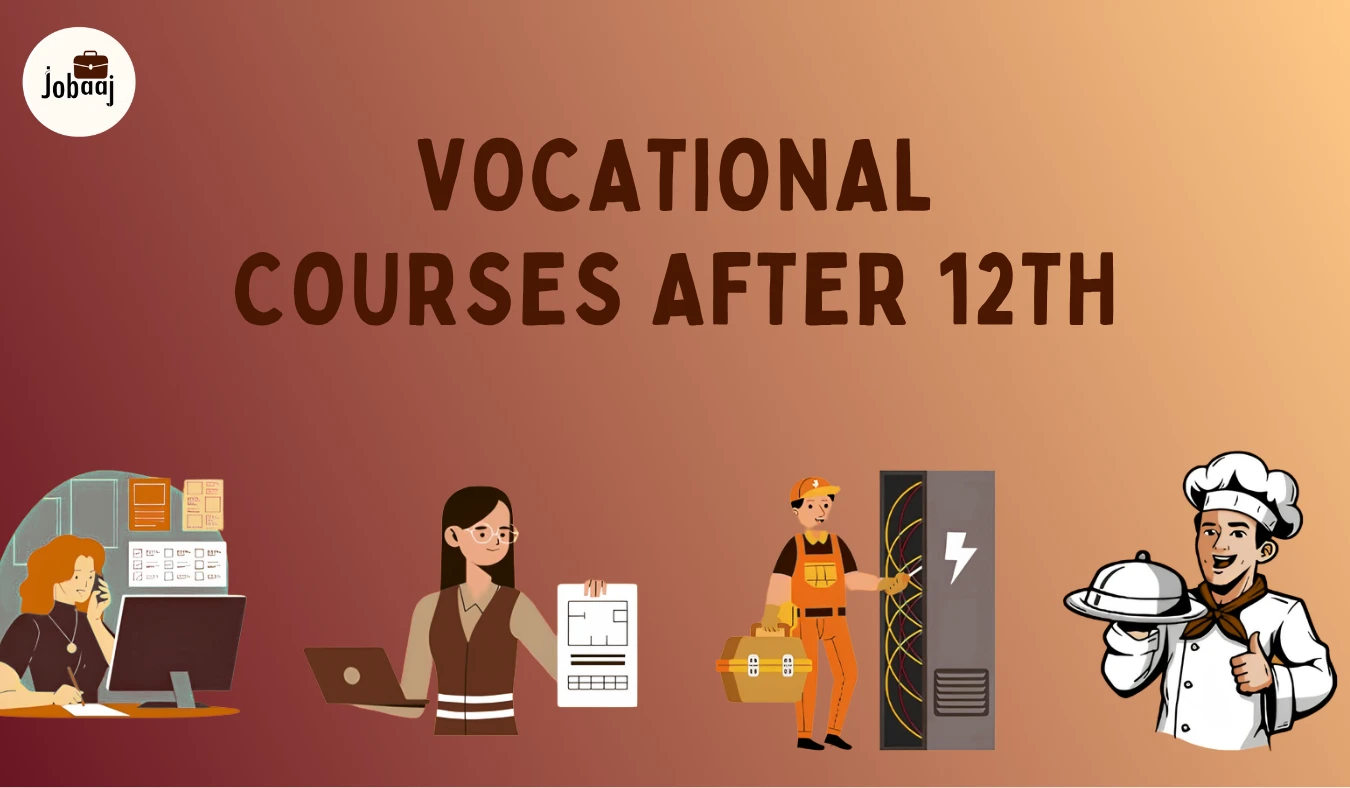
Not everyone needs a four-year degree to build a great career. In 2026, some of the fastest-growing jobs in India don't care about your college name - they care about what you can actually do. Vocational courses are the shortcut nobody told you about.
Why Vocational Courses Are Having a Moment in 2026
Let's be honest - a huge number of graduates are sitting at home with a degree and no job. Not because they're lazy, but because the gap between what colleges teach and what industries actually need has never been wider.
Vocational courses exist to close that gap. They focus on skills, not theory. You leave with the ability to do something specific and valuable - whether that's wiring a solar panel, designing a logo, coding a website, or managing a patient's care plan.
In 2026, India's National Education Policy (NEP 2020) has been pushing vocational education harder than ever, and global companies hiring from India are responding. The market is finally catching up to what smart students already knew: you don't need four years to be employable.
You don't need a degree to prove your worth. You need a skill that solves a real problem for a real employer.
Top Vocational Courses After 12th
Here are the best vocational courses across major sectors - each with real job outcomes, not just certification names. These are courses where demand is high, training is short, and the pay is better than most people expect.
| Course / Domain | Duration | Description | Salary |
| Web Development & Coding | 6 – 12 Months | Full-stack development, Python, Java, or front-end design. Multiple platforms offer certificates. | 3 – 8 LPA |
| Digital Marketing & SEO | 3 – 6 Months | Social media management, Google Ads, content strategy, and analytics. Freelance potential is high. | 2.5 – 6 LPA |
| Healthcare & Paramedical | 1 – 2 Years | Medical lab technician, ECG technician, physiotherapy assistant, or dental hygienist. Roles are essential. | 2 – 5 LPA |
| Aviation & Hospitality | 6 – 12 Months | Ground staff, cabin crew, hotel management, or event coordination. Sector actively hiring youth. | 2.5 – 5 LPA |
| Graphic Design & UI/UX | 6 – 12 Months | Adobe tools, Figma, Canva, and brand design. Demand in startups, agencies, and govt digital projects. | 2.5 – 7 LPA |
| Electrician & Solar Tech | 6 Months – 1 Year | Licensed electricians and solar installation technicians. Highly employed due to renewable energy push. | 3 – 6 LPA |
Other strong options include: Tally & Accounting (3–6 months), Auto Mechanic/EV Technician (1 year), Fashion Design (1 year), Cybersecurity Basics (6 months), and Plumbing/HVAC (1 year). The ITI (Industrial Training Institute) system covers most of these with government-recognized certifications.
Vocational vs. Traditional Degree
This isn't about saying degrees are worthless - they're not. It's about being realistic about the trade-offs so you can make the choice that actually fits your life, your budget, and your goals.
| Factor | Vocational Course | Traditional Degree (3–4 yr) |
| Duration | 3 months – 2 years | 3–5 years |
| Cost | 10,000 – 2,00,000 | 3,00,000 – 15,00,000+ |
| Job-readiness | High — skills-first | Varies widely by field |
| Entry-level salary | Competitive (skill-based) | Often lower initially |
| Time to first job | 6–24 months | 3–5 years |
| Scope for higher studies | Lateral entry options exist | Direct pathway |
| Recognized by industry? | Yes, increasingly so | Yes, traditionally |
| Best for | Hands-on learners, quick entry | Research, management, medicine |
The smartest move for many students in 2026 is a hybrid path: complete a vocational course, start working, and then pursue a distance/part-time degree if needed for advancement. You earn while you learn.
How to Choose the Right Course for You
With so many options, students often feel paralyzed. Here's a simple framework to narrow things down - honestly and practically.
1. Start with what you don't hate
You don't need a burning passion - most people don't have one at 17. But pick something you're genuinely not bored by. If numbers are okay, look at accounting or data. If you like fixing things, go technical. Interest keeps you going when the training gets hard.
2. Check local demand
A solar technician in Rajasthan has more opportunity than in a metro. A digital marketer in any city has work. Research what businesses in your area actually hire for - visit LinkedIn, Indeed, or just walk into local offices and ask.
3. Match your budget to the course duration
A 6-month course at 30,000 is a very different financial decision from a 2-year diploma at 2 lakhs. Factor in living costs, family expectations, and how quickly you need to start earning. Don't take a loan for a course that doesn't justify it.
4. Look for placement records, not promises
Every institute will tell you they have "100% placement." Ask for names of companies they've placed with. Ask to speak to alumni. If they can't provide this easily, that's your answer. A good institute is proud of its track record and shows it.
5. Think about the next 3 years, not 30
You don't need a life plan. You need a 3-year plan. What job will this course likely get you? Is that job stable? Can you grow from there? If yes - move. You can always pivot later with new skills, but you can't get back the time spent waiting.
Where to Study?
Choosing the right institute is as important as choosing the right course. Here are the main options - from free government programs to premium private institutes.
Government / Public Options (Affordable & Recognized)
- ITI (Industrial Training Institutes) — Across every state; trade certificates in 100+ vocations. Fees as low as 2,000–10,000 per year.
- Polytechnic Institutes — 3-year diploma programs with lateral entry to B.Tech later. Government-subsidized fees.
- NSDC (National Skill Development Corporation) — Partners with 500+ training organizations. Subsidized or free for eligible candidates.
- PMKVY (Pradhan Mantri Kaushal Vikas Yojana) — Free short-term skill training with government certification in 200+ courses.
- Jan Aushadhi & AIIMS Allied Health Programs — Paramedical and healthcare-specific training at minimal cost.
Online / Private Options (Flexible & Current)
- Coursera, edX, Udemy — Certifications from Google, IBM, Meta, and top universities. Great for tech, marketing, and design.
- NIIT, Jetking — Established private institutes with strong industry ties for IT roles.
- UpGrad, Simplilearn — India-focused online learning platforms with placement assistance.
- Local trade academies — For electrician, plumbing, automotive - local certifications often matter more than national ones for trades.
Conclusion
There's no shame in wanting to start your life sooner. There's no shame in choosing a path that matches your reality - your budget, your family's needs, your personality.
Vocational courses in 2026 are not a compromise. For millions of students across India, they're the smartest, most efficient route to financial independence and professional dignity.
Your career doesn't start on graduation day. It starts the day you decide to learn something useful.
FAQs
Vocational courses after 12th are skill-based programs designed to equip students with practical, job-ready skills. These courses focus on hands-on training, preparing 12th pass students for direct employment in industries like IT, healthcare, hospitality, and technical trades.
In 2026, vocational courses in IT, healthcare, hospitality, creative fields, and technical trades are highly sought-after. These courses provide career-focused training and practical skills that align with current industry needs, making students more employable after 12th.
Most vocational courses after 12th range from 6 months to 2 years. They offer fast-track, skill-based learning that allows students to gain practical experience and enter the workforce quickly compared to traditional degree programs.
Yes, vocational courses are usually more affordable than traditional degrees. With shorter durations and practical training, they provide cost-effective career-focused education, helping students acquire in-demand skills without spending years or large sums on conventional studies.
Absolutely. Vocational courses after 12th focus on practical skills and industry-relevant training, making students job-ready and employable immediately. They help 12th pass students enter various sectors like IT, healthcare, hospitality, or technical trades faster than traditional degrees.