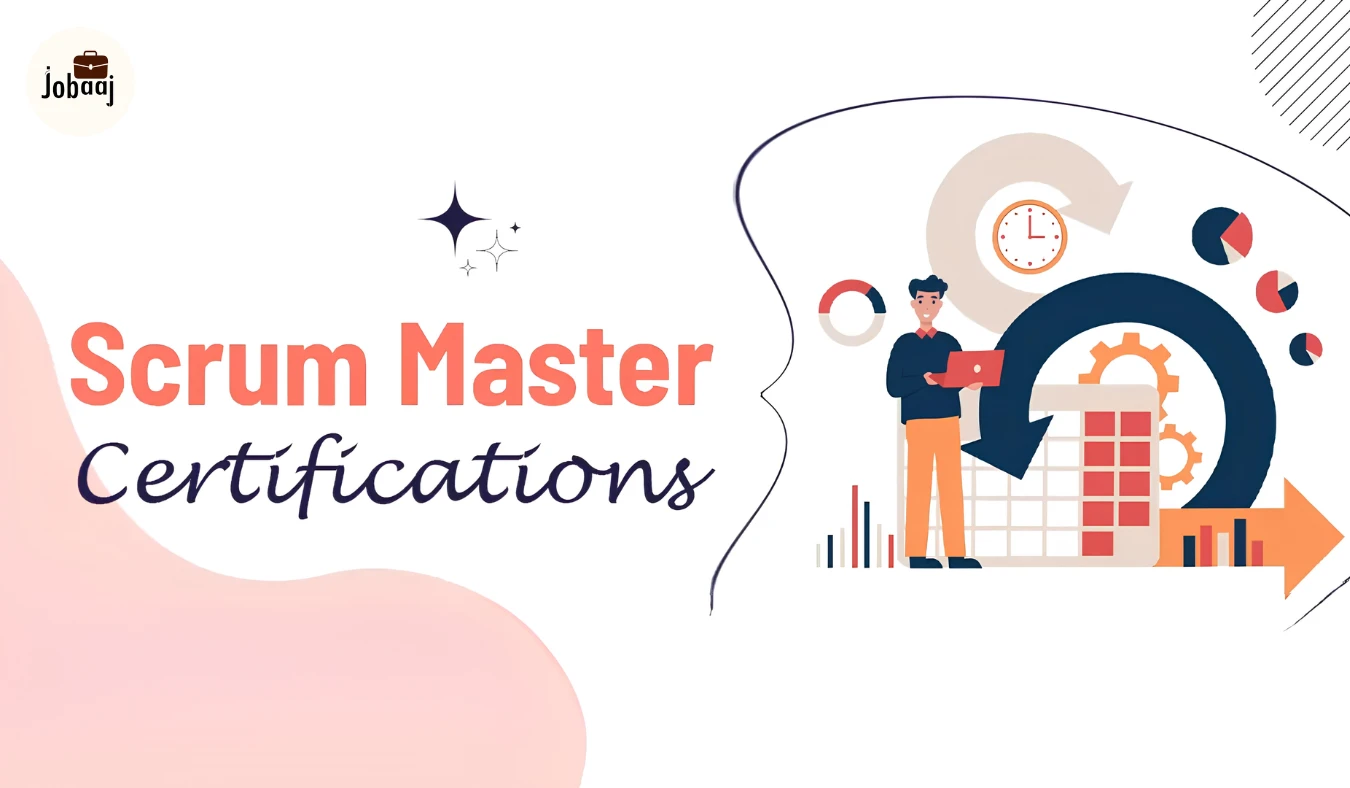
A Scrum Master certification is often marketed as a quick route into a high-paying technology career. The reality is more balanced. Certification can help you understand Scrum and get noticed by recruiters, but it does not automatically qualify you to coach an experienced Agile team.
Companies increasingly want Scrum Masters who can facilitate difficult conversations, remove delivery barriers, interpret project data and help teams improve. Passing an online test is only the beginning.
For students, working professionals, project coordinators and business analysts, Scrum Master certification can still be a valuable career investment. The key is choosing the right certification and combining it with practical Agile experience.
This complete guide explains Scrum Master eligibility, certification costs, popular courses, exam formats, salary expectations and long-term career scope in India.
What Is Scrum?
Scrum is a lightweight framework used by teams to solve complex problems and deliver value in small, regular increments. It is widely associated with software development, but it is also used in product management, banking, consulting, marketing and other industries.
Instead of planning every detail of a long project at the beginning, a Scrum Team works in short cycles called Sprints. Each Sprint produces a usable Increment and creates an opportunity to review results, collect feedback and adjust future work.
Scrum is built around transparency, inspection and adaptation. These principles help teams respond when customer needs or market conditions change.
Who Is a Scrum Master?
A Scrum Master helps a team understand and use Scrum effectively. The role is based on leadership, facilitation, coaching and problem-solving rather than traditional command and control.
The Scrum Master supports the team by:
- Facilitating Scrum events when needed
- Helping remove obstacles affecting delivery
- Coaching team members in self-management
- Protecting the team from unnecessary disruption
- Improving communication and transparency
- Supporting the Product Owner
- Helping the organisation adopt Scrum properly
- Encouraging continuous improvement
A Scrum Master is not the team’s boss, personal assistant or meeting scheduler. The role involves influencing people without relying on formal authority.
What Does a Scrum Master Do Every Day?
There is no fixed daily checklist for every Scrum Master. Responsibilities depend on the organisation, team maturity and complexity of the product.
A typical day may include checking delivery risks, speaking with the Product Owner, helping resolve an external dependency and observing how team members collaborate.
The Scrum Master may also facilitate a Daily Scrum, Sprint Planning, Sprint Review or Sprint Retrospective. However, the goal is not to control every meeting. A mature team should eventually be able to manage many activities independently.
Other responsibilities can include:
- Tracking unresolved impediments
- Improving backlog readiness
- Coaching team members through conflict
- Analysing Sprint trends
- Coordinating with other teams
- Supporting Agile transformation
- Helping stakeholders understand realistic delivery expectations
The work requires considerably more judgement than simply updating tickets in Jira.
Is Scrum Master Certification Mandatory?
No law or universal industry rule requires a Scrum Master to hold a certification. Some employers prioritise relevant experience, team leadership and practical Agile knowledge over credentials.
However, certification can help when:
- You are changing careers
- Your current role involves Agile delivery
- Recruiters use certification as a screening criterion
- You need structured Scrum training
- Your employer is moving towards Agile
- You want to validate your foundational knowledge
A certificate is most valuable when it supports an existing professional profile. For example, a business analyst with product-delivery experience may gain more immediate value from it than a fresher with no teamwork or project exposure.
Best Scrum Master Certifications
Several organisations offer Agile and Scrum credentials. The three options most commonly considered by Indian professionals are CSM, PSM I and SAFe Scrum Master.
1. Certified ScrumMaster: CSM
The Certified ScrumMaster credential is offered by Scrum Alliance. It is designed for beginners who want instructor-led training and a structured introduction to Scrum.
CSM Eligibility
There is no formal work-experience or educational requirement for the foundational CSM certification. However, candidates must complete a mandatory 16-hour CSM course with a Certified Scrum Trainer.
Previous Agile experience or another certification cannot be used to skip this course. Scrum Alliance does not currently provide a direct exam-only route for CSM.
CSM Examination Pattern
After completing the approved course, candidates receive access to the online CSM test.
The examination currently includes:
- 50 multiple-choice questions
- 60-minute time limit
- 74% passing score
- Online, non-proctored format
- Open-book access
- Two free attempts within 90 days
Candidates who do not pass within the first two attempts must pay US$25 for each additional attempt.
CSM Certification Cost in India
Scrum Alliance does not set one universal course price. Training fees are decided by authorised trainers and providers.
In India, a CSM programme may generally cost approximately 20,000 to 35,000, including training, examination access and the initial certification period. Actual prices vary according to the trainer, class format, taxes and available discounts.
Students should verify that the course is listed in the official Scrum Alliance course directory before making a payment.
CSM Renewal
The foundational CSM credential is renewed every two years. Scrum Alliance currently requires 20 Scrum Education Units and a US$100 renewal fee for foundational certifications.
At the July 2026 exchange rate, US$100 is roughly 9,650 before taxes and payment charges. Currency conversion can change by the time you renew.
2. Professional Scrum Master I: PSM I
Professional Scrum Master I is offered by Scrum.org. It validates a foundational understanding of Scrum and the Scrum Master accountabilities.
Unlike CSM, candidates can take the PSM I assessment without attending a mandatory training course.
PSM I Eligibility
There is no degree, work-experience or training requirement. Candidates can prepare independently using the Scrum Guide, Scrum Open assessments and other learning resources.
Official instructor-led training is available, but it is optional.
PSM I Examination Pattern
The PSM I assessment currently has:
- 80 questions
- 60-minute time limit
- 85% passing score
- Multiple-choice, multiple-answer and true-or-false questions
- Online examination
- US$200 fee per attempt
The 85% passing score and tight time limit make PSM I more demanding than many introductory certification tests.
PSM I Certification Cost in India
The official assessment costs US$200 per attempt. At an indicative July 2026 exchange rate of about 96.5 per US dollar, this is approximately 19,300, excluding card charges or applicable taxes.
Optional PSM training costs significantly more and varies by trainer and country. The assessment fee is generally included when a candidate attends an official Professional Scrum Master course.
PSM I Renewal
PSM I does not expire. Scrum.org does not charge a recurring renewal fee after you pass the assessment.
This lifetime validity makes PSM I attractive to self-learners and candidates who want to avoid certification-maintenance costs.
3. SAFe Scrum Master Certification
The SAFe Scrum Master certification is offered by Scaled Agile. It focuses on the Scrum Master’s role within a larger enterprise using the Scaled Agile Framework.
Standard Scrum generally focuses on an individual Scrum Team. SAFe addresses coordination across multiple Agile teams, programmes and organisational layers.
SAFe Scrum Master Eligibility
There is generally no mandatory degree or work-experience requirement for the foundational programme. However, familiarity with Agile concepts and experience in a development environment can make the course easier to understand.
The official course and assessment conditions should be verified with the selected training partner.
SAFe Scrum Master Cost
SAFe course prices vary considerably by authorised training provider, location, taxes and delivery format. Indian programmes may broadly fall between 35,000 and 70,000, but candidates should check the provider’s current official quotation.
Do not choose SAFe only because its course fee is higher. It is most useful when your employer or target organisation actively follows SAFe.
SAFe Renewal
SAFe Scrum Master is a foundational SAFe credential. Scaled Agile currently lists foundational membership renewal at US$195 annually, plus applicable taxes.
Updated requirements can also include continuing education. Scaled Agile states that SAFe Scrum Master holders must earn 24 Continuing Education Units during a two-year certification cycle.
CSM vs PSM I vs SAFe Scrum Master
| Factor | CSM | PSM I | SAFe Scrum Master |
| Provider | Scrum Alliance | Scaled Agile | |
| Best suited for | Guided beginners | Self-learners and Scrum practitioners | Enterprise Agile environments |
| Mandatory training | Yes | No | Usually course-led |
| Entry experience required | No | No | No formal experience requirement |
| Passing score | 74% | 85% | Depends on current programme version |
| Basic cost | Approximately 20,000– 35,000 | US$200, approximately 19,300 | Approximately 35,000– 70,000 |
| Validity | Two years | Lifetime | Renewal required |
| Renewal cost | US$100 every two years | None | Foundational membership currently US$195 annually |
| Main strength | Instructor-led learning | Rigorous, flexible and lifetime credential | Scaled enterprise context |
Fees are indicative and can change with providers, taxes and currency movements. Always verify the final amount on the issuing organisation’s official website.
Software and Tools Scrum Masters Should Learn
| Tool | Common use |
| Jira | Backlogs, Sprints, workflows and issue tracking |
| Confluence | Documentation and team knowledge |
| Azure DevOps | Product backlogs, code and delivery tracking |
| Trello | Simple visual task management |
| Miro | Retrospectives, workshops and remote collaboration |
| Microsoft Teams | Communication and meetings |
| Slack | Team communication and integrations |
| Power BI | Agile dashboards and delivery analysis |
| Excel | Basic reporting and data analysis |
| GitHub or GitLab | Understanding development workflows |
A Scrum Master does not need to become an expert administrator in every tool. Start with Jira, Confluence and one visual collaboration platform.
FAQs
CSM and PSM I are both suitable for beginners. CSM provides mandatory instructor-led training, while PSM I allows candidates to prepare independently. PSM I also offers lifetime validity. Your budget, learning preferences and the certification requirements mentioned in your target job descriptions should guide your decision.
CSM certification generally costs between ₹20,000 and ₹35,000 in India, depending on the authorised training provider. The PSM I examination costs approximately ₹19,300 per attempt at current exchange rates. SAFe Scrum Master courses may cost between ₹35,000 and ₹70,000, depending on the provider and taxes.
A fresher can earn a Scrum Master certification, but finding a dedicated Scrum Master job immediately may be difficult. Employers often prefer candidates with experience in software development, testing, business analysis or project coordination. Freshers can begin with Agile coordinator, PMO analyst or project analyst roles to gain relevant experience.
Coding is not compulsory for a Scrum Master. However, basic knowledge of software development, testing, DevOps and product delivery can improve communication with technical teams. Facilitation, coaching, conflict resolution, stakeholder management and problem-solving are more central to the role than the ability to write production code.
No Scrum Master certification can guarantee employment. It can strengthen your resume, validate your knowledge and help with initial job screening. Employers will still evaluate your practical Agile experience, communication skills and ability to manage team challenges. Combine certification with Jira practice, case studies and relevant project experience.