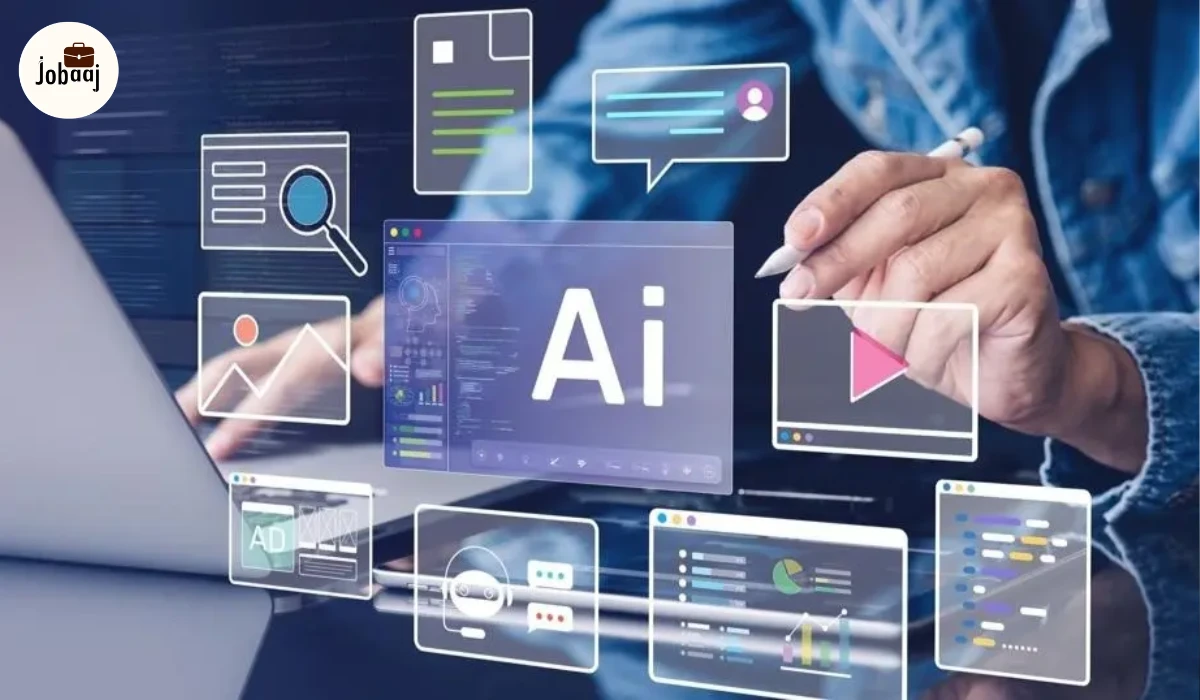
Artificial Intelligence (AI) is no longer just a futuristic concept it’s a driving force behind innovation in industries across the globe. In 2026, AI is integrated into almost every aspect of our personal and professional lives, from virtual assistants to smart healthcare systems. With the rapid advancement in AI technologies, several AI tools have emerged as game-changers, enabling businesses to streamline operations, enhance customer experiences, and drive productivity.
In this blog, we will dive into some of the most popular and trending AI tools in 2026. These tools are shaping industries, optimizing workflows, and revolutionizing how we work and interact with technology.
1. ChatGPT and Conversational AI Tools
Since its debut, OpenAI’s ChatGPT has been at the forefront of AI-driven conversational tools. As of 2026, ChatGPT continues to evolve, becoming even more advanced with its natural language processing (NLP) capabilities. Businesses are increasingly using AI chatbots like ChatGPT to automate customer support, answer queries, and assist in various tasks, improving customer experience and operational efficiency.
Why It Matters in 2026:
The evolution of Conversational AI has paved the way for more personalized and seamless interactions between businesses and customers. With improved sentiment analysis, language understanding, and contextual awareness, AI tools like ChatGPT are no longer just reactive they can anticipate customer needs and deliver proactive solutions.
Key Uses:
-
Customer support and service automation
-
Virtual assistants for businesses
-
Personalized recommendations and content generation
-
Market research and sentiment analysis
2. DALL·E 3 (AI Image Generation)
DALL·E 3, the latest version of OpenAI's image-generating AI tool, has taken the world by storm. This tool uses advanced AI models to create detailed, realistic images from textual descriptions. Whether it’s for marketing, content creation, or product design, businesses and individuals alike are leveraging DALL·E 3 to generate high-quality images in a fraction of the time it would take a human designer.
Why It Matters in 2026:
In the digital age, visual content is paramount. AI tools like DALL·E 3 make it easier for businesses to create visually appealing graphics, advertisements, and promotional content without the need for extensive design teams. The tool’s ability to produce images from mere descriptions has transformed the creative process and saved significant time and resources.
Key Uses:
-
Marketing and advertising campaigns
-
Content creation for social media and blogs
-
Product design and prototyping
-
Digital art creation
3. TensorFlow and Machine Learning Platforms
TensorFlow, developed by Google, remains one of the most popular open-source platforms for building machine learning models. By 2026, TensorFlow has evolved to include more user-friendly features, enabling both novice and advanced users to create, train, and deploy AI models with greater efficiency. Its versatility has made it a go-to tool for AI researchers and developers working in fields like healthcare, finance, and autonomous vehicles.
Why It Matters in 2026:
Machine learning continues to grow in importance, and TensorFlow is at the heart of that growth. Its ability to support deep learning and neural networks allows businesses to harness AI’s full potential, from predictive analytics to automation, improving outcomes across industries.
Key Uses:
-
Predictive analytics and forecasting
-
Natural language processing (NLP)
-
Image and speech recognition
-
Autonomous systems and robotics
4. IBM Watson
IBM Watson is one of the most trusted AI platforms for businesses in 2026, particularly in industries such as healthcare, banking, and customer service. Watson's advanced machine learning algorithms, natural language processing, and deep learning capabilities enable businesses to extract insights from vast amounts of data, automate processes, and make data-driven decisions.
Why It Matters in 2026:
IBM Watson continues to revolutionize industries by providing AI-driven insights and automating complex tasks. Its ability to handle vast amounts of unstructured data, such as medical records, financial statements, and customer feedback, makes it a valuable tool for businesses seeking to leverage AI for enhanced decision-making and process optimization.
Key Uses:
-
Healthcare diagnostics and personalized treatments
-
Risk analysis and fraud detection in finance
-
Customer service automation
-
Data mining and predictive modeling
5. UiPath (Robotic Process Automation)
UiPath is a leading AI tool for Robotic Process Automation (RPA), allowing businesses to automate repetitive tasks, increase efficiency, and reduce errors. By 2026, RPA tools like UiPath are being used in industries from manufacturing to healthcare, enabling businesses to automate everything from simple data entry to complex workflows.
Why It Matters in 2026:
Robotic Process Automation has become an essential part of digital transformation. UiPath and other RPA tools enable organizations to free up human resources from mundane, repetitive tasks, allowing employees to focus on higher-value activities. This leads to increased productivity and cost savings across the board.
Key Uses:
-
Automating customer service workflows
-
Invoice processing and financial reconciliations
-
Supply chain management and inventory control
-
Employee onboarding and HR management
6. DeepL Translator (AI Translation Tool)
DeepL Translator has revolutionized the translation industry with its superior language processing abilities. In 2026, DeepL continues to be the go-to AI-powered translation tool, offering more accurate translations than traditional services like Google Translate. Its advanced neural networks ensure high-quality, contextually accurate translations, making it a valuable tool for businesses that operate in multiple languages.
Why It Matters in 2026:
As businesses expand globally, the need for real-time, accurate translation services has never been greater. DeepL enables companies to connect with customers, partners, and clients across language barriers without losing the nuance and meaning of the original message.
Key Uses:
-
Real-time translation for global customer support
-
Localizing content for international markets
-
Multilingual communication in e-commerce and social media
-
Automated translation in international conferences and meetings
7. Hugging Face (NLP Models)
Hugging Face has become a leader in Natural Language Processing (NLP) with its range of transformer-based models, including BERT and GPT. The platform offers a suite of tools that allow developers to build and deploy state-of-the-art NLP models for text generation, translation, summarization, and sentiment analysis.
Why It Matters in 2026:
With NLP becoming more crucial in customer interactions, content generation, and data analysis, Hugging Face’s tools help businesses harness the power of language models to improve communication, automate content creation, and provide better customer service.
Key Uses:
-
Automated customer support chatbots
-
Text summarization and sentiment analysis
-
Content generation for marketing campaigns
-
Language translation and transcription services
8. Microsoft Azure AI
Microsoft Azure AI is a comprehensive suite of AI services and tools provided by Microsoft, offering cloud-based solutions to build, train, and deploy AI models. With the power of Azure’s cloud infrastructure, businesses can access scalable AI capabilities, including cognitive services, machine learning, and speech recognition.
Why It Matters in 2026:
Azure AI is becoming the backbone for many businesses seeking cloud-based AI solutions. Its easy integration with other Microsoft services makes it a powerful tool for enterprises looking to implement AI without extensive infrastructure changes.
Key Uses:
-
Machine learning and predictive analytics
-
Speech recognition and natural language processing
-
Facial recognition and image analysis
-
Chatbots and virtual assistants
9. Runway ML (Creative AI Tools)
Runway ML offers a suite of creative AI tools that allow designers, artists, and content creators to generate videos, images, music, and more using AI. With easy-to-use interfaces and powerful algorithms, Runway ML enables the creative community to experiment with AI in ways never before possible.
Why It Matters in 2026:
Creative AI tools like Runway ML are democratizing creativity, allowing anyone from professional artists to hobbyists to create high-quality, AI-generated content. In 2026, we’ll see a rise in AI-assisted content creation across entertainment, marketing, and social media.
Key Uses:
-
AI-generated artwork and music
-
Video editing and special effects
-
Interactive art and installations
-
Game design and immersive experiences
10. Salesforce Einstein (AI for CRM)
Salesforce Einstein is an AI-powered tool integrated into Salesforce’s Customer Relationship Management (CRM) platform. It provides AI-driven insights, predictions, and automation to help businesses improve customer engagement, sales, and marketing efforts.
Why It Matters in 2026:
AI-powered CRMs like Salesforce Einstein enable businesses to deliver hyper-personalized customer experiences, optimize sales strategies, and increase customer retention rates. In 2026, companies that leverage Salesforce Einstein will gain a competitive edge in customer relationship management.
Key Uses:
-
Lead scoring and sales forecasting
-
Personalized marketing campaigns
-
Customer sentiment analysis
-
Automated workflows and customer service optimization
Conclusion
As AI continues to evolve, these tools are leading the way in transforming industries, improving business processes, and enabling creativity. Whether you’re a developer, business owner, or creative professional, understanding and utilizing these AI tools will position you to thrive in the ever-evolving tech landscape of 2026.
By staying informed and adapting to these advancements, you can unlock new possibilities, enhance productivity, and stay ahead of the curve in your industry. The future of AI is here, and these tools are paving the way for innovation in the years to come.
FAQs
The most popular AI tools in 2026 include ChatGPT, DALL·E 3, TensorFlow, IBM Watson, and Hugging Face. These tools are revolutionizing industries by enhancing customer experience, enabling automation, and facilitating data-driven decision-making.
AI tools help businesses automate repetitive tasks, gain insights from data, improve customer engagement, and increase operational efficiency. By leveraging AI, companies can stay competitive and drive innovation across various sectors.
Industries such as healthcare, finance, e-commerce, entertainment, and marketing are benefiting the most from AI tools. These tools are enabling smarter decision-making, improving customer experiences, and optimizing operations.
While AI tools can automate many tasks, they are unlikely to fully replace human jobs. Instead, AI will complement human efforts, allowing professionals to focus on higher-level strategic and creative tasks while automating routine operations.
Start by identifying areas where AI can improve efficiency, such as customer service automation or data analysis. Explore AI tools that align with your business needs, and consider starting with platforms like TensorFlow, Salesforce Einstein, or Runway ML for easy integration and practical use cases.